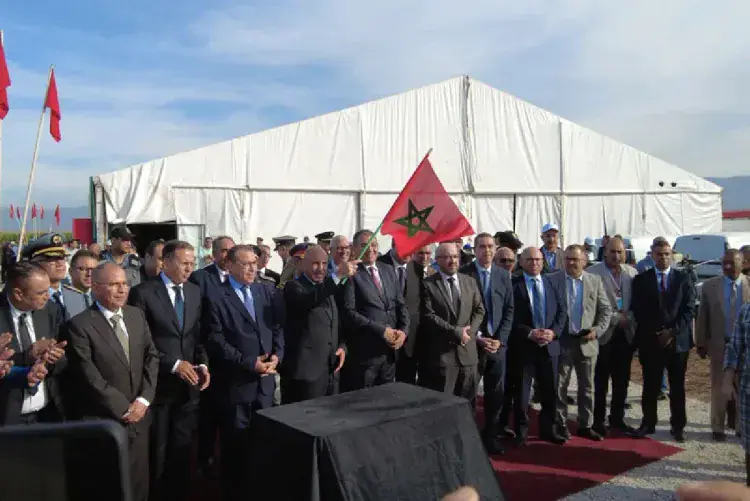
Moroccan Agriculture Minister Khalid Hatimi launched the 2026-2027 farming season in Fquih Ben Saleh, a town in the Beni Mellal-Khenifra region. The event was attended by local authorities, including governors and representatives from the agricultural sector. Hatimi emphasized the importance of achieving high production levels and creating new job opportunities while contributing to Morocco's food sovereignty and security.
The new farming season aims to build on the success of the previous season, which saw a harvest of around 90 million quintals of grain. To ensure a smooth start to the current season, the Ministry has implemented several measures, including the mobilization of 1.3 million quintals of certified seeds for autumn crops at subsidized prices. The Ministry has also made 500,000 tons of phosphate fertilizers available to farmers.
The Ministry's strategy, dubbed "Green Generation," focuses on optimal productivity, rational use of water resources, and control of agricultural inputs. The program also includes the implementation of a national plan for direct seeding, covering 540,000 hectares, and the insurance of around 1 million hectares of crops against climate-related risks. Additionally, the Ministry is working to revive the national livestock sector by launching a program to rebuild herds and reduce imports.
The program to rebuild herds includes incentives for importing breeding cattle and gradually reducing imports of cattle for slaughter. This aims to boost local production and stabilize market prices. Rashid Benali, president of the Moroccan Confederation of Agriculture and Rural Development (COMADER), highlighted the importance of supporting farmers to enhance their resilience to climate change and overcome financial losses.
Benali noted that the inclusion of "food sovereignty" in the Ministry's new name reflects the King's emphasis on the strategic importance of this issue. He also stressed the need for continued support for farmers to help them cope with climate fluctuations and recover from past losses. The launch event included a visit to a cooperative working to improve the social and economic conditions of rural women.
Hatimi also visited a center for the sale of certified seeds and inspected infrastructure projects, including a water treatment plant and a canal renovation project. These projects aim to improve irrigation efficiency and reduce water waste. The Minister also met with representatives from the Moroccan Olive Interprofessional Federation to discuss the current state of the olive sector and the challenges it faces.
The meeting with the Olive Federation focused on the study of the olive chain, the current harvest season, and challenges related to labor costs and market conditions. The Minister's visit and meetings demonstrate the government's commitment to supporting the agricultural sector and promoting sustainable development in Morocco. The 2026-2027 farming season is expected to be crucial in achieving the country's food sovereignty and security goals.
Key points
- Morocco's Agriculture Minister launches 2026-2027 farming season with a focus on high production levels, food sovereignty, and sustainable development.
- The Ministry implements measures to support farmers, including subsidized seeds and fertilizers, and a program to rebuild herds.
- The sector aims to build resilience to climate change and achieve optimal productivity while rationalizing resource use.
Reporting sources
- وزير الفلاحة يعطي انطلاقة الموسم الفلاحي 2026-2027 من الفقيه بن صالح · Al Ahdath Al Maghribia