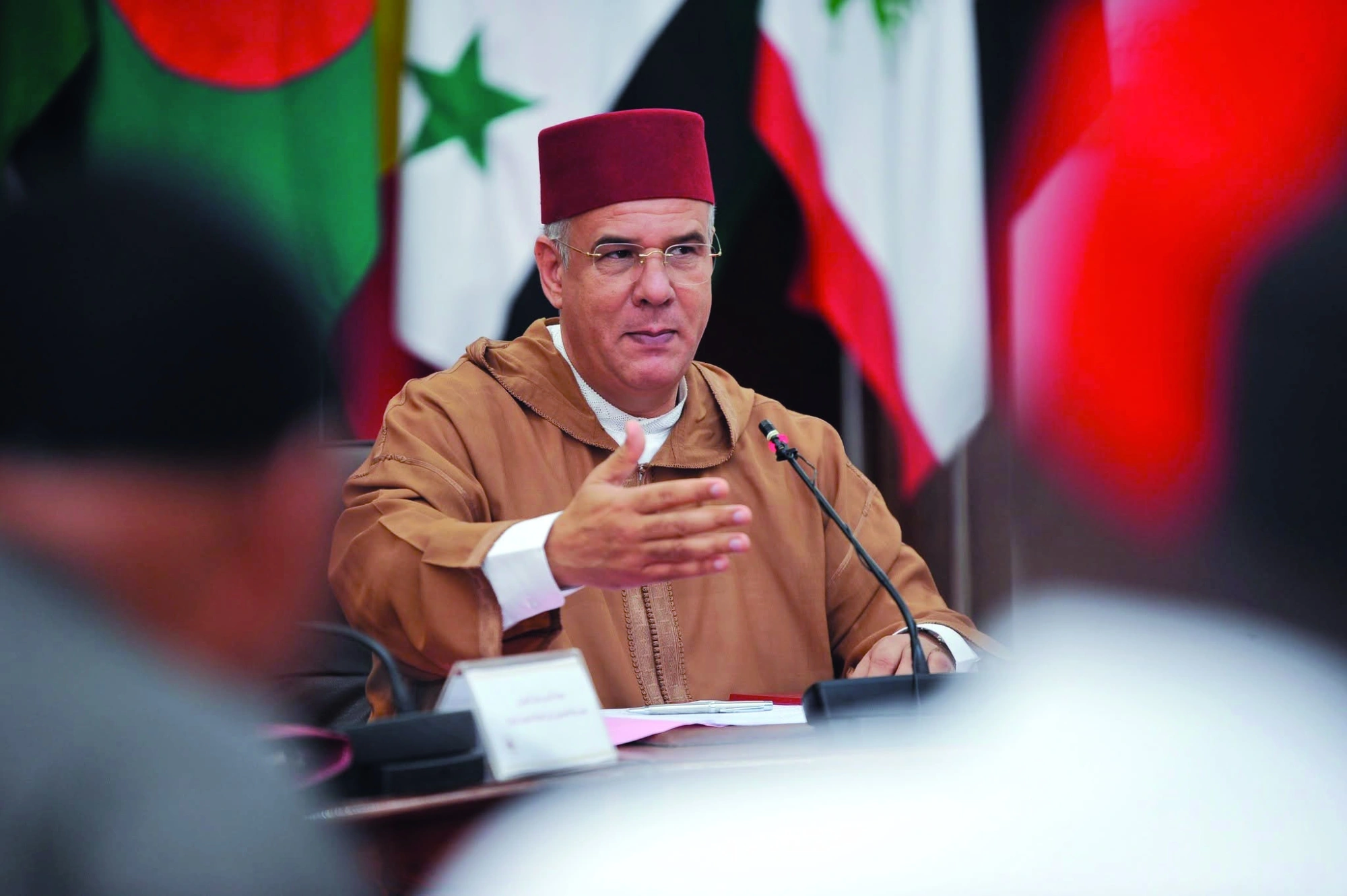
The Bayt Mal Quds Agency, led by Mohammad Salem Al-Sharqawi, has outlined its vision for Jerusalem's future, focusing on sustainable development and economic empowerment. As the designated manager of the agency, Al-Sharqawi emphasized that King Mohammed VI, in his capacity as Chairman of the Jerusalem Committee, prioritizes the protection of Jerusalem and support for its inhabitants and institutions. The agency's strategy aims to transition from direct aid to sustainable development, focusing on economic and social empowerment.
The agency's vision for 2030 is built around three strategic pillars: effective governance, digitalization, and quality standards; improving and diversifying funding sources; and a comprehensive plan to support social sectors from 2027 to 2030. Al-Sharqawi highlighted that the agency's interventions will focus on preserving Jerusalem's historical, cultural, and religious heritage, while promoting the resilience of its residents through innovative programs for economic and social empowerment.
The agency's strategy involves a shift from providing direct aid to empowering and sustaining the local community. This approach includes supporting productive associations, emerging businesses, and farmers, while promoting the use of digital platforms to enhance transparency and efficiency. Al-Sharqawi emphasized that local stakeholders in Jerusalem will be partners in planning and implementation, rather than just recipients of aid.
The agency's plan for 2027-2030 includes ten programs that combine continued basic interventions with new areas responding to social, economic, and technological changes. The plan is supported by an annual budget of $7 million, supplemented by additional resources mobilized through partnerships. Al-Sharqawi stressed that the plan prioritizes sustainability, ensuring that each donation has a lasting impact and reaches the intended beneficiaries.
The agency's vision for 2030 also focuses on building a cumulative record that consolidates achievements and opens up new opportunities. This includes investing in human capital, entrepreneurship, and innovation, while promoting a culture of transparency, integrity, and accountability. Al-Sharqawi highlighted that the agency's funding has been entirely Moroccan since 2011, with an annual budget of around $3 million for operational costs and $4 million for projects.
The agency's strategy has been informed by consultations with local stakeholders, including institutional, economic, and social actors, as well as Islamic and Christian religious leaders. These consultations have helped shape the agency's plan, which aims to address the needs and priorities of the local community. Al-Sharqawi emphasized that the agency's work in Jerusalem is a testament to Morocco's commitment to supporting the city's inhabitants and institutions.
The agency's vision for Jerusalem's future reflects its commitment to sustainable development and economic empowerment. By prioritizing local partnerships, transparency, and accountability, the agency aims to make a lasting impact in the city. As Al-Sharqawi noted, the agency's work is guided by the principles of sustainability, integrity, and accountability, ensuring that its efforts have a lasting and positive impact on the lives of Jerusalem's residents.
Key points
- The Bayt Mal Quds Agency's vision for 2030 prioritizes sustainable development and economic empowerment in Jerusalem.
- The agency's strategy involves a shift from direct aid to empowering and sustaining the local community.
- The agency's plan for 2027-2030 includes ten programs that combine continued basic interventions with new areas responding to social, economic, and technological changes.