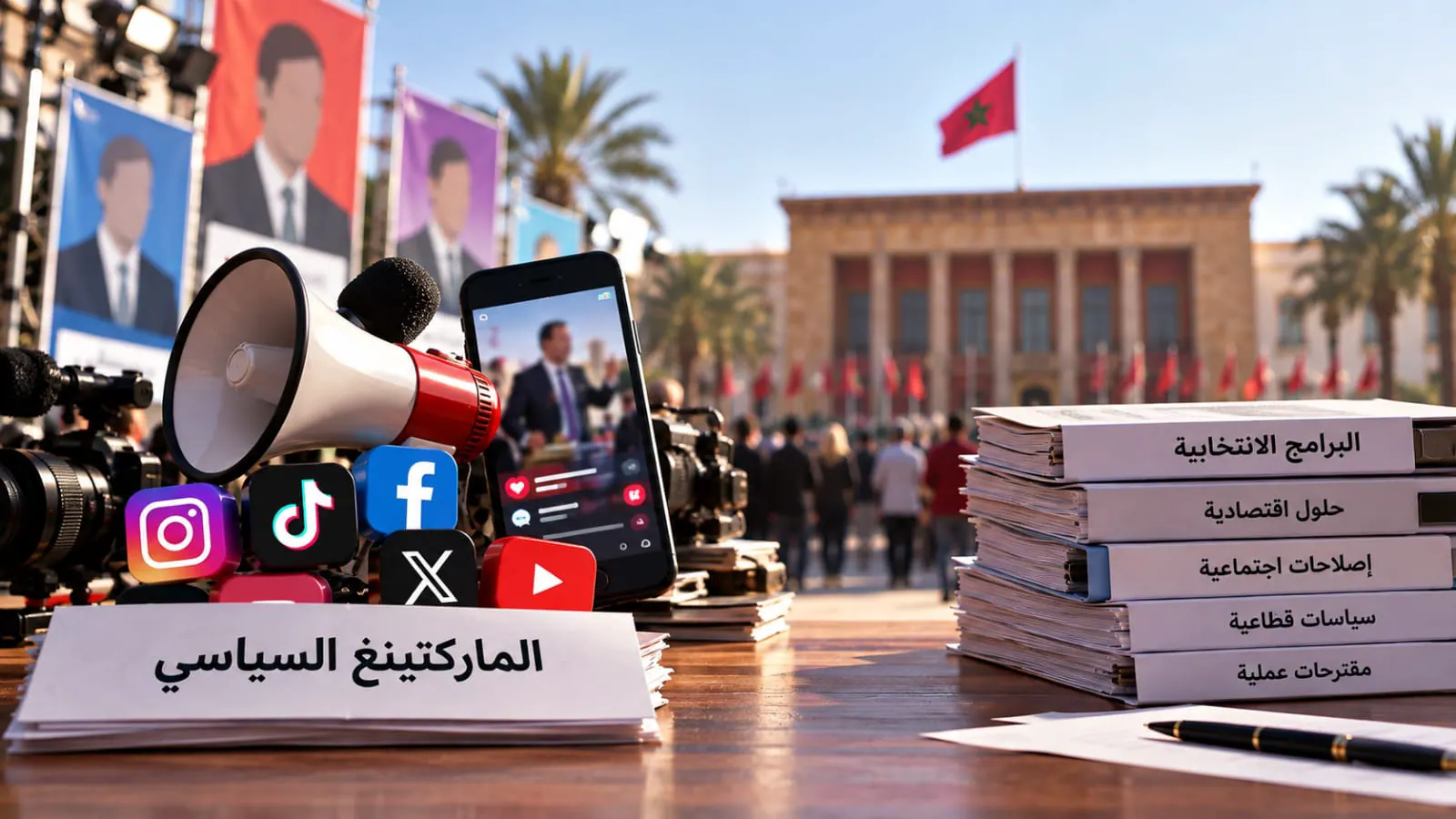
The 2026 Moroccan elections have raised questions about the impact of political marketing on the country's political landscape. According to a recent article by Al-Massae, the elections have highlighted the growing importance of political marketing in Morocco. The article notes that the competition for votes is no longer limited to traditional campaign methods, but also involves new tools and strategies. These changes have sparked debates about the significance of political communication and the influence of marketing on leadership and presence.
The use of digital platforms has become increasingly important in Moroccan politics. During the 2026 elections, parties utilized these platforms to present their candidates and messages directly and quickly to voters. This approach enabled them to have greater control over their public image. However, the effective use of these tools requires significant resources, including funding, specialized teams, and high-quality production. The article suggests that not all parties have equal access to these resources, which can impact their ability to reach their target audience.
The concept of political marketing has emerged as a crucial aspect of modern campaigns. It encompasses more than just promoting a party or candidate; it involves building an image, crafting messages, identifying target audiences, and managing media presence. Effective political marketing can make a candidate more visible and prominent, but it does not necessarily reflect the strength of their political project. The article notes that some parties may have well-defined ideas and positions, but lack the resources to communicate them effectively.
The 2026 elections have demonstrated that political marketing is now a key component of campaign strategies in Morocco. However, it is essential to consider the relationship between marketing and substance. While marketing can make a message more accessible, it cannot replace the content and quality of a party's platform. The article warns that when the focus shifts from the idea itself to its presentation, the substance of the message can be lost.
The article highlights the challenges of evaluating the impact of political marketing on election outcomes. The costs associated with digital advertising do not necessarily reflect the total expenditure on political communication, which includes production, consulting, and campaign management. Therefore, it is difficult to assess a party's strength solely based on their marketing efforts.
The 2026 Moroccan elections have shown that political marketing is just one of several factors that influence voter choice. Other factors, such as candidate profiles, local organization, and campaign discourse, also play a significant role. The article concludes that the outcome of the elections cannot be attributed solely to political marketing, but rather to a combination of factors.
As Morocco continues to evolve, the role of political marketing is likely to remain significant. The article suggests that parties must strike a balance between marketing and substance to effectively communicate their vision and values to voters. Ultimately, the 2026 elections have underscored the importance of understanding the complex interplay between marketing, substance, and voter choice in Moroccan politics.
Key points
- The 2026 Moroccan elections highlighted the growing importance of political marketing in shaping the country's political landscape.
- Effective political marketing requires significant resources, including funding, specialized teams, and high-quality production.
- The outcome of the elections cannot be attributed solely to political marketing, but rather to a combination of factors.