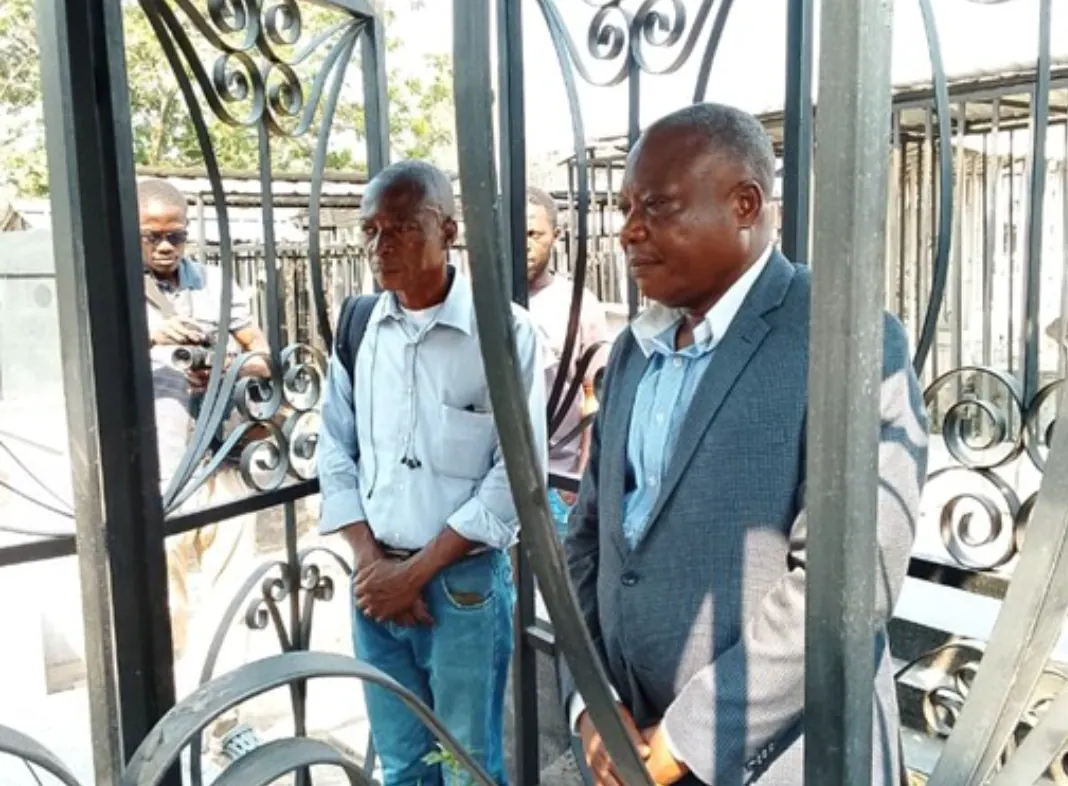
The proposal to erect a monument in memory of Dr. Nico was made on September 23, 2026, at his gravesite in Kinshasa's Gombe cemetery. Colonel Donat Liwoke, a retired military magistrate and expert on Congolese rumba, suggested that a monument would help recognize the guitarist's legacy, whose works continue to be popular among the public. Dr. Nico's music remains widely enjoyed, with many of his songs still being shared on social media platforms like Facebook.
Dr. Nico, whose real name was Nicolas Kasanda wa Mikalayi, was a key figure in the development of Congolese music. According to Herman Bangi Bayo, vice-president of the National Commission for the Valorization of Rumba, Dr. Nico was one of the pioneers of Congolese rumba and introduced new techniques and sounds to the genre. He, along with Dechaud Mwamba, established the use of a solo guitar and an accompanying guitar in orchestras, revolutionizing the music scene in 1953.
The impact of Dr. Nico's music on Congolese culture cannot be overstated. Bangi Bayo noted that Dr. Nico's contribution to the guitar was significant, as he made the instrument "speak" in a way that was not previously done. He also introduced the use of the hawaiian guitar and tam-tam luba in Congolese rumba. The vice-president of the National Commission for the Valorization of Rumba emphasized that Dr. Nico's legacy must be preserved and celebrated.
The commemoration of Dr. Nico's 41st anniversary of death was marked by a gathering at his gravesite, where colleagues and fans paid their respects. Bangi Bayo stressed the importance of honoring Dr. Nico's memory, citing his influence on Congolese music and his continued popularity globally. Dr. Nico's music is studied in Europe and the United States, and his legacy continues to inspire new generations of musicians.
To ensure the preservation of Dr. Nico's heritage, Bangi Bayo proposed organizing conferences, concerts, and specialized programs, as well as teaching his work in schools and universities. He emphasized that Dr. Nico's song "Indépendance Cha Cha" remains an iconic piece of Congolese music, and that his memory should be honored through continued celebration of his work.
Colonel Donat Liwoke reflected on the enduring power of Dr. Nico's music, stating that although he is no longer alive, his legacy continues to inspire and influence new generations. Liwoke expressed his admiration for Dr. Nico, whom he had known since 1966, and emphasized the importance of preserving his musical heritage.
Dr. Nico passed away on September 22, 1985, at the age of 51, leaving behind a rich musical legacy. His contributions to Congolese music have been recognized globally, and his influence can still be felt in the music scene today. The proposed monument is seen as a way to further honor his memory and cement his place in Congolese musical history.
Key points
- A monument has been proposed in Kinshasa to honor Dr. Nico's legacy and contributions to Congolese music.