In a surprising turn of events, Mohammed Abacha and Hamza al Mustapha faced charges in 1999 for the murder of Kudirat Abiola, a vocal advocate for democracy in Nigeria. This marked a significant moment for the country as it signaled the new civilian government's willingness to confront past alleged atrocities, even those implicating powerful figures, after years of military rule. The charges were brought against Abacha, the son of former dictator General Sani Abacha, and al Mustapha, a high-ranking security official.
Kudirat Abiola, the wife of the acclaimed winner of the annulled 1993 presidential election, Moshood Abiola, became a powerful voice for democracy in Nigeria. Her activism was a direct challenge to the military government of General Sani Abacha, which had detained her husband. On June 4, 1996, gunmen assassinated Kudirat Abiola in Lagos while she was traveling in her white Mercedes Benz. The assassination was carried out by an operation codenamed "Operation Cika Aiki" using an F-90 submarine gun.
The murder of Kudirat Abiola sent shockwaves across Nigeria and internationally, underscoring the brutal political climate of the 1990s. The killing became a potent symbol of the struggle for Nigeria's return to civilian rule and the sacrifices made. Kudirat's driver, Dauda Atanda, also died from injuries, while her personal assistant, Lateef Shofolahan, escaped unharmed. The case highlighted the need for accountability and justice in Nigeria's transition to democracy.
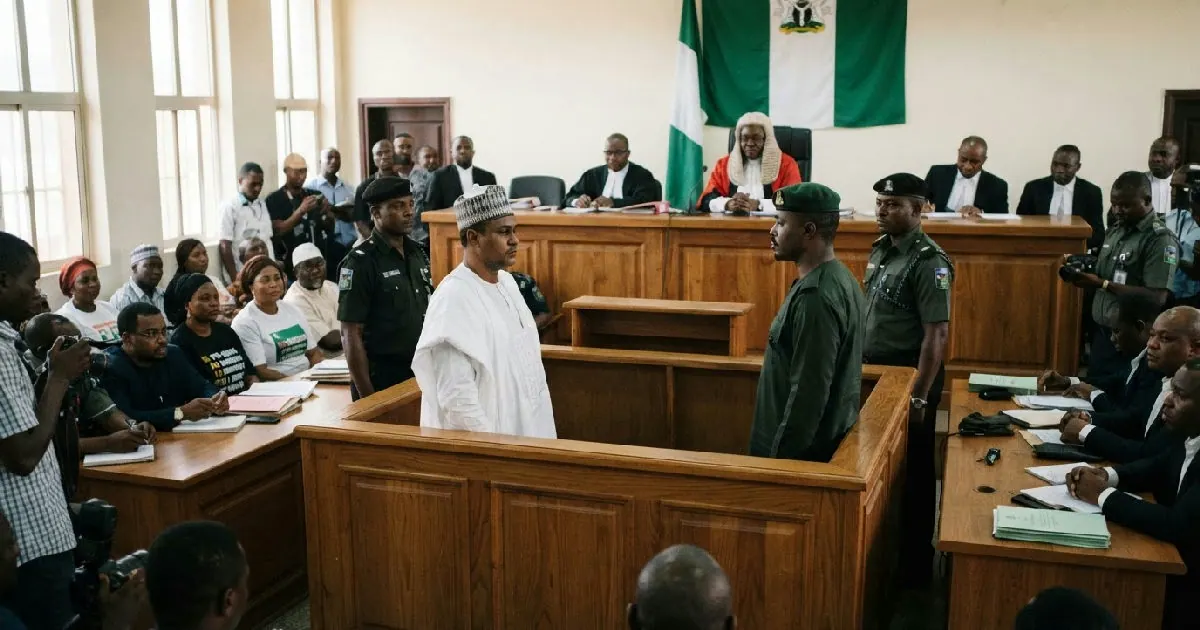
After General Sani Abacha's death in June 1998 and Nigeria's transition to civilian government in May 1999, the political landscape shifted dramatically. President Olusegun Obasanjo's new administration took a different stance on past alleged crimes. On October 14, 1999, Mohammed Abacha, Major Hamza al Mustapha, and several others appeared before a Lagos magistrate's court, facing charges of murder and conspiracy in connection with Kudirat Abiola's assassination.
The prosecution team, at various stages, included prominent legal figures like Prof. Yemi Osinbajo and Mr. Lawal Pedro. The case wound its way through Nigeria's judicial system for over two decades, illustrating the inherent difficulties in prosecuting politically charged cases. In 2002, the Supreme Court ruled that a sufficient prima facie case had not been established against Mohammed Abacha, effectively ending his involvement in the trial.
Sergeant Barnabas Jabila Mshiela, also known as "Sergeant Rogers," confessed in May 2000 to personally shooting Kudirat Abiola with an Uzi gun, testifying that al Mustapha gave the order for "Operation Cika Aiki." However, Sergeant Rogers later recanted parts of his earlier testimony in October 2009. Despite the challenges posed by shifting testimonies and prolonged proceedings, the Lagos State High Court eventually convicted al Mustapha and Lateef Shofolahan of Kudirat's murder in 2012.
The convictions of al Mustapha and Shofolahan were overturned on appeal in 2013, citing "weak and unreliable evidence." The state sought to challenge this acquittal at the Supreme Court, but procedural delays plagued the appeal for years. Finally, on January 22, 2026, the Supreme Court dismissed the state's outstanding appeal, effectively bringing the long-running Kudirat Abiola murder case to a close.
Key points
- The 1999 charges against Mohammed Abacha and Hamza al Mustapha marked a significant moment in Nigeria's transition to democracy, as the new government sought to hold past officials accountable for alleged atrocities.
- The case highlighted the brutal political climate of 1990s Nigeria, where dissent was often met with severe repression.
- The Supreme Court's 2026 dismissal of the state's appeal brought an end to the protracted Kudirat Abiola murder case, which had lasted over two decades.