The Mohamed bin Zayed Foundation for Humanity has announced a $135 million commitment to improve access to lifesaving medicines, medical equipment, and healthcare technologies across nine African countries. This investment seeks to address persistent shortages in hospitals and clinics, reduce preventable maternal and newborn deaths, and strengthen primary healthcare services. The initiative will benefit more than 500 health facilities in Ethiopia, Kenya, Liberia, Malawi, Nigeria, Rwanda, Ghana, Sierra Leone, and Mozambique.
The Foundation's contribution is expected to mobilize more than $550 million in additional financing from governments and development partners, potentially bringing the combined investment to over $685 million. Under the co-financing arrangement, each participating government will contribute at least an equivalent amount to the Foundation's country-level investment. This approach places African governments at the center of efforts to address national healthcare priorities, increase domestic health financing, and sustain improvements in medical services.
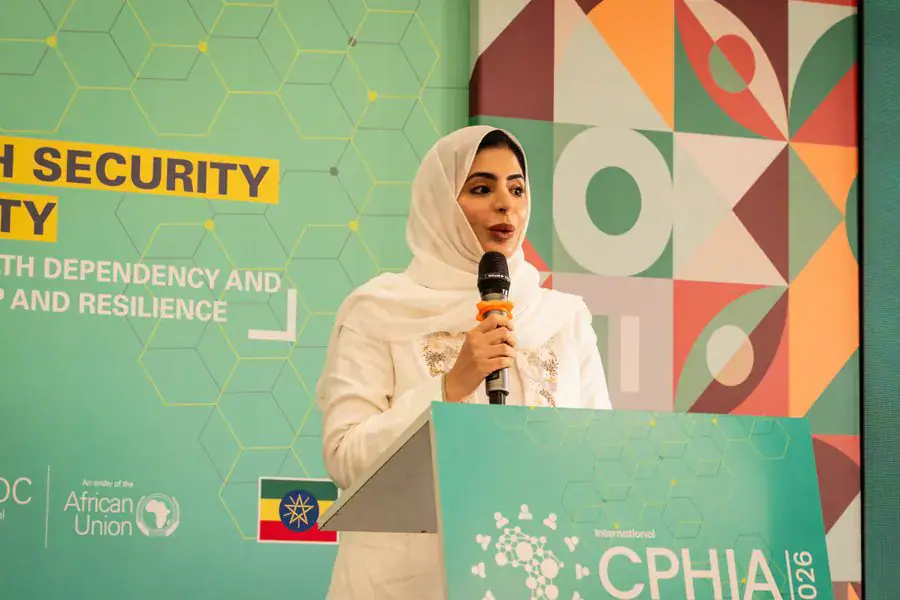
Dr. Shamma Khalifa Al Mazrouei, Director General of the Mohamed bin Zayed Foundation for Humanity, emphasized the importance of partnerships with African governments to reduce preventable maternal, newborn, and child deaths. She noted that skilled health workers are essential to this vision, but their ability to save and improve lives depends on having ready access to the medicines and equipment they need. The Foundation's commitment comes at a time when shortages of essential medicines and medical equipment continue to undermine healthcare delivery across Africa.
According to World Health Organization figures, more than half of African countries experience shortages of essential health products, including medicines and vaccines. In sub-Saharan Africa, two-thirds of emergency childbirth facilities lack some of the essential resources needed to provide round-the-clock care. The Foundation's investment will support national healthcare programs, with particular emphasis on maternal and newborn survival, diagnostic services, and access to essential medicines.
The countries set to benefit from the initiative include Ethiopia, which will receive the largest confirmed country allocation of $25 million, followed by Kenya and Nigeria, with $20 million each. Rwanda will receive $15 million, while Ghana, Liberia, and Malawi have each been allocated $10 million. Mozambique and Sierra Leone will receive $5 million each. These investments will help equip health facilities with essential medicines and medical technologies, such as advanced ultrasound equipment and antibiotics.
Ethiopia provides an encouraging example of how philanthropic contributions can attract substantially larger investments in public healthcare. The Mohamed bin Zayed Foundation for Humanity was the first partner to commit funding to Ethiopia's Reproductive, Maternal, Newborn and Child Health (RMNCH) Compact, with an initial pledge of $20 million. This contribution helped secure a further $151.2 million from development partners, with the combined amount matched by the Ethiopian government, bringing total financing under the compact to $342.4 million.
In Rwanda, the Foundation's $15 million commitment will help provide essential medical equipment to 170 health facilities, including district and teaching hospitals. The program will provide equipment to help medical personnel manage excessive bleeding after childbirth, alongside incubators and respiratory support systems for premature and critically ill newborns. This initiative aims to sustain improvements in maternal and child health, with Rwanda's Minister of Health, Dr. Sabin Nsanzimana, highlighting the country's progress in this area over the past two decades.
Key points
- The Mohamed bin Zayed Foundation for Humanity has pledged $135 million to improve healthcare in nine African countries.
- The initiative aims to address persistent shortages in hospitals and clinics, reduce preventable maternal and newborn deaths, and strengthen primary healthcare services.
- The Foundation's contribution is expected to mobilize more than $550 million in additional financing from governments and development partners.
Reporting sources
- Mohamed bin Zayed Foundation Pledges $135 Million to Strengthen Healthcare Across Africa · Pan African Visions