The modernisation of the Kalemie–Manono road, spanning 427 kilometers and 323 meters in the Tanganyika province of the Democratic Republic of Congo, is progressing. This strategic road corridor is crucial for enhancing mobility, facilitating goods transport, and strengthening economic connections within the province. The project aligns with the country's vision of modernising infrastructure, promoting integrated development, and boosting economic growth.
The project is part of a broader national effort to modernise infrastructure and develop provinces, as envisioned by President Félix Tshisekedi. The government, led by Prime Minister Judith Suminwa, is committed to coordinating and monitoring major projects and partnerships. The Agence de pilotage, de coordination et de suivi des conventions de collaboration (APCSC) is overseeing the project, ensuring effective coordination and implementation.
The Kalemie–Manono road has been divided into three lots to facilitate its realisation. Lot 1, executed by CREC7, stretches from PK 0+000 to PK 107+500 and has a global execution rate of 76.88%. The general site preparation is at 83%, while road works, including land clearing, recharging, and culvert construction, are at 70.4%. The roadbed, including platform and foundation works, is at 88.51%.
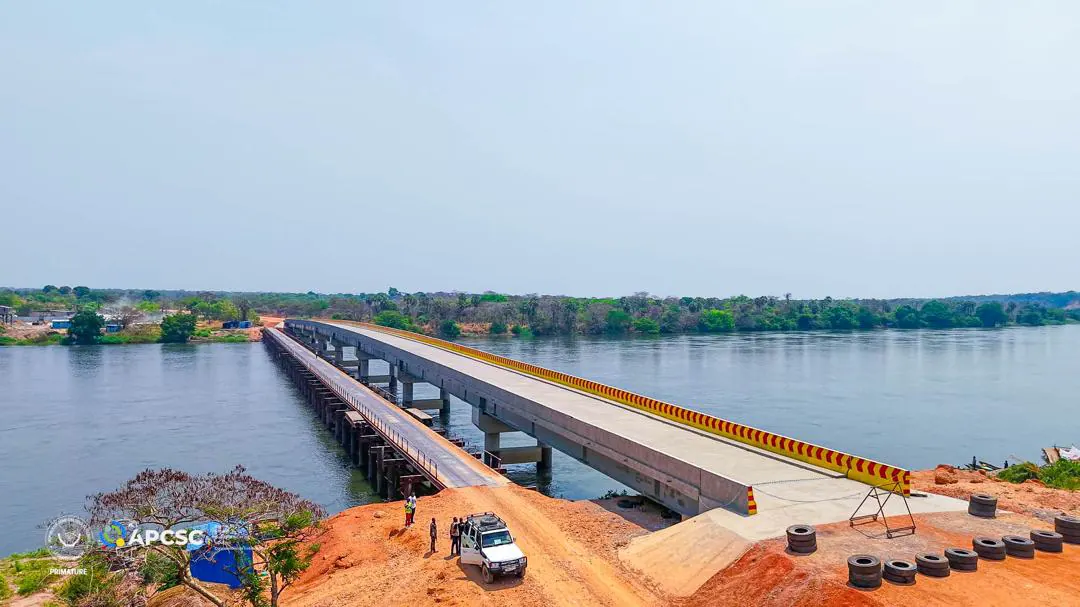
The APCSC reported significant progress on Lot 1's infrastructure, including a 96.86% completion rate for the Luvua bridge and 100% for another 44-meter bridge. However, certain components, such as security installations and toll-related works, remain to be finalised. Lot 2, between PK 107+500 and PK 255+550, is executed by Qiaoyang and has a global execution rate of 75%.
On Lot 2, the general site preparation is at 83%, while road works are at 71.26%. The roadbed is at 65.33%, and most of the infrastructure, including bridges, culverts, and drains, is complete. Lot 3, also executed by Qiaoyang, spans from PK 255+550 to PK 427+323 and has a global execution rate of 45%. Road works are at 39%, while the roadbed is at 40%.
Despite progress, certain works remain to be completed, including security installations, toll-related works, and auxiliary installations. The APCSC, under the leadership of its Director General, Me Freddy Yodi, aims to reinforce its role in facilitating, coordinating, and catalysing major investment projects in collaboration with public institutions, private partners, and stakeholders.
The modernisation of the Kalemie–Manono road is expected to contribute significantly to the economic development and integration of the Tanganyika province. The project will improve connectivity, facilitate trade, and enhance the overall quality of life for residents. The APCSC's efforts to monitor and coordinate the project's implementation will be crucial to its success.
Key points
- The modernisation of the Kalemie–Manono road is a strategic project aimed at improving connectivity and promoting economic development in the Tanganyika province.
- The project is part of a broader national effort to modernise infrastructure and develop provinces, as envisioned by President Félix Tshisekedi.
- The project has been divided into three lots, with varying levels of completion, and is expected to contribute significantly to the economic development and integration of the Tanganyika province.