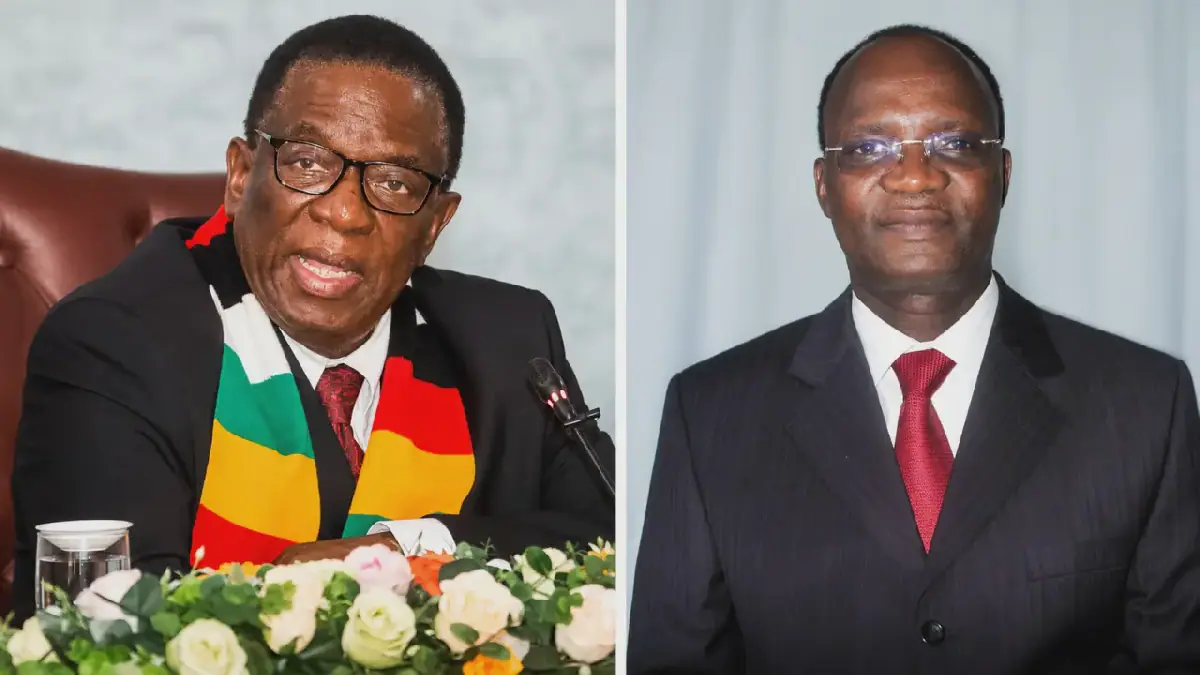
Zimbabwean President Emmerson Mnangagwa recently met with exiled former Information Minister Jonathan Moyo in Nairobi, Kenya, at the Villa Rosa Kempinski hotel. The meeting took place on November 26, 2026, shortly after Mnangagwa's arrival in the city. According to reports, Mnangagwa's first order of business was the meeting with Moyo, which was attended by several high-ranking officials, including Justice Minister Ziyambi Ziyambi and Attorney General Virginia Mabhiza.
The meeting has renewed attention to claims that Jonathan Moyo played a role in shaping the country's constitutional amendments, known as CAB3. Moyo was hired by Ziyambi and businessman Kudakwashe Tagwirei to provide a framework for the changes, which include postponing elections from 2028 to 2030 and extending Mnangagwa's term of office by two years. The project reportedly involved a payment of around $5 million to Moyo and his associates.
Moyo produced a document called the Breaking Barriers Initiative, which was used as the basis for the Constitutional Amendment Bill. The bill has faced opposition and is currently being challenged in the Constitutional Court. Mnangagwa had previously denied working with Moyo on the constitutional changes, but the meeting in Nairobi has lifted the veil on Moyo's involvement.
The changes to the constitution have been widely criticized, with many arguing that they are aimed at consolidating Mnangagwa's power and undermining democratic processes. The Constitutional Court is set to hear applications challenging the amendments, which could have significant implications for Zimbabwe's future.
The meeting between Mnangagwa and Moyo has also raised questions about the role of other key players, including Tagwirei and Temba Mliswa. Tagwirei reportedly met with Chief Justice Elizabeth Gwaunza to influence her to rule in favor of the amendments, while Mliswa has been tasked with intimidating constitutional court judges.
The developments have sparked concerns about the erosion of democratic institutions and the rule of law in Zimbabwe. Mnangagwa's government has faced criticism for its handling of opposition and dissent, and the meeting with Moyo has renewed questions about its commitment to democratic principles.
The opposition and civil society groups have called for greater transparency and accountability in the country's governance. The Constitutional Court's decision on the amendments will be closely watched, both domestically and internationally, as it has significant implications for Zimbabwe's future and its relations with the international community.
Key points
- Mnangagwa's meeting with Jonathan Moyo revives claims that Moyo helped shape the country's constitutional amendments.
- The constitutional changes have faced opposition and are being challenged in the Constitutional Court.
- The developments have sparked concerns about the erosion of democratic institutions and the rule of law in Zimbabwe.