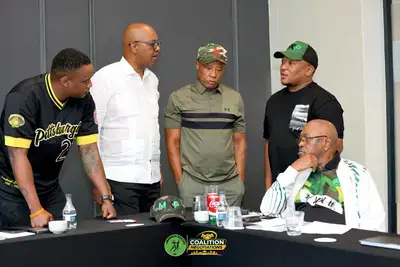
The uMkhonto weSizwe Party (MK Party) has emerged as a significant force in KwaZulu-Natal, securing the largest vote share in 19 of the province's 34 hung councils. Despite this, the party faces significant hurdles in forming coalitions to govern these municipalities. In its maiden elections, the MK Party secured 45% of the provincial vote but failed to form a government due to botched coalition negotiations. The party has since appointed a seven-member team, led by Duduzane Zuma, to spearhead negotiations in hung councils.
The MK Party's negotiations began with backtracking, with party spokesperson Sifiso Mahlangu and advocate Dali Mpofu expressing opposing views on the party's posture in engagements with other parties. Mahlangu ruled out working with the DA, citing policy differences, while Mpofu stated that the party was open to talks with the DA to unlock a governing pact in some hung councils. The party's leader, Jacob Zuma, has invited the DA to discuss coalition possibilities, and Mpofu confirmed that the party would approach these discussions with an open book.
The MK Party secured an outright majority in the rural council of Impendle, gaining six out of 11 council seats, and also secured 56.27% of the vote in Richmond municipality, walking away with 10 of the 17 council seats. Both councils were previously considered ANC strongholds. The party's performance has made it a key player in the province, with significant influence in municipalities such as eThekwini metro, the heart of the provincial economy, and the City of uMhlathuze on the north coast.
Other parties, such as ActionSA, are also vying for power in key municipalities. ActionSA leader Zwakele Mncwango stated that his party was meeting all parties that had secured seats in various municipalities, but with caution. He expressed a desire to occupy the position of mayor in eThekwini to bring about change, but emphasized that any coalition formed must work for ordinary people. ActionSA holds seven seats in the eThekwini metro council, making it a key power broker.
The DA in KwaZulu-Natal has initiated coalition discussions with smaller parties, with the goal of pushing out the MK Party and forming a slim majority. DA leader Sithembiso Ngema stated that the party was committed to building a KZN that works for everyone, with core values including clean and accountable government, rooting out corruption, and upholding the rule of law. The IFP, another key player, has emphasized that stability in municipalities is among its non-negotiables.
Professor Musa Xulu, a social researcher and political commentator, believes that it is unlikely that the ANC will strike a governing pact with its splinter party, the MK Party. Xulu cited the hurt caused to the ANC by the formation of the MK Party and the party's subsequent takeover by Jacob Zuma in 2023. He expects that coalition partners in the KZN government of provincial unity will prefer to keep arrangements with smaller parties like ActionSA.
The outcome of the coalition negotiations will have significant implications for the province, with stability in municipalities crucial for attracting investors and creating job opportunities. While the MK Party has secured significant support, it remains to be seen whether it can form coalitions to govern key municipalities. The ANC, DA, and IFP alliance may bring stability to hung councils, but the MK Party's influence is likely to be a factor in the negotiations.
Key points
- The MK Party commands the biggest vote share in 19 of 34 hung councils in KwaZulu-Natal.
- The party faces significant hurdles in forming coalitions to govern these municipalities.
- The outcome of the coalition negotiations will have significant implications for the province's stability and economic development.
Reporting sources
- Big votes but bigger hurdles for MK Party · Mail & Guardian