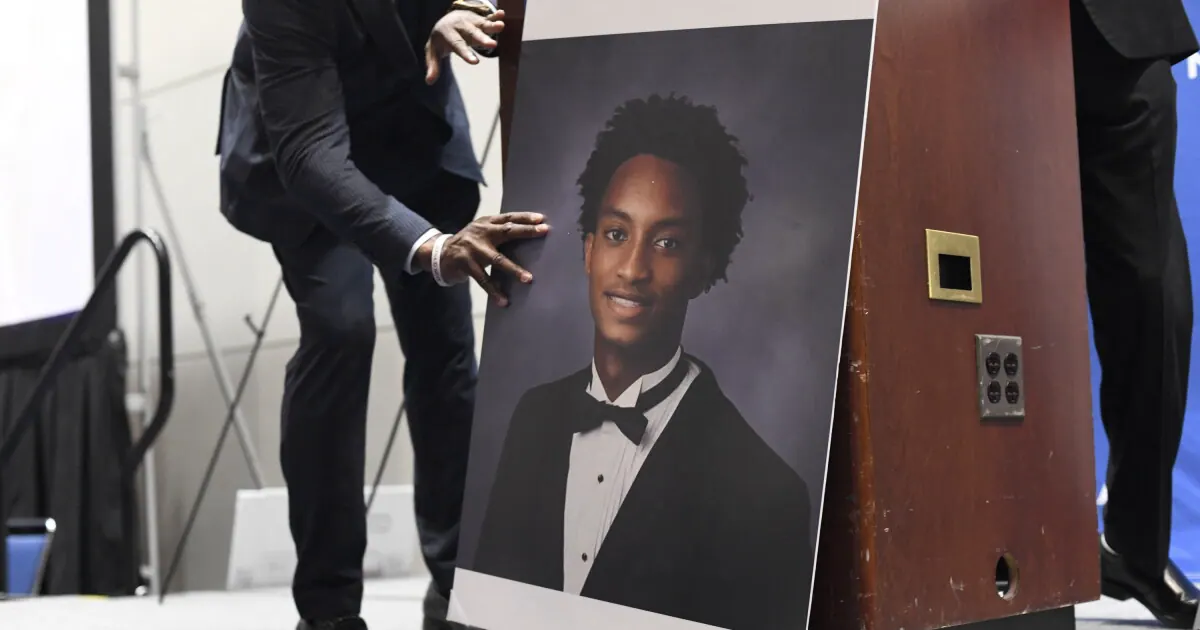
A Mississippi grand jury has concluded that there is no credible evidence to support allegations of criminal conduct related to the death of Nolan Wells, a teenager found dead off the Mississippi coast in early July. The grand jury met from September 14 to September 18 and heard from over 40 witnesses. They reviewed evidence including GPS data, cellphone extractions, photos, and videos from Horn Island, where Wells was last seen.
The grand jury found that Wells' cause of death was consistent with drowning, based on the location of his body and multiple autopsies. The cause of death is listed as undetermined, but drowning is considered a likely diagnosis by exclusion. Wells was found dead on Horn Island on July 6, after boating there with friends on July 4 to celebrate Independence Day. He was the only member of his group who did not return from the trip.
The grand jury report states that Wells chose to stay on Horn Island on the afternoon of July 4, which was not considered unusual or suspicious. The report also found that the accounts of the boat occupants who went out that day were true, including reports of one boat taking on water and needing to be towed. District Attorney Angel Myers McIlrath stated that there was no evidence to contradict Wells' decision to stay on the island.
The grand jury found that a thorough search of Horn Island was conducted on July 5, and it is likely that Wells' body would have been discovered during the search if it had been on the island at that time. The report does not provide further information on why Wells' body was found a day later. Civil rights attorney Ben Crump, representing Wells' family, released a statement saying that the grand jury's decision does not resolve the questions surrounding Wells' death.
An independent autopsy performed by Dr. Roger Mitchell found that the cause and manner of death were undetermined, and drowning was considered a diagnosis by exclusion. Crump previously claimed that Mitchell did not have access to parts of Wells' body, but the grand jury report states that Mitchell confirmed he received all body parts, except internal neck structures. Bruises were found on Wells, but they were not considered fatal injuries.
Crump's team released an independent autopsy report recommending that the investigation remain open due to uncertainties surrounding Wells' death. The report noted that the available record does not definitively establish Wells' condition before entering the water or how he got there. District Attorney Myers McIlrath stated that the Crump team had no evidence of a crime being committed against Wells after conducting their independent autopsy.
The investigation into Wells' death has been contentious, with his parents expressing concerns that law enforcement moved too quickly in assuming foul play was not involved. They also raised questions about deleted messages on Wells' phone, which was found at a friend's house the day his body was discovered. Myers McIlrath defended the secrecy of the grand jury, stating that it was necessary to protect the integrity of the investigation.
Key points
- The grand jury found no credible evidence to support allegations of criminal conduct related to Wells' death.
- The cause of death is listed as undetermined, but drowning is considered a likely diagnosis by exclusion.
- The investigation into Wells' death has been contentious, with questions raised about the handling of evidence and communication with Wells' family.