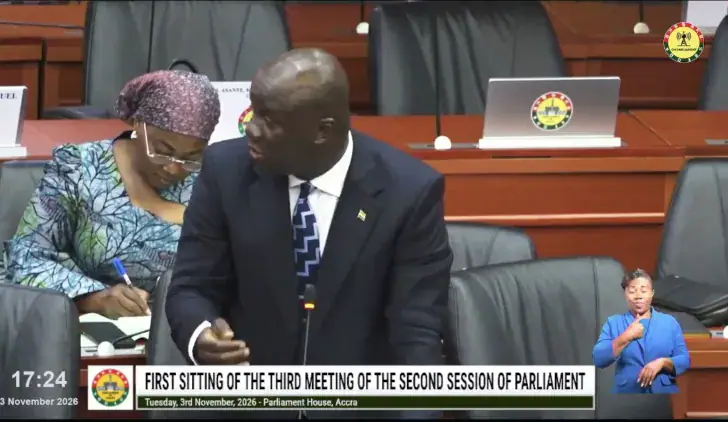
On Tuesday evening, the Minority Caucus in Ghana's Parliament staged a walkout in solidarity with MP Samuel Abu Jinapor, who was ordered out of the Chamber by Speaker Alban Sumana Kingsford Bagbin. The incident occurred during a debate on allegations that Ghanaian diplomatic passports were being sold. Mr. Jinapor, the MP for Damongo, had raised concerns about reports that passports were being sold for amounts ranging from $10,000 to $50,000, describing it as a threat to the country's international reputation.
According to Mr. Jinapor, there was "unimpeachable evidence" that diplomatic passports were being sold, and he called for the matter to be investigated. He pointed out that only the Foreign Affairs Minister had the authority to grant diplomatic passports, which were subject to a thorough process due to their privileges and international responsibilities. The MP emphasized that the issuance and use of diplomatic passports had far-reaching implications for Ghana's standing and reputation on the international stage.
However, the Majority Leader, James Agalga, objected to Mr. Jinapor's statement, arguing that it constituted a serious allegation of criminal conduct that required substantiation. He urged the Speaker to direct Mr. Jinapor to withdraw the allegation and provide evidence to support it. The Speaker subsequently directed Mr. Jinapor to withdraw the allegation, assuring him that he could return to the matter with the necessary evidence.
Mr. Jinapor initially indicated that he would withdraw the statement and return to the issue through the appropriate parliamentary process. However, the Speaker considered his response insufficient and instructed the Marshall to walk him out of the Chamber. This move prompted the Minority MPs to stage a walkout in solidarity with their colleague. The Minority Leader, Alexander Afenyo-Markin, later described the Speaker's action as "harsh, high-handed and mostly unfair" to Mr. Jinapor.
Mr. Afenyo-Markin argued that the issue of diplomatic passports was a matter of public interest and should have been allowed to proceed for investigation. He believed that MPs did not necessarily have to establish all the facts before raising matters requiring parliamentary scrutiny. The Foreign Affairs Minister could have been invited to make a statement on the matter, with Parliament considering a bipartisan committee if further investigation became necessary.
The walkout by the Minority MPs was a show of solidarity with Mr. Jinapor, who had insisted that he had evidence to support his claim. The incident has sparked debate about the role of Parliament in scrutinizing matters of public interest and the limits of MPs' powers to raise allegations. The Speaker's decision has been questioned by some, who argue that it undermines the principles of parliamentary democracy.
The incident has also raised concerns about the sale of diplomatic passports and its implications for Ghana's international reputation. The government has not officially commented on the allegations, but the opposition has called for a thorough investigation into the matter. The incident is likely to continue to generate controversy and debate in the coming days.
Key points
- The Minority MPs walked out in solidarity with Abu Jinapor after he was ordered out of Parliament for refusing to withdraw allegations of selling diplomatic passports.
- The incident has sparked debate about the role of Parliament in scrutinizing matters of public interest and the limits of MPs' powers to raise allegations.
- The allegations of selling diplomatic passports have raised concerns about Ghana's international reputation and the need for a thorough investigation.