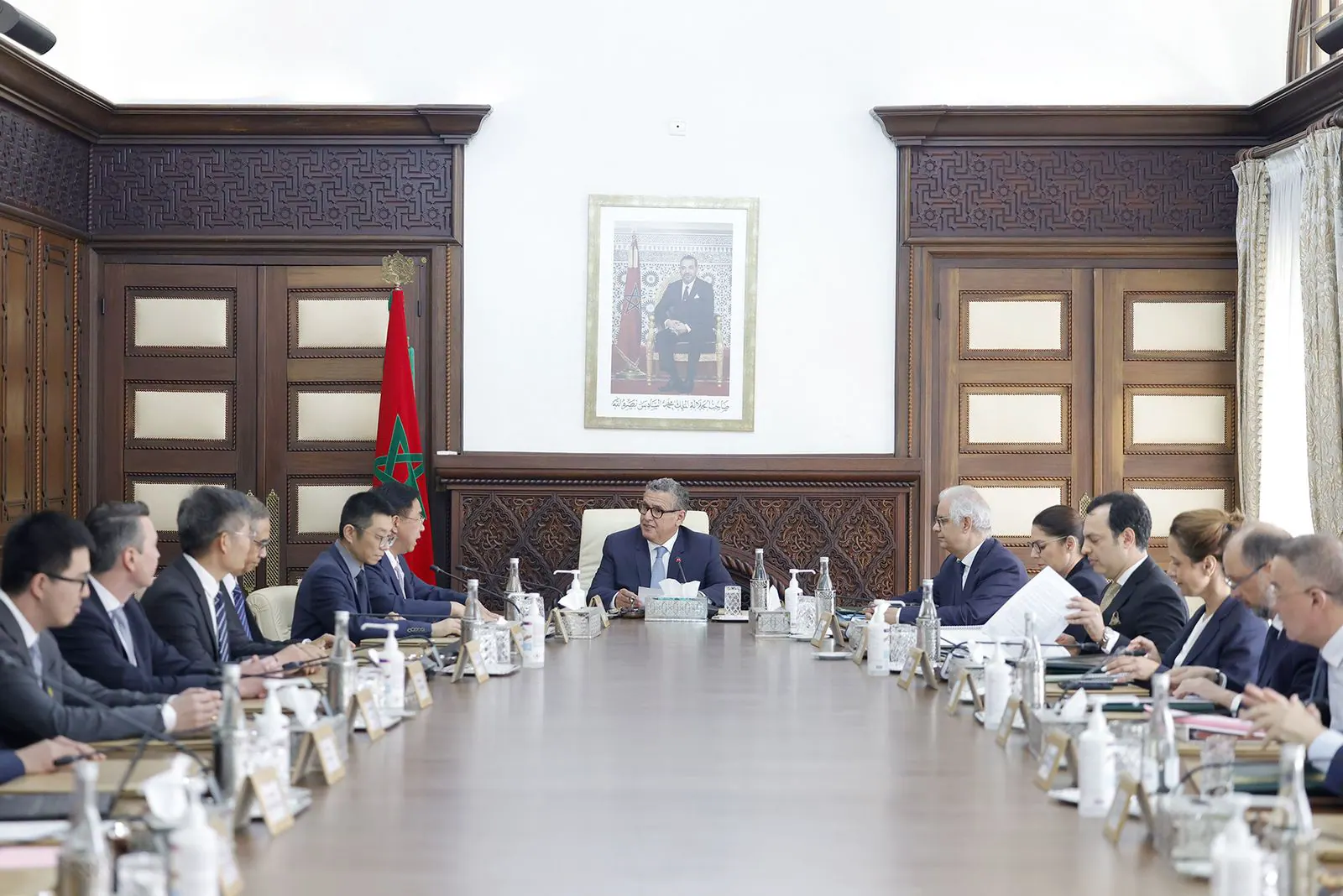
In Morocco, 14 members of Prime Minister Aziz Akhannouch's government must step down following their election wins on September 23. The cause of their departure lies in a legal incompatibility, as the law prohibits combining government membership with parliamentary seats. Consequently, these ministers or their substitutes will be assigned to other government members to carry out their tasks in an acting capacity.
The departing ministers belong to three parties participating in Akhannouch's government: the Authenticity and Modernity Party (PAM), the National Rally of Independents (RNI), and the Independence Party (PI). The largest number of departing ministers come from PAM, which won the most seats in the recent elections. They include Fatima Zahra Mansouri, Minister of National Territory Planning, Urban Planning, Housing, and City Policy; Abdel Latif Wahbi, Minister of Justice; and Mohamed Mehdi Bensaid, Minister of Youth, Culture, and Communication.
From the RNI party, the ministers who must leave are Mustapha Bayita, Minister Delegate in charge of Relations with Parliament and Government Spokesperson; Ahmed Bawari, Minister of Agriculture, Fisheries, Rural Development, Water, and Forests; and Hassan Sadki, State Secretary for Traditional Industry, Social Economy, and Solidarity. Zakia Dyrious, State Secretary for Fisheries, also belongs to the RNI party.
The Independence Party will see the departure of Nizar Baraka, Minister of Equipment and Water; Riyad Mazour, Minister of Industry and Trade; Abdel Samad Qiyouh, Minister of Transport and Logistics; and Omar Hajira, State Secretary for Foreign Trade.
The recent elections took place on September 23, 2026, under a new electoral system aimed at improving the quality of the electoral process, promoting political life, and enhancing transparency and fairness. The elections saw a significant turnout, with various parties competing for seats in the parliament.
Following the elections, some parties have begun forming alliances and groups within the parliament. For instance, the Constitutional Union and the Social Democratic Movement have formed a joint parliamentary group, citing their shared values and experiences in working together.
The election results have also led to reactions from various quarters, with some experts analyzing the implications for the future government and the country's political landscape. The winning parties have begun strategizing for the next phase, while the losing parties are assessing their performance and planning for future challenges.
Key points
- Fourteen government members in Morocco must leave their posts due to a legal incompatibility with holding parliamentary seats.
- The departing ministers belong to the Authenticity and Modernity Party (PAM), the National Rally of Independents (RNI), and the Independence Party (PI).
- The recent elections took place under a new electoral system aimed at improving the quality of the electoral process and promoting political life.