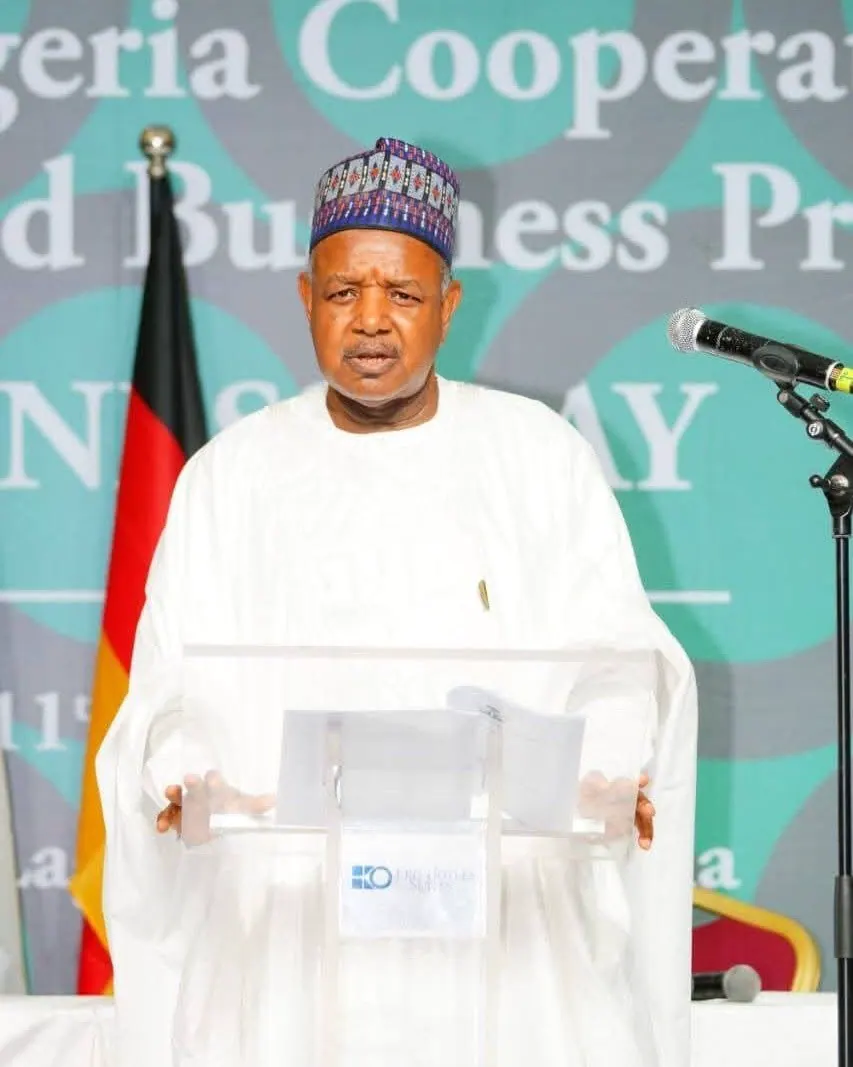
The Federal Government of Nigeria is seeking deeper industrial cooperation with Germany to bring down the cost of building materials, particularly cement. This move aims to expand Nigeria's manufacturing and construction capacity. Minister of Budget and Economic Planning, Senator Abubakar Atiku Bagudu, disclosed this at the Germany-Nigeria Industrial Technology Conference in Abuja.
The proposed partnership with Germany will focus on attracting investment, technology, and equipment into key sectors, including cement, mining, construction, infrastructure, and industrial processing. According to Bagudu, Nigeria's economic transformation requires a stronger partnership with the private sector and greater access to modern industrial technology. The government is working to remove structural bottlenecks and improve the investment environment.
President Bola Ahmed Tinubu's economic reforms are designed to create an environment where private businesses can invest, expand productive capacity, generate employment, and create value. Bagudu emphasized that Nigeria's ambition to build a $1 trillion economy by 2030 cannot be achieved without significant private-sector investment and increased domestic value addition. The minister identified manufacturing, mining, construction, and infrastructure as areas with substantial opportunities for German companies.
German companies can play a major role in Nigeria's drive to expand production and reduce industrial costs, particularly in materials handling, cement and minerals processing, digitalisation, and environmental technologies. According to Dr. Chux Onaa, Head of the VDMA delegation, these technologies can help Nigerian industries improve productivity, reliability, and long-term competitiveness. The German Engineering Federation is committed to converting the engagement into concrete opportunities for technology transfer, investment, and industrial collaboration.
The longstanding relationship between Nigeria and Germany provides a strong foundation for expanded private-sector partnerships. Deputy Head of Mission at the German Embassy in Nigeria, Ambassador Johannes Lehne, noted that Nigeria's ongoing economic reforms have improved trade prospects and the business environment. Various financial instruments are available to enable German and Nigerian companies to scale up investments.
A high-level mission involving 14 leading German companies operating in the cement, mining, construction, and industrial technology sectors visited Nigeria to identify investment opportunities and areas for industrial development. The conference, hosted by the German Engineering Federation in collaboration with the German Embassy in Nigeria, brought together government officials, German engineering and technology companies, Nigerian businesses, financial institutions, and industry stakeholders.
Discussions at the conference focused on industrial investment, technology transfer, infrastructure development, and mechanisms for strengthening economic cooperation between Nigeria and Germany. The German export credit guarantee framework of €300 million is an important component of the expanding economic relationship between both countries. This framework, along with other financing mechanisms, can support the partnership and provide competitive funding for projects.
Key points
- Nigeria seeks $1 trillion economy by 2030
- German companies can invest in cement, mining, construction, and infrastructure
- €300 million German export credit guarantee framework to support partnership