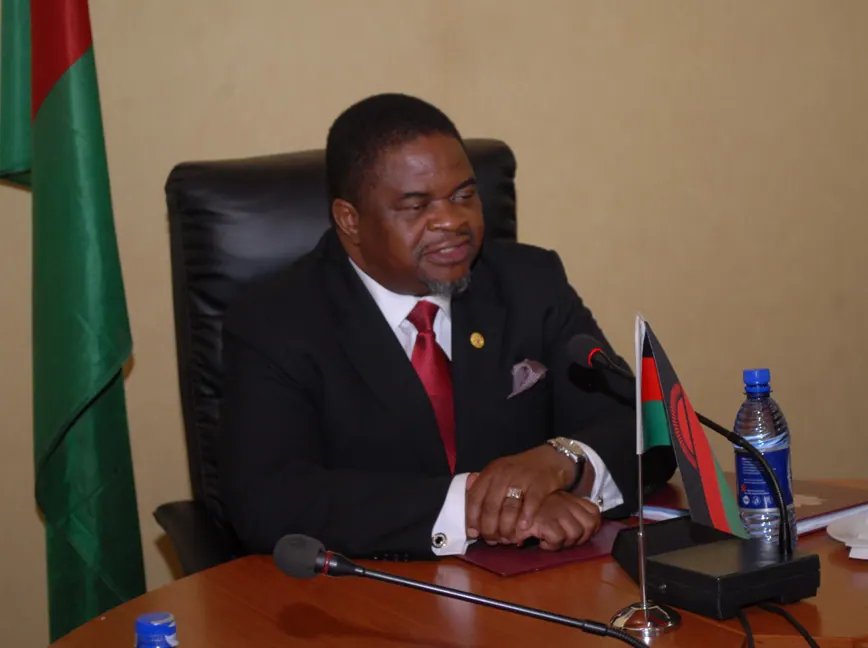
Malawi's Minister of Education, Science and Technology, Bright Msaka, has urged the country's universities to support the government's efforts in generating foreign exchange. During a ceremony in Blantyre, Msaka questioned why Malawi's universities do not contribute to the country's forex generation by enrolling more international students who would pay their fees in dollars. He cited neighbouring Zambia as an example where universities are a significant source of forex.
Msaka emphasized that Malawi has a lot of students studying in Zambia, paying fees in dollars, and that the country can replicate this model. He encouraged universities to improve their services and make them attractive to foreign students, particularly from Europe. By doing so, these students would bring in much-needed foreign exchange. The minister stressed the importance of implementing reform commitments, stating that Malawi is known for its visions but often fails to execute them.
The minister's call to action was echoed by various university vice-chancellors who highlighted their institutions' reform commitments. Malawi University of Business and Applied Sciences (Mubas) Vice-Chancellor, Associate Professor Nancy Chitera, reported that her institution has made significant progress in expanding its resource mobilisation. Mubas has operationalised its agricultural mechanisation unit, focusing on tractor assembly and spare parts production.
University of Malawi Vice-Chancellor, Professor Samson Sajidu, outlined three key reform commitments. These include establishing strategic partnerships, diversifying finance mobilisation streams, and expanding and rehabilitating infrastructure. The university aims to shift from project-specific partnerships to long-term strategic relationships. Meanwhile, Malawi University of Science and Technology Vice-Chancellor, Associate Professor Mwapasa Mipando, highlighted three reform areas: process efficiency through digital transformation, stronger governance, and corporate sustenance through revenue diversification.
Other university vice-chancellors also shared their institutions' reform commitments. Kamuzu University of Health Sciences Vice-Chancellor, Professor MacPherson Mallewa, stated that his institution's reform area focuses on research and innovation, revenue generation, and teaching and learning. Besides the four public universities, Malawi National Examination Board (Maneb) and Malawi Institute of Education (MIE) also signed their commitment areas.
Maneb executive director, Dorothy Nampota, reported that her institution is focusing on modernising exam infrastructure and security systems. MIE acting executive director, Jennings Kayira, stated that the institution is working on curriculum review and transitioning from an outcome-based to a competence-based curriculum. These commitments aim to improve the education sector and contribute to the country's economic growth.
The signing ceremony marked a significant step towards implementing public sector reforms in the education sector. Minister Msaka urged the institutions to fully own and implement their reform commitments, stressing the need for early warning systems to ensure timely execution. The government aims to see these commitments implemented within the stipulated period.
Key points
- Universities in Malawi are challenged to generate foreign exchange by enrolling more international students.
- The country's education sector is implementing public sector reforms to improve services and contribute to economic growth.
- Various universities have outlined their reform commitments, focusing on areas such as research, revenue generation, and infrastructure development.