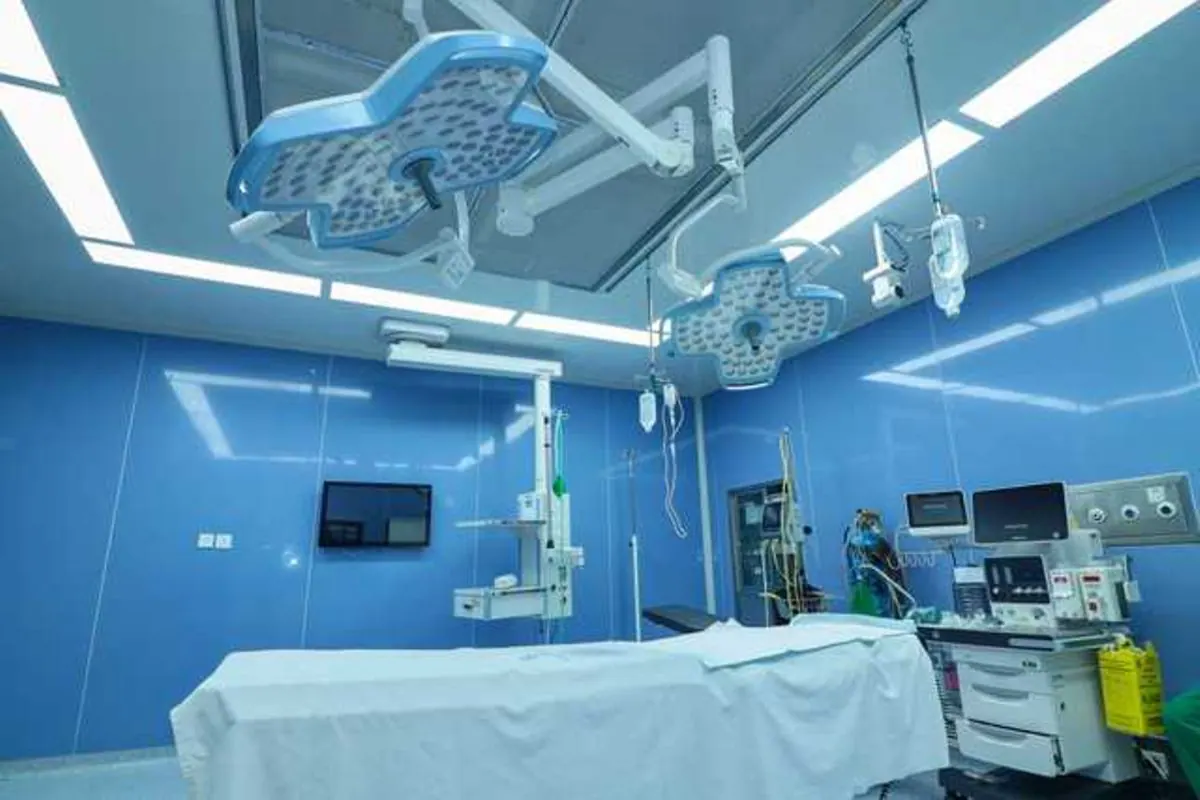
Kenyan hospitals are increasingly adopting minimally invasive surgery procedures, providing patients with a less painful alternative to traditional surgeries. These techniques, including laparoscopic surgery, endoscopic procedures, natural-orifice surgery, and robotic-assisted procedures, offer reduced recovery times and lower risks of complications. Laparoscopic surgery involves inserting a small camera and instruments through tiny incisions, allowing surgeons to operate while viewing enlarged images on a screen.
The Kenyan government has reported a significant increase in minimally invasive surgeries, with 9,852 procedures performed in 2025/26, exceeding the target of 7,005 by about 41 per cent. Aga Khan University Hospital Nairobi (AKUH) has expanded its range of robotic-assisted procedures, including a robotic-assisted laparoscopic gallbladder removal and robotic removal of an ovarian cyst measuring over 10 centimetres. According to Abdulkarim Abdalla, chair of AKUH's Department of Surgery, robotic technology builds on conventional keyhole surgery, providing surgeons with a three-dimensional view of the surgical field and greater flexibility of movement.
AKUH has also been using vaginal natural orifice transluminal endoscopic surgery (vNOTES) since 2024, enabling certain gynaecological operations to be performed through the vagina instead of through abdominal incisions. This technique can be used for selected hysterectomies, removal of ovarian cysts, and treatment of ectopic pregnancies. Bob Achila, lead surgeon and consultant urogynaecologist at AKUH, noted that vNOTES avoids an external abdominal incision, operating solely through the vagina.
Public hospitals are also adopting minimally invasive surgery, with Jaramogi Oginga Odinga Teaching and Referral Hospital (JOOTRH) in Kisumu launching fully fledged laparoscopic and endoscopy services this year. The hospital acquired advanced equipment to reduce the need for patients in the Lake Region to travel to Nairobi for advanced procedures. JOOTRH Chief Executive Joshua Clinton Okise stated that the investment aims to make specialised care more accessible to patients.
Other public hospitals, such as Moi Teaching and Referral Hospital (MTRH), have also expanded their laparoscopic surgery services. In May 2025, MTRH's Shoe4Africa Children's Ward performed laparoscopic surgery on a four-year-old boy with an undescended testicle. Mbagathi County Referral Hospital performed its first laparoscopic operation in June, removing the gallbladder from a patient with painful gallstones, with the procedure fully covered by the Social Health Authority (SHA).
The cost of minimally invasive surgery varies, with estimates putting the cost of laparoscopic procedures in some private hospitals at between Sh300,000 and Sh350,000. However, Mbagathi County Referral Hospital performed the procedure for Sh212,000, which was fully covered by the SHA. Rezūm water-vapour therapy for benign prostate enlargement is also being used in Kenyan hospitals, with Kenyatta National Hospital (KNH) becoming the first public health institution in Kenya to perform the procedure in January.
Hospitals are also expanding their use of robotic surgical technology, with Metropolitan Hospital in Nairobi performing robotic-assisted knee replacement surgery on two patients in December. This made it the first hospital in East and Central Africa to use the technology for the procedure. Metropolitan Hospital's Chief Executive Kanyenje Gakombe stated that the development followed years of investment in surgical capacity, technology, and specialist training.
Key points
- Kenyan hospitals are adopting minimally invasive surgery procedures, offering patients less painful alternatives to traditional surgeries.
- The Kenyan government has reported a significant increase in minimally invasive surgeries, exceeding targets.
- Public hospitals are expanding their use of minimally invasive surgery, making specialised care more accessible to patients.