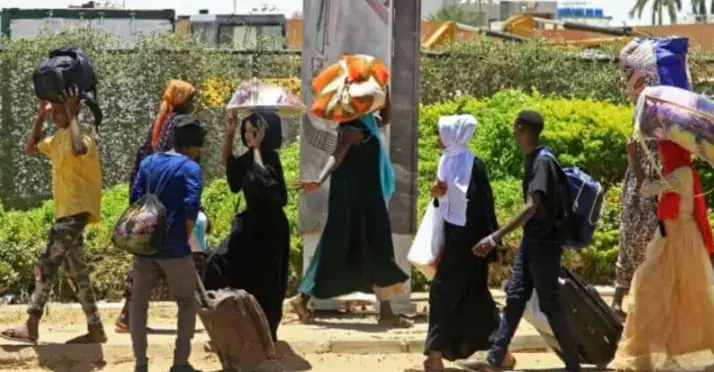
The ongoing conflict in Sudan, which began in April 2023, has resulted in millions of people being displaced from their homes, with many families forced to flee repeatedly as fighting spreads and front lines shift. According to Abubakarr Jalloh, deputy representative of the UNHCR in Sudan, nearly 15 million people in Sudan have been uprooted by the conflict or are trying to rebuild their lives in areas devastated by the fighting. This figure includes people displaced within the country, returnees, and refugees who had previously fled Sudan but were forced to escape again.
The humanitarian situation in Sudan continues to deteriorate, with host communities struggling to meet the growing needs of displaced families despite having limited resources. Jalloh noted that three in four displaced people in Sudan are women and children, highlighting the urgent need for adequate shelter and protection. He emphasized that tents provide more than protection from the elements, giving women and girls privacy and a measure of safety, while solar lamps and cooking facilities enable them to access basic necessities without exposing themselves to unnecessary risks.
As winter approaches, displaced families in Sudan face increasingly difficult conditions, with temperatures in northern Sudan potentially falling into single digits. Jalloh warned that many families are approaching winter with damaged or makeshift shelters, and that blankets could be life-saving for newborn babies and older people. In Tawila, which shelters around 900,000 people, heavy rains during the summer destroyed hundreds of tents, leaving many families without adequate shelter.
The impact of El Niño has also affected Sudan, bringing less rainfall this year and impacting harvests across Darfur, Kordofan, and other conflict-affected areas. Food prices remain high despite the harvest season, with the price of staple grains rising by as much as 40% in September. This adds to the pressure on families already struggling with inflation, leaving them with limited resources to purchase essential supplies, including blankets and safe shelter.
Delivering humanitarian assistance in Sudan has become increasingly challenging, with drones striking UNHCR trucks twice this year and destroying emergency shelter supplies intended for over 1,300 families. Despite these challenges, UNHCR and its partners continue to work to reach people in need. However, the agency's collective shelter response requires $179 million this year and has received only 35% of the funding, according to Jalloh.
Mohamed Refaat, IOM's chief of mission in Sudan, noted that humanitarian access has improved over the past year, allowing aid workers to reach more people and better understand their needs. However, he warned that Sudan's displacement crisis could worsen despite a gradual decline in the number of internally displaced people, which stands at around 8.6 million. Refaat emphasized that failure to provide assistance in Sudan could have consequences beyond its borders, with neighboring countries likely to face increased pressure if the humanitarian crisis deteriorates further.
The IOM has distributed over 40,000 tents this year but its warehouses are now empty, and the agency can only assist about one in 10 people in need of emergency shelter. Refaat called for flexible international funding to support the agency's efforts to provide shelter and assistance to displaced families and returnees. With ongoing fighting and logistical difficulties making it harder to reach vulnerable communities, the need for humanitarian assistance in Sudan remains urgent.
Key points
- UNHCR and IOM warn of looming crisis as humanitarian funding for Sudan's displaced populations dwindles
- Millions of displaced people in Sudan face increasingly difficult conditions as winter approaches
- Humanitarian assistance in Sudan has become increasingly challenging due to ongoing fighting and logistical difficulties
Reporting sources
- Millions in Sudan risk losing shelter as aid funding runs dry · Radio Tamazuj