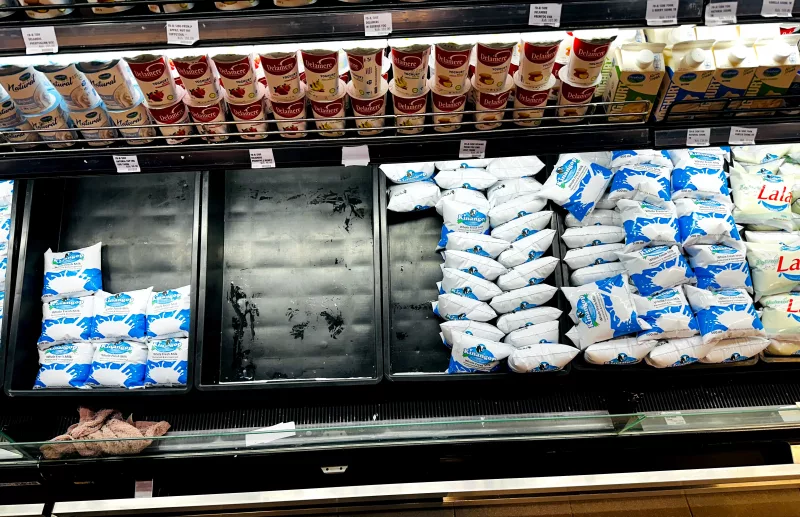
A severe milk shortage has hit Kenya, leaving many households struggling to find affordable supplies. The crisis has resulted in empty shelves and limited stocks in supermarkets across Nairobi, with shoppers being forced to visit multiple stores in search of a packet. The shortage has also led to a significant increase in prices, with some brands selling at around Sh135 per packet.
The shortage appears to be widespread, with reports from Nairobi, Kisumu, and Nakuru indicating a wider supply squeeze. Some retailers have limited the number of packets customers can buy, with signs restricting purchases to three packets per customer becoming common in some shops. The milk ATMs at some locations were idle, while raw milk, where available, cost more than Sh90 per litre.
According to the Kenya Dairy Board, formal milk intake fell from 84.4 million litres to about 81.3 million litres in July 2026. Agriculture Cabinet Secretary Mutahi Kagwe attributed the shortfall to dry spells that have depleted pastures and driven up the cost of animal feed, leaving farmers struggling to maintain production. He stated that milk deliveries to processors had dropped by 5.8 per cent.
The Consumers Federation of Kenya (COFEK) has criticised the government's handling of the crisis, describing the shortage as a foreseeable and largely avoidable policy failure. The consumer lobby says commercial animal feed costs have risen by nearly 45 per cent, putting additional pressure on smallholder farmers, who account for about 80 per cent of the country's milk supply.
The pressure on farmers has also affected how milk reaches consumers, with some farmers bypassing cooperatives and selling directly to brokers or neighbourhood customers who can offer immediate cash payments. This has potentially reduced the volumes available to formal processors. Kagwe acknowledged that the shortage had encouraged consumers to seek milk directly from farms.
The government maintains that the shortage is seasonal and expects improved rainfall to regenerate pastures and help normalise milk production. However, for many households struggling to find milk at a price they can afford, the promise of rain offers little immediate relief. Until supplies improve and prices become more predictable, the simple act of buying a packet of milk may continue to be a challenge.
The shortage has also led to changes in shopping habits, with households that would ordinarily buy one packet purchasing several at a time, adding to the rush to secure supplies before shelves are emptied. The crisis has highlighted the need for the government to address the underlying issues affecting milk production and find a long-term solution to the problem.
Key points
- The milk shortage in Kenya has been caused by a combination of drought and high animal feed costs.
- The shortage has led to a significant increase in prices, with some brands selling at around Sh135 per packet.
- The government expects improved rainfall to help normalise milk production and alleviate the shortage.