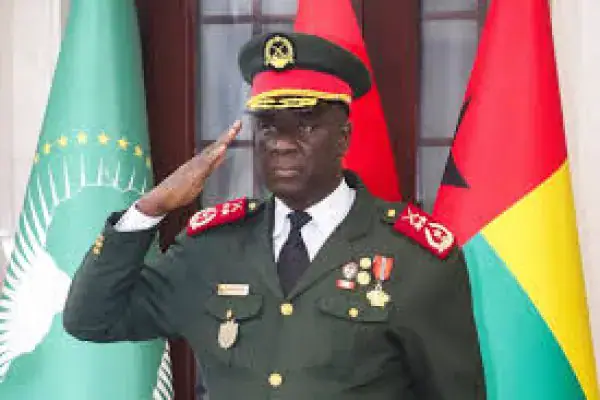
The military regime in Guinea-Bissau, led by General Horta Inta-a, has announced the postponement of the presidential and legislative elections. The elections were initially scheduled for December 6, 2026, but have been rescheduled for November 26, 2028, according to a presidential decree. The regime cites a lack of sufficient technical, material, and financial conditions as the reason for the delay.
The decree, signed by General Horta Inta-a, aims to ensure the regularity, transparency, and credibility of the electoral process, as well as the trust of citizens and political actors. This decision extends the military transition, which began on November 26, 2025, when the High Command of the army took power on the eve of the publication of the electoral results. The incumbent president, Umaro Sissoco Embaló, was ousted from power.
General Horta Inta-a, then Chief of Staff of the armies, has been leading the country since the coup. Ilídio Vieira Té, former campaign director of Embaló in the Biombo region, was appointed Prime Minister. The postponement of the elections delays the return to a civilian government, which the military had promised to organize within a rapid transition framework.
The new schedule maintains the transition regime until November 2028. The military regime had promised to hand over power to a civilian government after a short transition period. However, with this postponement, it appears that the transition will take longer than initially anticipated.
The decision to postpone the elections has raised concerns among citizens and political actors. The regime's move to delay the elections has sparked debate about the country's progress toward democracy. The international community has been following the situation closely, with many expressing concern about the country's stability.
The postponement of the elections in Guinea-Bissau has regional and international implications. The country has experienced frequent military interventions in politics, which have hindered its democratic progress. The Economic Community of West African States (ECOWAS) and other international organizations have been working to promote stability and democracy in the region.
The situation in Guinea-Bissau remains uncertain, with many questions about the country's future. The postponement of the elections has created uncertainty about when the country will transition to a civilian government. The international community will be watching closely to see how the situation unfolds.
Key points
- The military regime in Guinea-Bissau has postponed the presidential and legislative elections to November 26, 2028.
- The regime cites a lack of sufficient technical, material, and financial conditions as the reason for the delay.
- The postponement extends the military transition, which began on November 26, 2025.