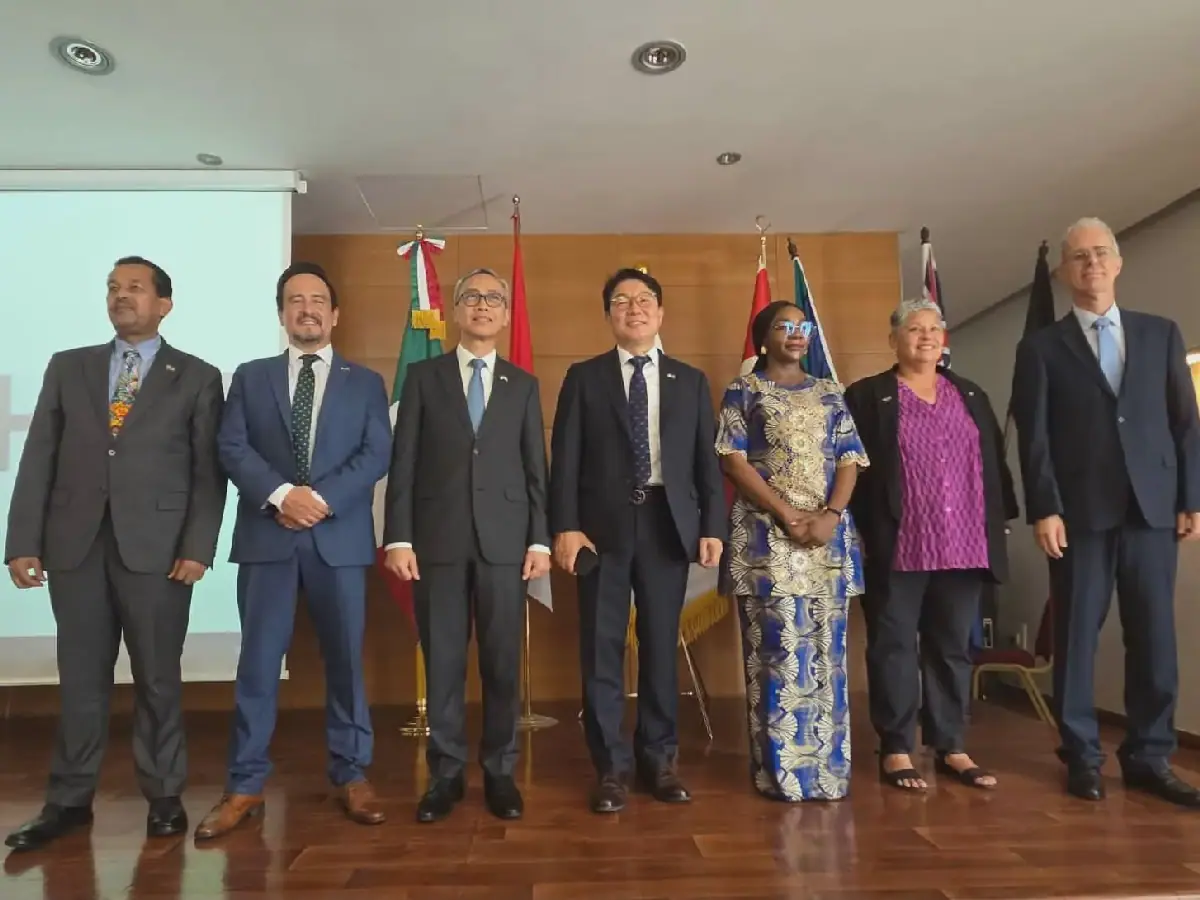
Diplomats from Mexico, Indonesia, the Republic of Korea, and Australia, collectively known as MIKTA, have called for stronger global partnerships and easier access to climate finance to help developing countries turn climate commitments into concrete action. The call was made at a roundtable on climate finance and implementation partnerships in Africa, held at the Turkish Embassy in Abuja on October 27, 2026. Nigerian government officials and other stakeholders discussed ways to mobilize investment for climate adaptation, renewable energy, sustainable agriculture, and community resilience ahead of the 31st United Nations Climate Change Conference (COP31).
The Australian High Commissioner to Nigeria, Ms Leilani Bin-Juda, emphasized that Nigeria's support would strengthen efforts to make climate finance simpler, more accessible, and responsive to the needs of vulnerable countries. She noted that developing countries often face complex application procedures, fragmented funding systems, demanding reporting requirements, and delays in accessing climate funds. Bin-Juda highlighted a Pacific-led Action Plan on access to climate finance for Small Island Developing States and Least Developed Countries, launched at Pre-COP in Fiji on October 8.
The Ambassador of Türkiye to Nigeria, Mehmet Poroy, stressed that COP31 should focus on implementing existing commitments and ensuring that climate investments deliver measurable benefits to communities. He highlighted Türkiye's Climate Implementation Bridge initiative, being developed with the United Nations Development Programme (UNDP), to help developing countries connect their climate priorities with investment-ready projects and appropriate financing sources. Poroy described Africa as a central partner in delivering meaningful climate action and said COP31 should sustain momentum towards COP32, expected to be hosted by Ethiopia in 2027.
Nigeria is estimated to require about $337 billion between 2026 and 2035 to meet its climate commitments, underscoring the need for domestic resources, international financing, and private-sector investment. The Director-General of the National Council on Climate Change (NCCC), represented by Mrs Jummai Vandu, said Nigeria was ready to work with MIKTA and other international partners to turn its climate commitments into implementable projects. Vandu identified adaptation finance, decentralized climate action, gender inclusion, and a just transition as key national priorities.
The Indonesian Ambassador to Nigeria, Bambang Suharto, disclosed that Indonesia estimated it would require about $472.6 billion to meet its climate targets, with annual financing needs of approximately $14.5 billion through 2030. Suharto called for existing international climate finance commitments to be honored and for greater assistance with project preparation to help developing countries attract investment. He expressed Indonesia's readiness to discuss a possible Indonesia-Nigeria Climate Finance and Resilience Partnership.
The South Korean Ambassador to Nigeria, Jeong Yo-an, identified renewable energy, agricultural technology, infrastructure, and green investment as areas for stronger cooperation between both countries. He highlighted a planned 2026–2030 project involving the Korea International Cooperation Agency (KOICA) and the Food and Agriculture Organization (FAO), aimed at creating green jobs for young people in agriculture and food systems. Jeong emphasized the importance of transparent regulations, reliable infrastructure, and a stable investment environment for attracting private capital into climate-related projects.
COP31 will be held in Antalya, Türkiye, from November 9 to 20, 2026, with Türkiye serving as the conference president and Australia leading the negotiations. The conference aims to turn climate ambition into practical outcomes, with a focus on implementing existing commitments and ensuring that climate investments deliver measurable benefits to communities. MIKTA countries are urging Nigeria to support climate finance reforms to help vulnerable countries access the resources needed to address climate change.
Key points
- Nigeria requires $337 billion to meet its climate commitments between 2026 and 2035.
- MIKTA countries call for stronger global partnerships and easier access to climate finance.
- COP31 will focus on implementing existing commitments and ensuring climate investments deliver measurable benefits.