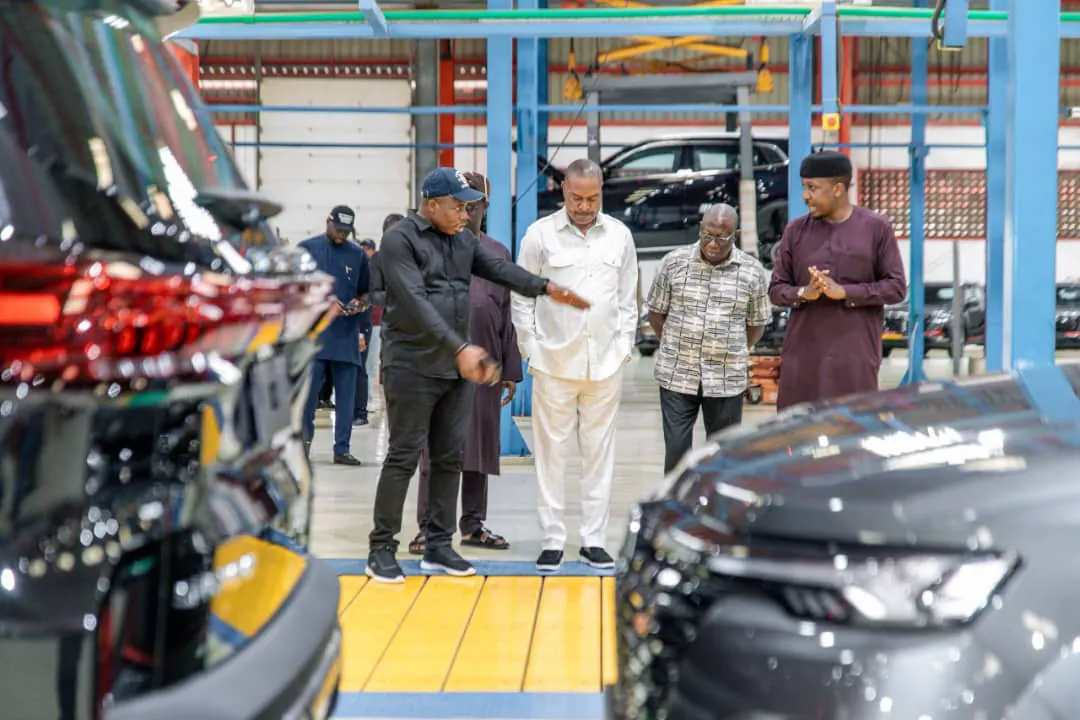
Mikano Motors, a leading Nigerian auto assembly and marketing company, has announced plans to migrate from its current Semi-Knocked Down (SKD) vehicle assembly operation to a more technologically demanding Complete Knocked Down (CKD) manufacturing operation. This move is expected to increase the company's production capacity and provide more vehicles for the local market. The National Operations Manager of Mikano Motors, Syam Abdulkadir, disclosed this during a recent oversight visit to the company's assembly plant in Lagos.
The company's current production capacity stands at between 15,000 and 20,000 vehicles annually, but actual demand in the auto market remains below this capability. Abdulkadir attributed the low demand to economic challenges affecting many sectors, which have resulted in inadequate patronage of locally assembled vehicles. He emphasized that increased patronage would provide the investment justification for manufacturers like Mikano to deepen localisation and transition to CKD production.
Mikano Motors holds the franchise for Changan and Maxus vehicles in Nigeria and currently operates a trade-in system, allowing customers to return previously purchased vehicles when upgrading to newer models. The company maintains the vehicles' service and warranty histories, enabling the returned vehicles to be channelled into the more affordable used-vehicle market. This strategy aims to improve affordability and stimulate demand for locally assembled vehicles.
The company previously manufactured high-quality brake pads locally but was forced to discontinue production due to competition from cheaper imported alternatives. Abdulkadir noted that the price differential made it difficult for locally produced components to compete, despite their higher quality and durability. However, he expressed optimism that with future support, Mikano would be more involved in local content production beyond brake pads.
The Director-General of the National Automotive Design and Development Council (NADDC), Otunba Oluwemimo Joseph Osanipin, commended Mikano Motors for its efforts in promoting local automotive manufacturing. He cited the company's former brake-pad manufacturing operation as an example of the competitive pressure confronting local component manufacturers. Osanipin noted that the locally produced brake pads were of higher quality but sold at a significantly higher price than imported alternatives.
The Chairman of the NADDC Governing Board, Chief Emma Eneukwu, observed that the workforce at the Mikano plant was predominantly Nigerian, with employees gaining practical knowledge of vehicle assembly, production processes, and manufacturing requirements. He called for stronger policy support for locally manufactured components and vehicles, arguing that manufacturers would struggle to compete where imported vehicles and components enjoyed significant cost advantages.
Eneukwu advocated for measures to regulate the importation of used vehicles, including consideration of age limits, to protect domestic manufacturing and encourage investment in local production. The NADDC Governing Board will use the information gathered during the factory visit to intensify efforts towards the actualisation of an automotive industry law, which is expected to provide a more predictable policy framework for investment, local content development, and the survival of Nigeria's automotive manufacturing base.
Key points
- Mikano Motors plans to transition from SKD to CKD production to increase its production capacity.
- The company's current production capacity is between 15,000 and 20,000 vehicles annually, but demand remains low.
- The NADDC is working on an automotive industry bill to create a more sustainable operating environment for local component manufacturers and vehicle assemblers.