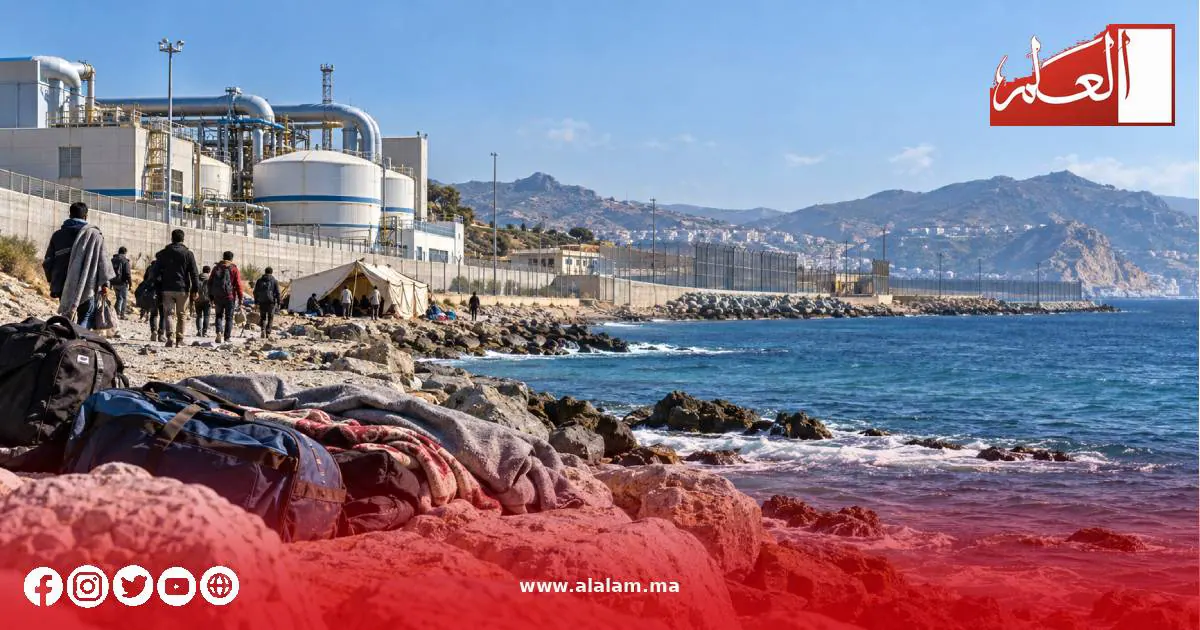
A significant security operation was carried out by the Spanish National Police on September 27 in Ceuta, a Spanish city in Morocco. The operation took place around a water desalination plant in the Benitez area, where police evacuated migrant gatherings and transferred several individuals to the Guanu area. According to local press reports, around 350 security personnel, including nearly 300 from intervention units, participated in the operation.
The intervention aimed to protect a vital facility and move migrants away from an area considered risky for them. However, the transfer of individuals did not resolve the issue, as some migrants left the Guanu area fearing it was a prelude to deportation. The operation sparked controversy over coordination between Spanish authorities, with the CSIF union criticizing the lack of prior notification to local police.
The migration issue has also taken to the streets, with hundreds of Ceuta residents marching to the Trajal border crossing on September 20. They demanded enhanced border security and greater attention from Spanish authorities to the city's situation. This mobilization reflects the growing presence of the crisis in daily life, but it preceded the evacuation of the desalination plant area by a week.
These developments are linked to events in late July, when large numbers of people crossed the border. Some cases have reached the Spanish judiciary, with Judge Maria Tardon summoning Ceuta's regional government head, Juan Jesus Vivas, and a former government representative as witnesses to investigate the circumstances of what happened.
The human dimension of the crisis remains a concern, with migrants still living in temporary gatherings and vulnerable conditions. The transfer of migrants from one site to another highlights the difficulty in providing sufficient and stable accommodation. These situations require a response that protects individuals and respects the law.
The situation in Ceuta underscores that a solely security-based approach is insufficient to address a complex crisis like this. The humanitarian response also needs institutional coordination and a clear legal framework. Between protecting facilities and residents, accommodating migrants, and investigating border incidents, there is a pressing need for a comprehensive policy.
The crisis has revived the issue of the two occupied Moroccan cities, with border, migration, security, and humanitarian issues intersecting. Ceuta remains a national issue for Morocco, a sovereign concern that is not overshadowed by daily events or transient changes.
Key points
- A wide-ranging security operation was carried out by the Spanish National Police
- The intervention aimed to protect a vital facility and move migrants
- The migration issue has also taken to the streets, with hundreds of Ceuta residents marching