A group of over 100 women gathered in front of the US embassy in Manzini, Eswatini, on July 18, 2025, to protest the secret arrival of foreign "criminals" who had been transferred to Swazi prisons. The women, fearing for the safety of their children, demanded that these prisoners be sent back to the US, where they had just been deported from. This rare display of protest in the small kingdom, where daily life is largely shaped by tradition and the monarch holds significant power, reflects the concern and uncertainty surrounding the deportations.
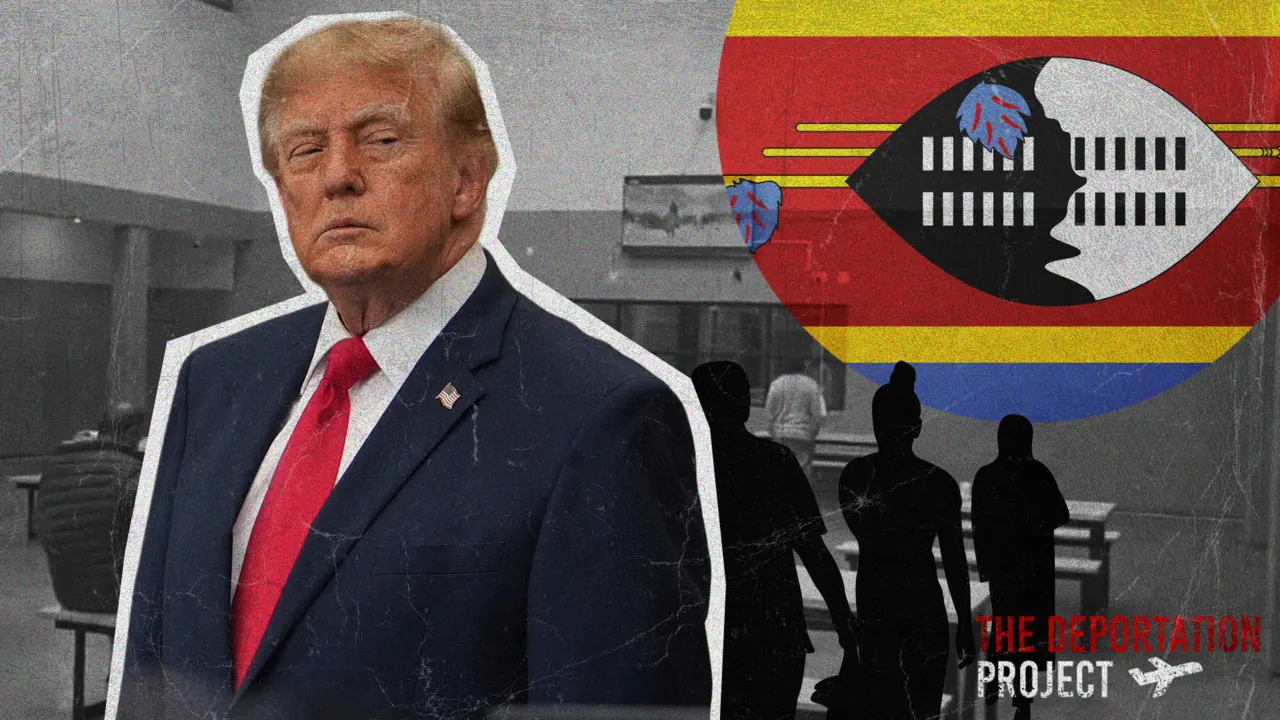
Since being deported from the US, migrants have found themselves in a country about which they know little, and where local residents view them with suspicion. The deportations are part of a programme of mass deportations investigated by "The Deportation Project", undertaken by Forbidden Stories and a network of 72 journalists across 15 countries. Four planes have discreetly touched down in Eswatini, carrying 32 migrants deported by the administration of US President Donald Trump, with plans to host 160 deportees in total.
The migrants, who come from countries such as Vietnam, Laos, Yemen, Cuba, Ethiopia, the Democratic Republic of Congo, and Jamaica, have been imprisoned in the central prison of Matsapha, near Manzini. They were previously convicted by US courts, but many have been rehabilitated and hold rehabilitation certificates. Sibusiso Nhlabatsi, a lawyer and human rights specialist, has been working to meet with the migrants and has been turned away from the prison multiple times.
Nhlabatsi took his case to the Supreme Court, which ruled in his favour in 2025, but the government appealed the decision. In March 2026, the High Court of Mbabane finally authorised the detainees to see him. Upon meeting the migrants, Nhlabatsi noted that they had been transported like a bag of potatoes, without regard for their human rights or the standards that should be met when transferring people across countries.
Dung Nguyen, a Vietnamese deportee, shared his experience with FRANCE 24 and Forbidden Stories, stating that he had never heard of Eswatini before being deported there. Nguyen was convicted of rape in 2011 and released in 2015, but was rearrested and deported to Eswatini on July 16, 2025. Despite his detention, Nguyen reported that he is not subject to the same strictures as Swazi inmates and has relatively better living conditions.
The secret arrangement between the US and Eswatini has sparked an outcry in the small kingdom, where King Mswati III has ruled since 1986 and has earned the nickname "Coca-Cola king" due to the country's significant ties with the Coca-Cola Company. The royal family controls a 40 percent stake in Eswatini Coca Cola Beverages, the authorised bottler, through the Tibiyo Taka Ngwane sovereign wealth fund.
The opposition People’s United Democratic Movement (PUDEMO) has expressed concerns about the agreement, describing it as an "evil deal". Siboniso Mkhabela, the national organising secretary of PUDEMO, stated that the relationship between the US and Eswatini has taken a turn since Trump came to power, and that the agreement on migrants has raised significant concerns about the kingdom's role in hosting deportees.
Key points
- Migrants previously convicted by US courts have been imprisoned in Eswatini as part of a secret deal struck by the Trump administration.
- The deportations have sparked concerns and protests in Eswatini, where local residents view the migrants with suspicion.
- The migrants face uncertainty and poor living conditions in Eswatini, a country that is unfamiliar to them.