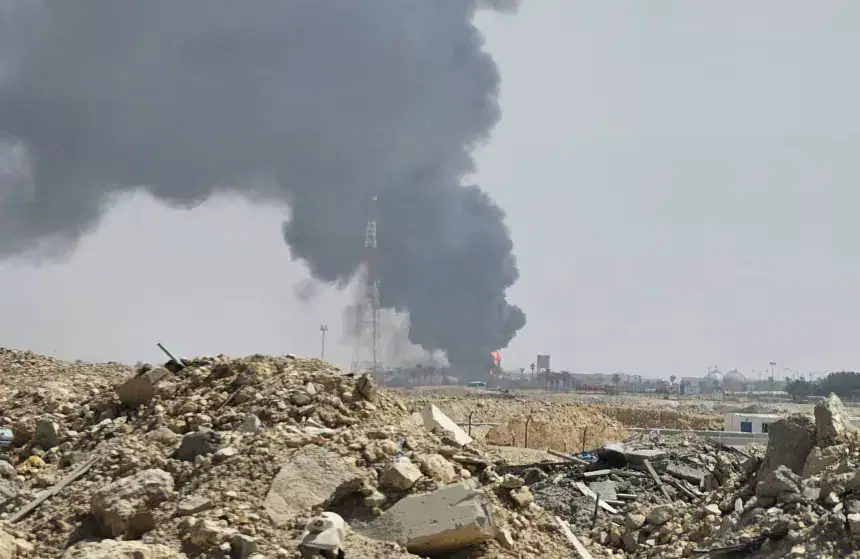
The ongoing conflict between Iran and the United States has entered its eighth month, with both sides locked in a stalemate. US President Donald Trump has offered little clarity on his endgame, oscillating between threats of further strikes and openness to possible diplomacy. This uncertainty has left people across the Middle East anxious and confused, scanning for signals on whether the conflict will reignite.
Residents in Gulf Arab countries are searching for clues that could help them make plans in case of school closures or travel disruption. A 36-year-old American national living in Saudi Arabia told CNN that she plans to leave before Tuesday's midterms, after which Trump has hinted renewed fighting is possible. "The mood has definitely shifted," she said. "People are more cautious in general, and it feels like a waiting game to see what happens."
Iran has tried to project its own deterrence, claiming it now possesses weaponry capable of striking more targets and inflicting even greater damage than before. A senior security official in Tehran told CNN that Iran will try to target infrastructure beyond oil facilities in the region, including AI. The official warned that if the conflict resumes, it will be a long "war of surprises."
Mediation is continuing, but a breakthrough would depend on at least one of the two sides breaching their own red lines. Trump wrote on social media earlier this month that Washington "will not be attacking Iran at any time prior to the midterm elections." However, his failure to rule out or confirm strikes would resume afterwards has added to the ongoing nerves.
Israel's Prime Minister Benjamin Netanyahu, who partnered the US in attacking Iran and has been pushing for new strikes, will remain in office despite losing his majority in the recent elections. Negotiations to form a new government in Israel look set to begin in earnest next week, but election results suggest it will be difficult for opposition parties to oust Netanyahu quickly.
In the absence of clarity, residents in the region often rely on hearsay or search social media for reports on troop movements to determine whether a US strike is imminent. Over the past month, Iranian military commanders have intensified a series of public messages claiming that Iran has built-up large stockpiles of new weapons, a tactic designed to induce fear among Washington's allies in the region.
Despite growing anxiety over the possible resumption of war, there has been a flurry of quiet diplomacy over the past week. US Vice President JD Vance sent Iran's top security official a message, and other international gatherings remain on track, though the risk remains that they could be disrupted if the US launches strikes in the coming week.
Key points
- The conflict between Iran and the US has entered its eighth month with no clear end in sight.
- Residents in the Middle East are anxious and confused, searching for signals on whether the conflict will reignite.
- Despite the uncertainty, there has been a flurry of quiet diplomacy over the past week, including a message from US Vice President JD Vance to Iran's top security official.