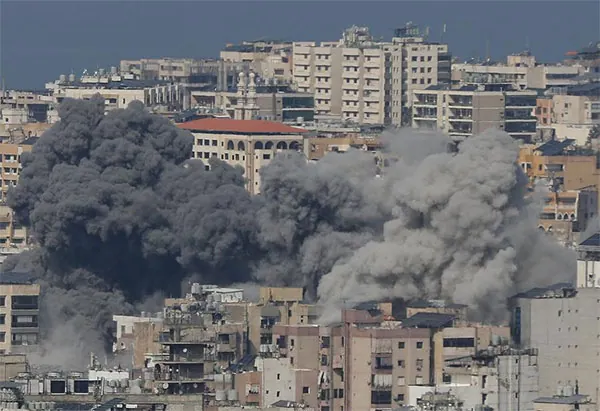
The Middle East is on the brink of a wider regional confrontation, threatening global energy markets and economies far beyond the Gulf. A targeted military strike on an airport runway in Yemen has rapidly evolved into a fresh cycle of violence, drawing in countries across the region. The conflict has raised concerns about the security of one of the world's most critical energy corridors at a time when global supply chains are already under pressure.
The Houthi forces, widely regarded as an Iranian ally, have launched a series of drone and ballistic missile attacks targeting infrastructure in southern Saudi Arabia. Over the past week, they have reportedly gained ground against the Saudi-backed internationally recognised government of Yemen, capturing strategic territories along the Red Sea coastline. These developments have heightened fears of disruptions to international trade and raised concerns about the security of maritime interests.
The situation has become even more alarming following Houthi threats against Saudi maritime interests. Reports of attacks on oil-related infrastructure, the seizure of strategic positions near the Bab el-Mandeb Strait, and threats to shipping routes have increased fears of disruptions to international trade. The risks to the global economy continue to mount, particularly with existing tensions around the Strait of Hormuz, through which a substantial share of the world's oil supplies pass.
The military strikes by the United States and Israel on Iran appear to have opened a dangerous new chapter in Middle Eastern geopolitics. The conflict may continue to widen, drawing in countries that neither initiated the confrontation nor sought to participate in it. If that happens, the Middle East could find itself engulfed in a broader war whose economic repercussions would be felt across every continent, particularly in energy-dependent regions such as Africa.
For many countries, these events may seem distant, but for Africa, the consequences could be immediate and significant. Rising geopolitical tensions in the Middle East often translate into higher fuel prices, increased transportation costs, inflationary pressures, and elevated costs of doing business. East African economies, which depend heavily on imported petroleum products, are particularly exposed to such shocks.
The continent possesses abundant oil, gas, renewable energy, and mineral resources, yet it remains highly dependent on external energy markets. Encouragingly, several regional initiatives are already pointing in the right direction. Investments in refining capacity, strategic petroleum infrastructure, and cross-border energy partnerships are gaining momentum. Projects such as Uganda's refinery initiative and the Uganda-Tanzania energy corridor through Tanga must be pursued with greater urgency and commitment.
Africa's population is projected to grow rapidly in the coming decades, increasing demand for affordable and reliable energy. To protect future generations from external shocks, leading economies such as Nigeria, South Africa, Egypt, Ethiopia, Kenya, and emerging regional players must work collectively through the African Union and regional blocs to develop large-scale energy projects financed and owned by Africans. The turbulence in the Middle East offers an important lesson: nations that depend on others for their energy security remain vulnerable to crises they neither create nor control.
Key points
- The Middle East escalation threatens global energy markets and economies.
- Africa's energy security and self-reliance are crucial to protecting future generations from external shocks.
- Regional initiatives and investments in energy infrastructure are gaining momentum.