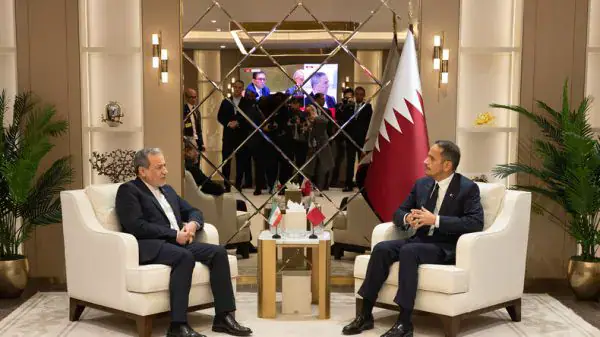
As the US and Israel consider new military options against Iran, countries in the Middle East are multiplying diplomatic initiatives to prevent a new war. With the American midterm elections approaching on November 3, regional powers are seeking to avert a conflict that could threaten their energy infrastructure and security. The Qataris are playing a central role in mediation efforts, with talks taking place in Tehran and Doha.
The Qatari mediators have been discussing a provisional agreement to reopen the strategic Strait of Hormuz, a critical passage for global oil trade. However, no compromise has been announced yet. Saudi Arabia, Turkey, and Pakistan have also intensified their consultations, with high-ranking officials visiting Tehran on October 26 to promote de-escalation. Riyadh is particularly concerned about potential Iranian reprisals against its territory, given the ongoing conflict with Houthis in Yemen.
The United Arab Emirates has also joined the diplomatic efforts, with Anwar Gargash, diplomatic adviser to the Emirati president, stating that a new military intervention would not resolve the crisis sustainably. Egypt has warned that a renewed conflict would have even more devastating consequences for the region. Despite these efforts, deep divisions remain, with Tehran demanding the lifting of the US maritime blockade and sanctions relief, while Washington seeks guarantees on Iran's nuclear program.
US President Donald Trump has ruled out new strikes before the November 3 elections but has not excluded future military action. For regional countries, the coming days may be crucial in securing a diplomatic compromise before military preparations lead to a new confrontation. The stakes are high, with the region's infrastructure and security hanging in the balance.
The diplomatic push is not limited to bilateral talks, with regional forums like the Manama Dialogue in Bahrain providing a platform for discussion. Participants are stressing the need for a peaceful resolution to the crisis, given the potentially catastrophic consequences of a new war. The Iranian nuclear issue remains a major point of contention, with no clear solution in sight.
As the US midterm elections approach, the international community is watching closely for any signs of escalation. The Iranian government has reiterated its commitment to a peaceful resolution, but the path forward remains uncertain. Regional players are working to create an environment conducive to dialogue, with the aim of preventing a new conflict that could have far-reaching consequences.
The next few days will be critical in determining the trajectory of the crisis. Diplomatic efforts are underway to find a compromise that addresses the concerns of all parties involved. While a solution is not yet in sight, the fact that countries are talking is seen as a positive step towards averting a new war in the region.
Key points
- Qatar plays a central role in mediation efforts between Iran and other regional countries.
- Regional countries are seeking to prevent a new US-Israel conflict with Iran that could threaten their energy infrastructure and security.
- Deep divisions remain between Iran and the US, with Tehran demanding sanctions relief and Washington seeking guarantees on Iran's nuclear program.