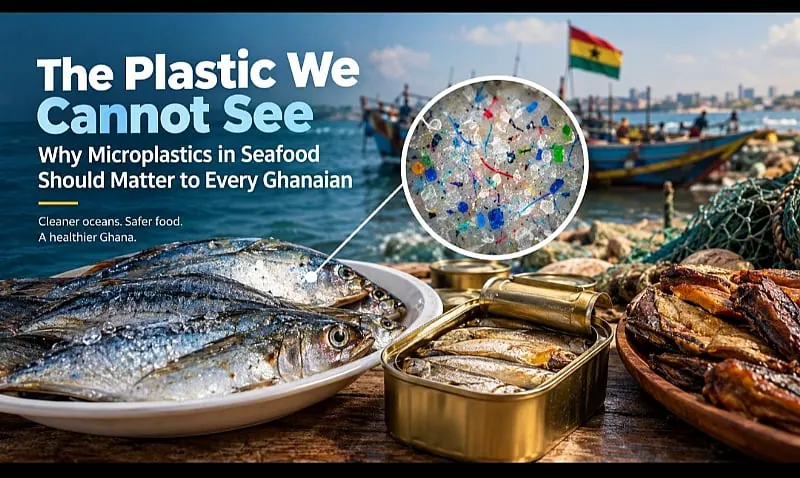
A recent study has revealed that microplastics, tiny plastic particles less than 5 millimeters in size, have invaded Ghana's oceans, lakes, rivers, and seafood. These microplastics are ingested by fish and other aquatic animals, which are then consumed by humans. The presence of microplastics in Ghanaian seafood has raised concerns about the potential health risks to consumers. Fish and seafood are a staple food in Ghana, providing nourishment and playing a significant role in the country's culture.
The sources of microplastics in Ghana's environment are varied. Discarded plastic bags, bottles, and wrappers, as well as fibres shed from clothing during laundry, tyre wear from vehicles, and broken plastics from nets, packaging, and other items, all contribute to the problem. The plastics are gradually destroyed by wind, wave action, and abrasion, breaking down into smaller fragments that eventually become microplastics. These microplastics then enter the food chain, with planktons, crustaceans, oysters, clams, and bivalves ingesting them first.
Research has confirmed the presence of microplastics in commercial fish species purchased at local markets in the Gulf of Guinea. Studies have shown that over 66% of the fish sampled in the Gulf of Guinea had microplastics in their tissues, with most of these being fibres. Similar findings have been reported in estuaries and coastal waters of Ghana. The presence of microplastics in fish and seafood has significant implications for human health, as the impact of ingesting these plastics is not yet fully understood.
One of the concerns about microplastics in Ghanaian seafood is the potential for contamination during processing and packaging. While processing fish in factories ensures that there is no bacteria in the fish, it does not guarantee that the fish is free from plastics. Plastics in processing plants, clothing of workers, and airborne particles in the manufacturing environment can all contribute to contamination. Therefore, consumers who believe that processed fish is free from microplastics may be mistaken.
The health implications of ingesting microplastics are not yet fully understood, but research suggests that they can cause inflammation and toxicity to the membranes of the intestines and accumulate in the organs of the body. Microplastics are also made up of various polymers, which can be contaminated with heavy metals and airborne particles during the manufacturing process. When these plastics are eaten, the toxins can stick to the plastics and be transferred to the membranes of the stomach and intestines.
The issue of microplastics in Ghanaian seafood goes beyond the impact on consumers, with significant implications for the fishing industry. If Ghana's oceans, rivers, and lakes continue to be polluted, they will become barren, and the industry will suffer greatly. The health hazards of pollutants may also affect the marketability of Ghanaian fish and seafood. To address this problem, Ghanaians must rethink their dependence on single-use plastics and invest in long-term reusable plastics.
Effective waste management is key to controlling the amount of plastic that ends up in the ocean. Improving standards in the fishing industry, food processing, and manufacturing industries will also help reduce the amount of microplastics in the environment. Further research is needed to establish the extent of contamination in canned fish and to determine the types of polymer plastics, their health implications, and provide data for monitoring these contaminants.
Key points
- Microplastics have been found in over 66% of commercial fish species in the Gulf of Guinea.
- The impact of ingesting microplastics on human health is not yet fully understood.
- Effective waste management and a reduction in single-use plastics are crucial to addressing the problem of microplastics in Ghanaian seafood.