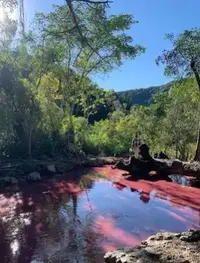
A recent study has found microplastics in South Africa's sacred freshwater systems, including remote springs believed to have healing and protective powers. The research, conducted by Rhodes University, the National Research Foundation, and the University of the Witwatersrand, sampled nine sites and detected 184 microplastic particles. The study's findings have raised concerns about the impact of pollution on these culturally significant water sources.
The study focused on Isinuka Springs in the Eastern Cape and five carbon dioxide-seeping freshwater systems along the Bongwana Fault. Researchers collected samples in March 2025 and found microplastic concentrations ranging from five to 48 particles per liter, with an average of 20.4 particles per liter. The highest concentration was recorded at Isinuka's Site 1, which is intensively used by communities and visitors for ritual bathing, spiritual cleansing, and other activities.
According to lead author Thendo Mutshekwa, the study's findings did not surprise him, given the intensive use of the springs by communities and visitors. However, he noted that the presence of microplastics at remote sites that appeared clean was a significant discovery. The study found that fibers and filaments dominated the microplastic particles, accounting for 69.6% of the total, while transparent particles were the most common color.
The researchers took precautions to prevent contamination during sampling and laboratory analysis, and no microplastic contamination was detected in their controls or procedural blanks. The study's findings varied between sites, with the three Bongwana sites on private property or accessible only with permission having lower concentrations than Isinuka. Two sites at Nomkololwana village in Mbizana had higher concentrations, which may be linked to traditional practices and ancestral communication.
The study is considered a baseline assessment of microplastic contamination in these sacred freshwater systems, rather than a measure of long-term pollution. The researchers cautioned that the associations between human activity and microplastic concentrations did not demonstrate causation. Further research is needed to understand the impact of microplastics on these water sources and the communities that use them.
The presence of microplastics in these waters is a concern for communities that use them for drinking, healing, and spiritual practices. However, Mutshekwa stressed that the study did not establish a health risk, and more research is needed before conclusions can be drawn. The research forms part of a larger project supported by the Water Research Commission, which aims to protect sacred water systems by combining scientific research and Indigenous Knowledge Systems.
Protecting these sacred springs requires a shared responsibility involving government, researchers, local authorities, conservation organizations, and communities. Mutshekwa suggested that sacred springs should be included in regular water quality monitoring, and that communities should be involved in protecting these water sources. The study's findings highlight the need for further research and action to address the issue of microplastic pollution in South Africa's sacred freshwater systems.
Key points
- Microplastics were found in all nine sites sampled, including remote springs.
- The study detected 184 microplastic particles, with concentrations ranging from five to 48 particles per liter.
- The presence of microplastics in these waters raises concerns about the impact of pollution on culturally significant water sources.