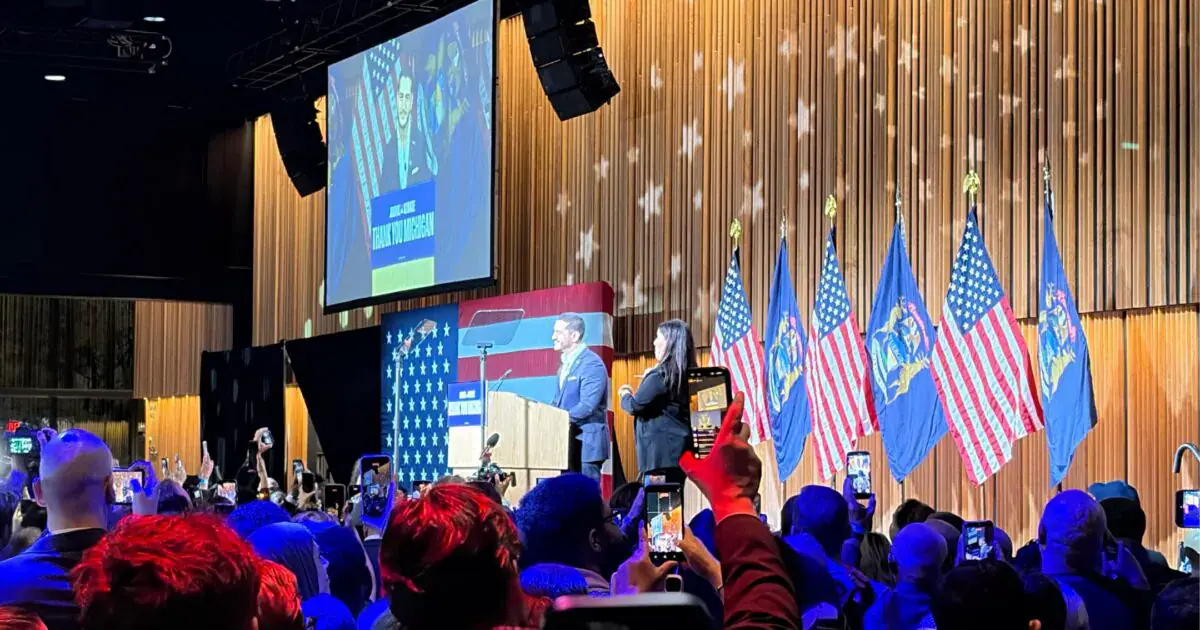
Abdul El-Sayed's victory in Michigan's US Senate race has sparked mixed reactions within the state's Jewish community. While some, like Eli Newell, Midwest field organiser for IfNotNow, hailed El-Sayed's win as a moment of shared safety, equality, and justice, others expressed concerns over his hard-line criticism of Israel and associations with far-left streamer Hasan Piker. IfNotNow had mobilised heavily for El-Sayed, bringing in a sizeable Jewish cohort from out of state to canvass in Jewish neighbourhoods.
Rabbi Asher Lopatin, community relations director at the Jewish Federation of Greater Ann Arbor, had publicly mobilised against El-Sayed during the campaign, objecting to his criticism of Israel and reaction to the Temple Israel attack. Lopatin had taken a brief leave of absence from his job to campaign with Republican nominee Mike Rogers. Now, Lopatin faces the challenge of building relationships with El-Sayed, whom he had opposed on deeply personal grounds. "I'm not taking anything back. But I think we have to work with what we have," Lopatin said.
The Michigan Jewish Democratic Caucus, which had refrained from endorsing El-Sayed during the campaign, is now looking to broaden its tent to include El-Sayed supporters. Decky Alexander, chair of the caucus, said that they need to make sure they are inclusive and work with progressive Jewish groups like Michigan Jews for Democracy and Bend the Arc, which had endorsed El-Sayed. Alexander aims to have these voices at the table and build relationships with El-Sayed's supporters.
El-Sayed's campaign pointed to a progressive PAC analysis showing that he had virtually matched the 2024 Jewish vote for Michigan's senior senator, Democrat Elissa Slotkin. The analysis claimed that El-Sayed lost only 1.3% of votes across 72 heavily Jewish precincts that had gone to Slotkin. However, uniting disparate Jewish voices may be easier said than done, as some Jewish leaders had expressed concerns over El-Sayed's rhetoric and associations.
Prior to the election, over 560 Jews in the state had signed a petition, titled "Michigan Jews Against Extremism", pledging to vote for Rogers due to concerns over El-Sayed's rhetoric. The signatories included influential figures such as the president of Detroit's Jewish federation and the head of the local Holocaust centre. Mark Davidoff, who heads the Michigan-Israel Business Accelerator, said that his group is prepared to work with all newly elected and returning leaders across Michigan.
Some Jewish groups, like the Anti-Defamation League (ADL), expressed "serious concerns" with El-Sayed's history of minimising Jewish community fears and demonising Israel. However, the ADL also offered an olive branch, stating that El-Sayed has an opportunity to work with the Jewish community and address their concerns. El-Sayed himself has suggested that, apart from Israel, he is likely aligned with many Jewish voters on most policy positions.
As El-Sayed prepares to take office, he faces the challenge of building relationships with Jewish leaders and addressing their concerns. While some Jewish groups have expressed reservations, others have welcomed his victory as an opportunity for growth and dialogue. Ultimately, El-Sayed's ability to work with the Jewish community will depend on his willingness to listen to their concerns and find common ground.
Key points
- El-Sayed's victory has sparked a divide within Michigan's Jewish community, with some expressing concerns over his stance on Israel.
- Jewish leaders are now looking to build relationships with El-Sayed and find common ground on policy positions.
- The Michigan Jewish Democratic Caucus aims to broaden its tent to include El-Sayed supporters and work with progressive Jewish groups.