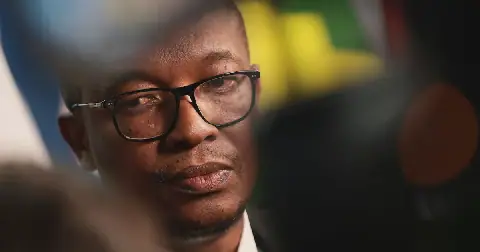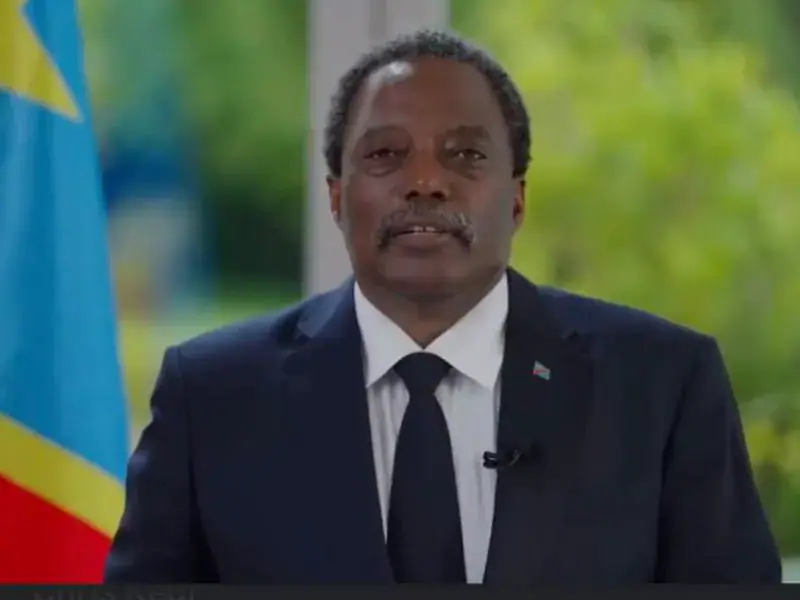
Mgr Fulgence Muteba, President of the National Episcopal Conference of Congo (CENCO) and Archbishop of Lubumbashi, recently spoke about the tense relationship between the Catholic Church and the government in the Democratic Republic of Congo. In an interview, he stated that the crisis of trust between the two parties has only just begun. Muteba emphasized that the Church's role is to promote peace and avoid escalating tensions. He cited the Christian values of tolerance and dialogue as essential in navigating the complex situation.
The interview took place on November 23, amidst heightened tensions between the Catholic Church and the government. Muteba addressed criticisms of the Church's perceived silence on the rebellion led by Joseph Kabila. He explained that the CENCO operates collegially, with decisions made collectively by its members. The Archbishop emphasized that the Church's approach is not to react impulsively to every event but to accumulate information and address issues through consensus.
Muteba discussed the Church's efforts to promote a social pact and facilitate dialogue between different stakeholders. He stated that the Church has fulfilled its obligations and that the ball is now in the court of decision-makers. The Archbishop expressed concern that the longer the situation persists, the more complicated it becomes. He emphasized that the Church's goal is to promote durable peace and address the root causes of the crisis.
The government has accused the Catholic Church of criticizing the Tshisekedi administration while remaining silent on the situation in the East. Muteba responded that the Church is not a chronicler of events but rather focuses on its primary mission of spreading the Gospel. He explained that each bishop is responsible for their diocese and that the CENCO operates according to its statutes and calendar.
Muteba addressed the issue of Joseph Kabila's rebellion, stating that the Church does not support war. He emphasized that condemning Kabila would not necessarily end the conflict. The Archbishop explained that the CENCO will address the issue collectively at its meeting in late February or early March. He urged patience and understanding of the Church's decision-making process.
The government has accused the Church of supporting those who have taken up arms. Muteba denied this, stating that the Church is not a branch of any government. He emphasized that the Church's principles of communication remain unchanged, even in the DRC context. The Archbishop questioned whether condemnation would automatically resolve the problems of governance and security.
Muteba called for evidence to support claims that the Church is biased towards the opposition or those who have taken up arms. He emphasized that the Church operates independently and that its role is to promote peace and stability. The Archbishop concluded by highlighting the importance of understanding the Church's approach and functioning.
Key points
- The Catholic Church in the DRC is navigating a complex relationship with the government, with tensions centered on issues of governance, security, and the role of the Church in promoting peace.