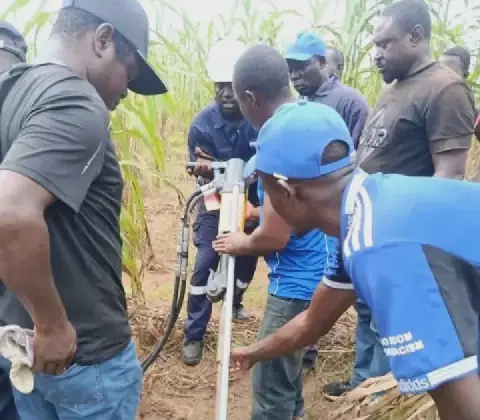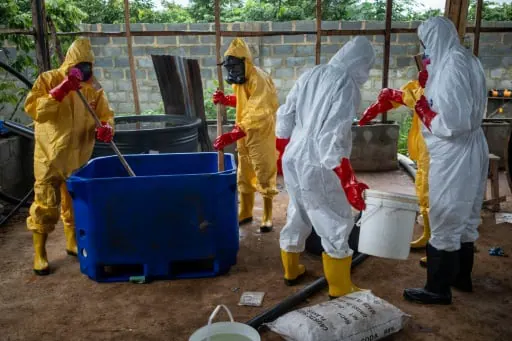
Forensic experts from Nigeria's National Drug Law Enforcement Agency (NDLEA) recently dismantled a Mexican-linked meth lab in Ogun State, highlighting the growing concern of Mexican cartels operating in Africa. The labs, investigators say, are part of a network established by the Sinaloa cartel to supply Australia and New Zealand, where methamphetamine prices are 65 to 100 times higher than in the United States. This development has raised concerns among law enforcement agencies in the region.
In South Africa, police believe that Mexican chemists, posing as tourists, were sent to set up an industrial-scale methamphetamine laboratory on a game farm near Swartruggens, one of at least seven discovered across southern Africa in the last two years. The Swartruggens lab, busted in May, was capable of producing five tonnes of methamphetamine a month, worth around $1 billion wholesale in Australia. Investigators say the lab was linked to a seizure in Australia, where a 32-year-old woman was arrested at Sydney airport with 39 kilogrammes of powdered meth in her bags.
According to Brigadier Devon Naicker, head of the South African Narcotics Enforcement Bureau (SANEB), the investigation revealed that the methamphetamine was packaged in a way that suggested it came from the Swartruggens laboratory. The lab was discovered on a game farm owned by an Afrikaner family, who had previously been before the courts for renting out land where the hypnotic sedative mandrax was being illegally made. The family bought the game farm in 2024, and police believe the cartels approached them to use their land for the lab.
The Australian police confirmed that it had identified increased targeting of Australia's illicit drug market by Mexican cartels. A seizure in January showed that the drug is not just being smuggled in by sea, with a large quantity of powdered meth found in a shipment of frozen cowhides from Mexico in 2019. The Australian market is huge, with methamphetamine being the most consumed illicit drug after cannabis, according to a 2024 report compiled with the US Drug Enforcement Agency (DEA).
Police in both Australia and New Zealand have previously established that local chapters of the Comancheros biker gangs were sourcing drugs from the Sinaloa cartel. The cartels' modus operandi is being seen in Nigeria, where four Mexicans have been arrested in busts of meth labs this year. In South Africa, 16 Mexicans have been arrested in swoops on labs since 2024. The clandestine meth laboratory hidden in the forest of Ogun State, Nigeria, that was raided in May, showed similar trademarks of the Sinaloa cartel.
The Sinaloa cartel uses the so-called P2P method, based on phenyl-2-propanone, with chemicals imported from China and India. Investigators say that making the precursors "really stinks" and can be smelled kilometres away if the wind is blowing in that direction. Last month, police seized five tonnes of solvents, catalysts, and reagents used by the cartels in a raid on a lab at Musina on the border with Zimbabwe.
The growing presence of Mexican cartels in southern Africa has raised concerns among law enforcement agencies in the region. The large reaction tanks found at a lab in Klipvoor, about 175 kilometers north of Johannesburg, are further markers of the cartels' involvement. Experts say that the equipment is industrial but handmade, suggesting that the cartels bring in their own boilermakers to build the kettles.
Key points
- The Sinaloa cartel has established industrial-scale methamphetamine laboratories in southern Africa to supply Australia and New Zealand.
- The labs are often found on isolated farms within easy reach of major roads, and the cartels approach farmers who are struggling to use their land.
- The Australian police have confirmed increased targeting of Australia's illicit drug market by Mexican cartels.