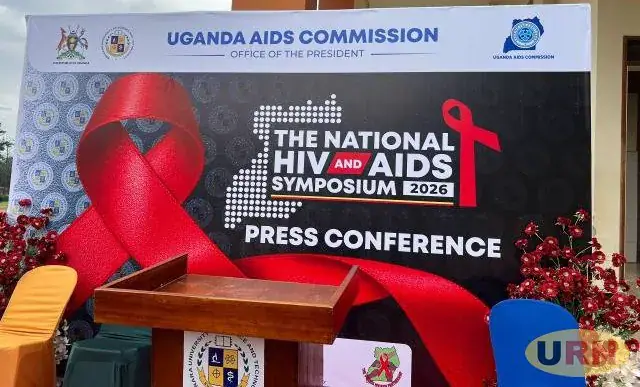
Health experts in Uganda have expressed concerns over the low uptake of HIV services among men, citing it as a significant contributor to AIDS-related deaths. At a press briefing in Mbarara, experts revealed that men's reluctance to test for HIV and enroll in treatment is a major challenge in the fight against the disease. They urged communities, families, and HIV/AIDS organizations to intensify awareness campaigns targeting men to improve HIV testing, treatment adherence, and reduce AIDS-related deaths.
The experts made the revelation ahead of the 2nd HIV and AIDS symposium, scheduled to take place at the Mbarara University of Science and Technology Pharmacy grounds from November 16 to 18, 2026. Dr. Elias Kumba Kumba stated that the symposium would focus on strategies to engage men in the fight against HIV, as they are less likely to test and seek treatment. The event aims to bring together stakeholders to share research findings and discuss evidence-based approaches to addressing the HIV/AIDS epidemic.
Michael Matsiko, head of the regional Uganda AIDS Commission, highlighted the challenges in reducing HIV infections, particularly the reluctance of men to seek HIV/AIDS services in health facilities. He also expressed concern over the rising number of new infections among adolescent girls and young women aged 15 to 24. Matsiko emphasized the need to review the performance of the National HIV Response against the targets set in the National HIV and AIDS Strategic Plan (NSP) to ensure stakeholders are on track to achieve the goal of ending AIDS as a public health threat by 2030.
According to statistics from the Uganda AIDS Commission, approximately 1,496,000 people living with HIV in Uganda are aged 15 years and above, representing 5.5% of the population. The overall total is about 1,567,000 people, which is 5.9%, with around 71,000 children aged 0-14 years living with HIV. Among affected adults, 66.3% are women, while 33.7% are men. These statistics underscore the need for targeted interventions to address the disparities in HIV service uptake.
Joseph Ngonzi, the Deputy Vice-Chancellor in charge of Academic Affairs at Mbarara University of Science and Technology, and chairperson of the second HIV and AIDS symposium, emphasized that the meeting would serve as a national scientific platform for sharing research findings and evidence-based programming. He noted that abstracts for both oral and poster presentations had been received, and the meeting would provide an avenue for disseminating research evidence and informing programming and practice.
The symposium aims to address the disparities in HIV service uptake, particularly among men, and to identify strategies for improving testing, treatment adherence, and reducing AIDS-related deaths. Experts hope that by engaging men and other stakeholders, Uganda can make progress toward achieving the goal of ending AIDS as a public health threat by 2030. The event will bring together researchers, policymakers, and practitioners to share knowledge and best practices in HIV/AIDS programming.
The low uptake of HIV services among men is a critical challenge in Uganda's fight against HIV/AIDS. Experts stress that addressing this issue requires a multi-faceted approach, including awareness campaigns, community engagement, and targeted interventions. By working together, stakeholders can improve HIV testing, treatment adherence, and reduce AIDS-related deaths, ultimately contributing to a more effective response to the HIV/AIDS epidemic in Uganda.
Key points
- Men's low uptake of HIV services is a significant contributor to AIDS-related deaths in Uganda.
- The 2nd HIV and AIDS symposium aims to address disparities in HIV service uptake and identify strategies for improvement.
- Uganda has approximately 1,496,000 people living with HIV aged 15 years and above, representing 5.5% of the population.
Reporting sources
- Men’s low uptake of HIV services contributing to AIDS-related deaths · The Independent magazine