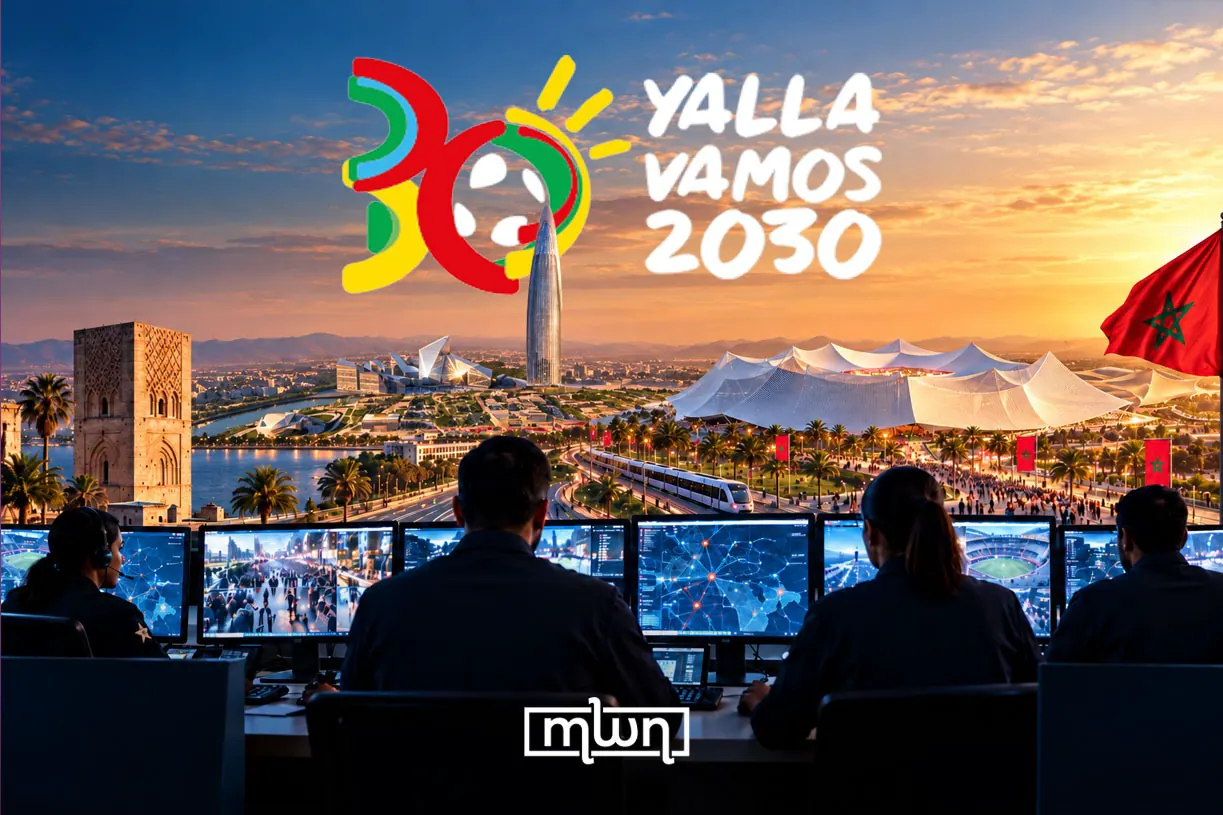
As Morocco prepares to co-host the 2030 World Cup, the country is focusing on building a robust framework to manage the complexities of hosting a mega-event. The Kingdom's experience in handling large-scale events will be put to the test as it welcomes millions of visitors from around the world. A critical aspect of this preparation is the development of an Event Resilience Architecture, which aims to integrate security, transport, health, utilities, and public information to ensure a seamless experience for visitors.
Traditional event security approaches often organize risk by function, with separate agencies handling different aspects of the event. However, this approach can lead to vulnerabilities in the spaces between these functions. For instance, a disruption at a transport hub can have far-reaching consequences, including passenger flow changes, road congestion, and pressure on emergency services. An integrated approach can help mitigate these risks and ensure that the event's ecosystem can absorb disruptions while preserving safe movement, essential services, and public confidence.
The concept of Event Resilience Architecture involves creating a shared operational picture that allows separate control rooms to understand the developing situation and act accordingly. This requires a framework that enables the detection of disruptions, shared situational awareness, cross-agency prioritization, decision ownership, coordinated action, and recovery. By treating the event as an interconnected operating environment, organizers can identify potential vulnerabilities and develop strategies to address them.
The use of technology, including cameras, sensors, and access-control systems, can generate vast amounts of information. However, the challenge lies in ensuring that the right information reaches the right operational functions with enough context to support decision-making. A genuine shared operational picture must answer key questions, such as what has been confirmed, what remains uncertain, and which services are affected.
Cross-agency prioritization is critical in managing the complexities of a mega-event. Different organizations have legitimate priorities, but not all can be maximized simultaneously. The control-room architecture must make these trade-offs visible, allowing leaders to manage them effectively. Decision ownership is also essential, as coordination can fail when everyone receives information but no one is clearly responsible for the next action.
Artificial intelligence can play a significant role in strengthening this architecture by correlating signals, identifying anomalies, and forecasting crowd movement. However, AI should reduce cognitive burden, not obscure accountability. Human authority remains crucial when safety, public movement, and multiple agencies intersect. The strongest preparation will therefore test relationships between systems, not just systems themselves.
The ultimate goal of Event Resilience Architecture is to prevent local problems from cascading across transport, venues, public safety, and communications. While disruptions are inevitable at large-scale events, operational success lies in the ability to respond effectively and restore normal flows without creating a second disruption. By adopting an integrated approach, Morocco can ensure a successful and resilient 2030 World Cup co-hosting experience.
Key points
- Morocco is co-hosting the 2030 World Cup, highlighting the need for a robust event management framework.
- An Event Resilience Architecture can integrate security, transport, health, utilities, and public information to ensure a seamless experience.
- The use of technology and artificial intelligence can support decision-making and enhance event resilience.