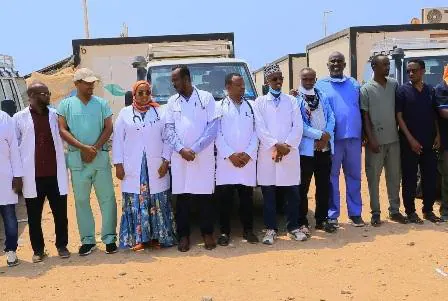
On the directives of the President of Djibouti, a medical caravan was organized in the Abkh region to provide healthcare services to Yemeni refugees. The caravan, which was part of the humanitarian response to the refugees, aimed to provide medical care and respond to the health needs of the displaced persons, with special attention to women, children, and vulnerable groups. The caravan was attended by medical teams from various regions of Djibouti, including the cities of Djibouti, Arta, Ali Sabieh, Dikhil, and Tadjourah.
The medical caravan brought together doctors, nurses, midwives, and other healthcare professionals who worked together to provide coordinated healthcare services to the refugees. The initiative reflects the commitment of the Djiboutian authorities to contribute to alleviating the suffering of Yemeni refugees by ensuring they have access to appropriate healthcare. During the caravan, 554 medical services were provided, including 278 consultations for women's health, 201 general medicine consultations, and 36 prenatal care consultations.
In addition to the medical consultations, the caravan also provided interventions for the detection, prevention, and guidance of various health conditions. The healthcare professionals also provided education on hygiene and health measures to prevent diseases and protect the health of the beneficiaries. The services provided during the caravan helped meet the priority needs of the refugees and provided an immediate response to those in need of medical care.
The participation of medical teams from various regions of Djibouti demonstrates the spirit of national solidarity and brotherhood that characterizes the Republic of Djibouti's approach to refugees facing difficult humanitarian situations. The medical caravan is a testament to Djibouti's commitment to providing humanitarian and health responses to Yemeni refugees and preserving their health and dignity.
The Ministry of Health of Djibouti praised the dedication and commitment of all healthcare workers who participated in the caravan, as well as the efforts of local authorities and other parties that contributed to the success of the initiative. The organization of this caravan confirms Djibouti's commitment to providing health and humanitarian responses to Yemeni refugees and alleviating their suffering.
The medical caravan provided services to refugees, including treatment for 39 cases of acute malnutrition. The services provided during the caravan were aimed at meeting the priority needs of the refugees and providing an immediate response to those in need of medical care. The initiative is part of Djibouti's efforts to provide humanitarian assistance to Yemeni refugees.
The Djiboutian government's efforts to provide healthcare services to Yemeni refugees reflect its commitment to upholding the dignity and well-being of refugees. With the medical caravan, the government has demonstrated its ability to respond to the health needs of refugees and provide them with essential services. The initiative has also highlighted the importance of collaboration and coordination among different stakeholders in providing humanitarian assistance to refugees.
Key points
- The medical caravan provided 554 medical services to Yemeni refugees in Djibouti.
- The initiative reflects the commitment of the Djiboutian authorities to contribute to alleviating the suffering of Yemeni refugees.
- The medical caravan was part of the humanitarian response to the Yemeni refugee crisis in Djibouti.