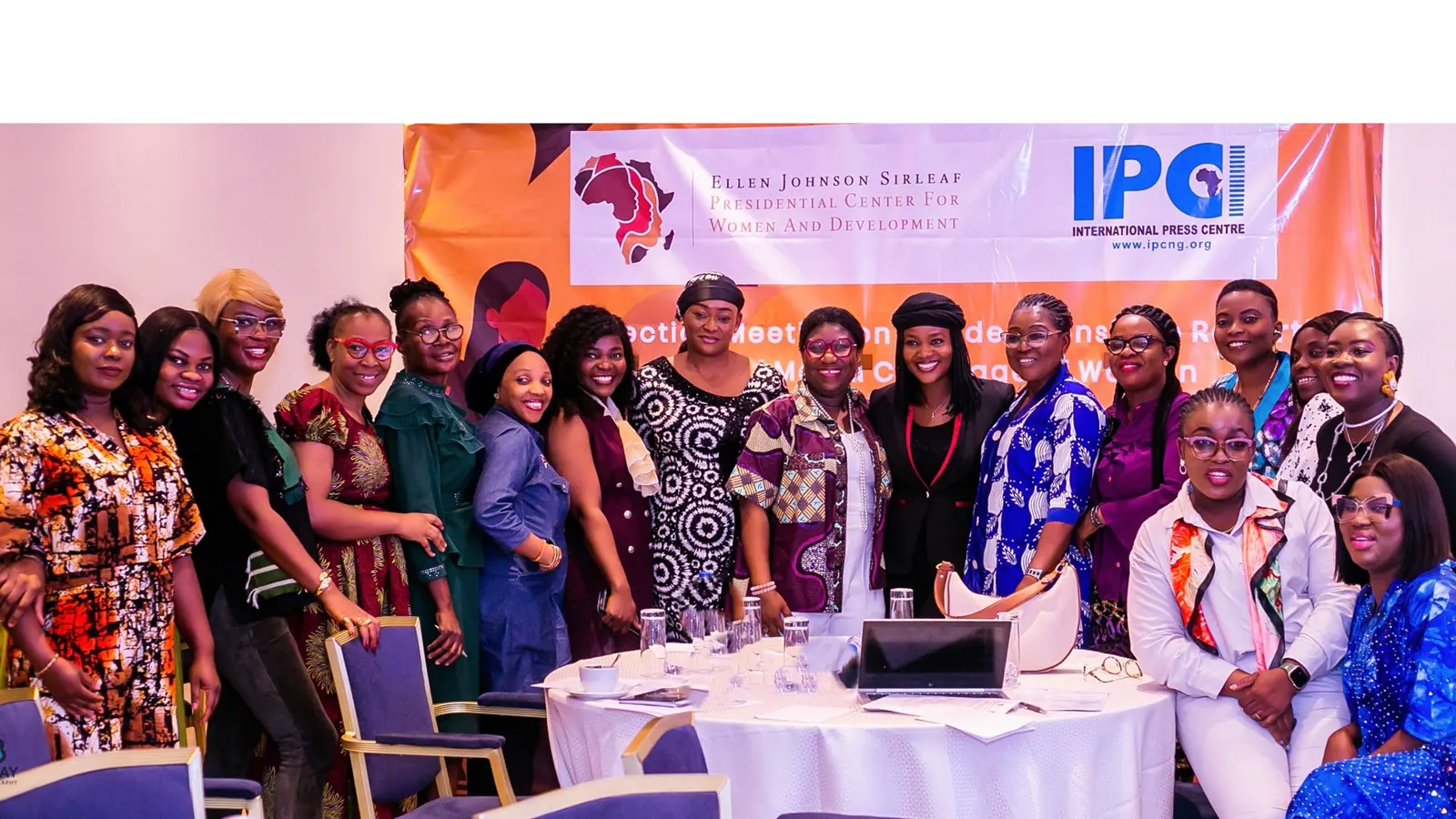
A three-day reflection and dialogue on gender-sensitive reporting and the representation of women in public life was held in Lagos, bringing together journalists, media leaders, and gender experts. The discussions focused on how the media sees, hears, and projects women in public leadership, and how editorial choices can influence public perceptions of women's leadership, credibility, and competence. The event was jointly organised by the Ellen Johnson Sirleaf Presidential Center for Women and Development (EJS Center) and the International Press Centre (IPC).
The Nigerian edition of Reporting on Leaders: See Her, Hear Her, Project Her, brought together about 35 senior and beat-relevant media professionals, alongside representatives of the Nigeria Association of Women Journalists (NAWOJ), Nigeria Union of Journalists (NUJ), Guild of Corporate Online Publishers (GOCOP), and gender experts. The dialogue examined a deeper question: what kind of visibility are women receiving, and does the coverage adequately reflect their leadership, competence, achievements, and impact? Rather than simply publishing more stories about women, the conversation aimed to interrogate the media's role in shaping public perceptions of women's leadership.
For Communication Officer, EJS Center, Noella Ngunyam, the conversation is critical because the media does more than report leadership; it helps shape who is recognised as a leader and whether that person is considered credible. Ngunyam reflected on the legacy of Ellen Johnson Sirleaf, Africa's first democratically elected woman president, and her commitment to mentoring and supporting more African women to pursue leadership through initiatives of the EJS Center. However, Ngunyam noted that the continent's persistent gender gap in political leadership requires a closer examination of how women are represented in the media.
Ngunyam stressed that gender-sensitive journalism should not mean giving women preferential treatment or shielding female leaders from scrutiny. She urged journalists to reflect on the tendency to make women's marital status, children, appearance, and family lives part of the central narrative when covering their leadership, while their competence, policies, and performance receive comparatively less attention. This, she argued, can perpetuate stereotypes and undermine women's leadership.
The dialogue also examined the responsibility of women leaders to make their work visible and accessible to the media. Executive Director, IPC, Lanre Arogundade, said women should not be spotlighted merely because they are women, arguing that journalism must interrogate what they are doing in office, the impact of their work, and whether they are fulfilling the responsibilities attached to their positions. Arogundade emphasized that greater visibility must be earned through substantive work and accountability.
Executive Director/CEO, Wole Soyinka Centre for Investigative Journalism (WSCIJ), Motunrayo Alake, called for a deliberate expansion of the pool of women available to journalists as experts and sources. Alake noted that the absence of women from public conversations is sometimes attributed to a lack of access to qualified female voices. She challenged the media to identify and introduce qualified women to the public, helping to broaden the pool of voices considered in political and public discourse.
The programme culminated in a "Commitments Room", where participants identified what journalism should stop and start doing in its coverage of women public leaders, while exploring opportunities for collaboration across newsrooms and media platforms. A 90-day accountability mechanism was established to sustain the commitments beyond the meeting, underscoring the central message of the dialogue: improving women's representation in public leadership requires more than increasing the number of stories about women; it requires journalism that is rigorous, fair, substantive, and conscious of how its choices shape public perceptions of leadership.
Key points
- The media's representation of women leaders can significantly influence public perceptions of their leadership, credibility, and competence.
- The dialogue aimed to promote gender-sensitive reporting and representation of women in public life.
- The programme established a 90-day accountability mechanism to sustain commitments to improving women's representation in public leadership.