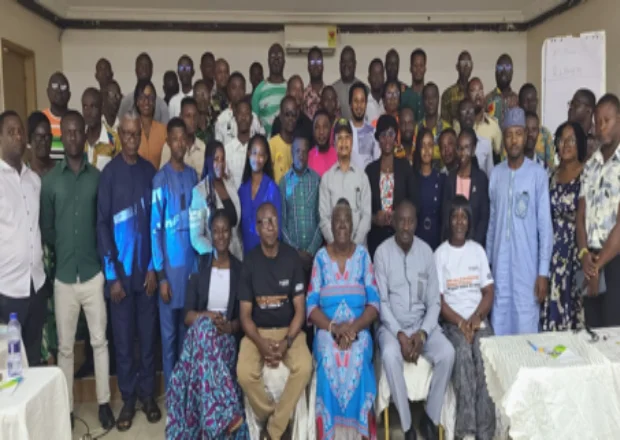
The call was made by Victoria Asumin of the Ashanti Regional Coordinating Team of Amnesty International at a two-day media engagement on constitutional reforms in Kumasi. The programme, organised by the Citizens' Platform on Constitutional Reforms, brought together media practitioners and civil society organisations to examine the recommendations of the Constitution Review Committee and the Government's position.
The constitutional reform process has moved beyond the stage of making recommendations and is now at the critical implementation stage, requiring a clear roadmap to guide the process. Civil society organisations are advocating for the passage of a Constitutional Reform Implementation and Roadmap Act to define what should be done, which institutions should be responsible, and when each stage should be completed.
The eight-member Constitution Review Committee, chaired by Professor H. Kwesi Prempeh, submitted its final report to the President on February 10, 2026, containing 206 proposals. 149 of the proposals sought amendments to existing constitutional provisions, while 59 were entirely new provisions. The committee conducted 10 thematic stakeholder engagements, received over 500 expert and practitioner inputs, and reached over 21,500 people.
Some of the major recommendations include a five-year presidential term instead of the current four-year tenure. The proposal does not introduce a third presidential term, and the Government has accepted the five-year presidential tenure. The reforms also cover presidential appointments, Parliament, local government, natural resources, and public finances, among others.
The recommendations are not yet law and will have to go through the appropriate constitutional and legislative processes. Some provisions can be amended through Parliament, while entrenched provisions will require a referendum. The Government has inaugurated an 11-member Constitution Review Implementation Committee, chaired by Presidential Legal Counsel Marietta Brew, to examine the recommendations and develop a framework for implementation.
The scale of the reforms raises concerns about whether the process can be completed before the 2028 general election. The proposals involve over 50 amendments and 14 bills, including new legislation and amendments to existing laws. Civil society groups are pushing for a legally binding framework to ensure the reform process continues even if there is a change of government or Parliament.
The media has a critical responsibility to ensure that the constitutional reform conversation reaches ordinary citizens across the country. Civic education should not be concentrated in major urban centres but should extend to communities with limited access to traditional media and digital platforms. Journalists are urged to provide accurate, balanced, and issue-based reports on the reforms to help citizens understand the proposals and participate in the process.
Key points
- The media has been urged to intensify public education on Ghana's ongoing constitutional reform process.
- The constitutional reform process has moved beyond the stage of making recommendations and is now at the critical implementation stage.
- The proposals involve over 50 amendments and 14 bills, including new legislation and amendments to existing laws.