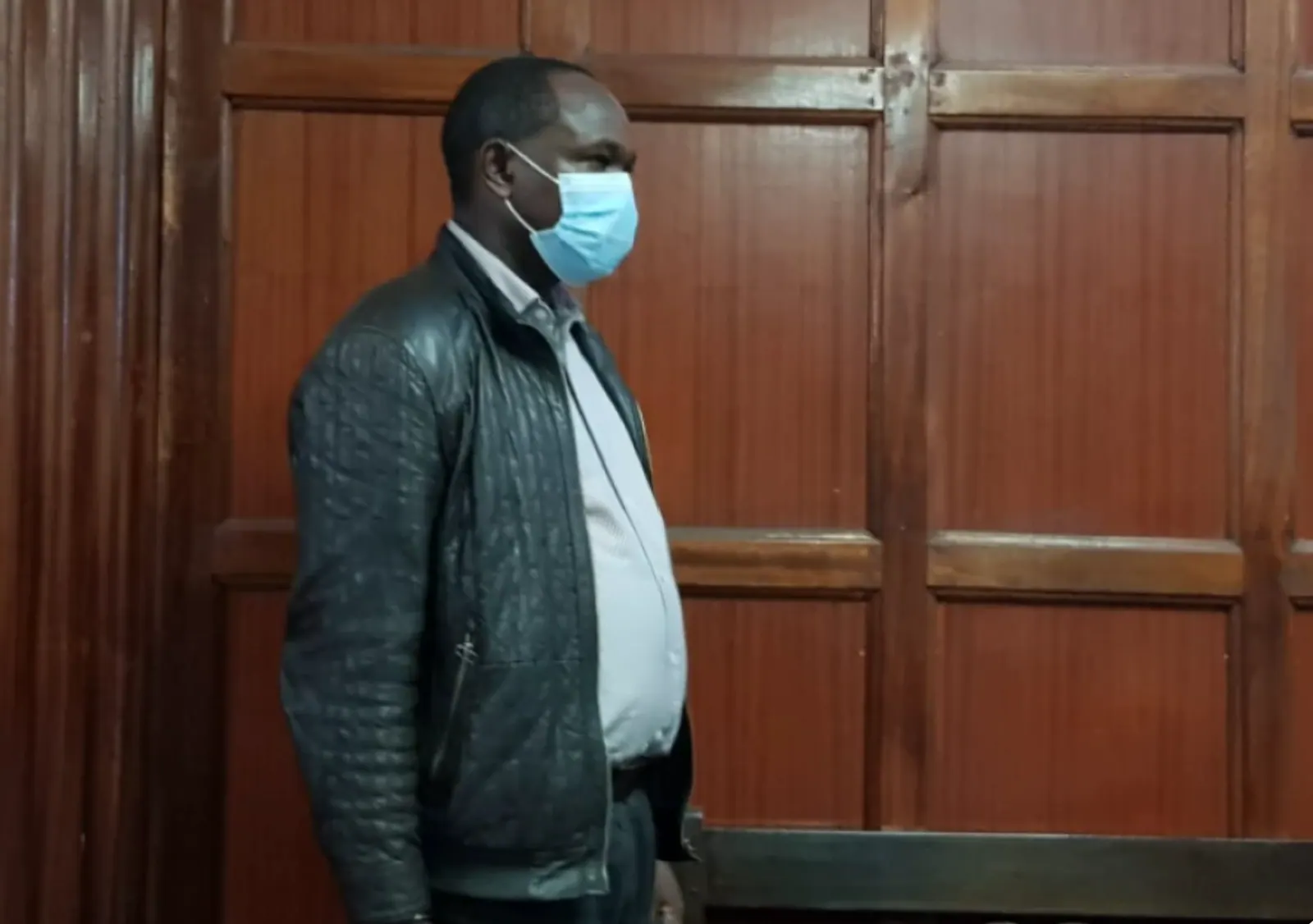
A fraud case against Nairobi businessman Barnabas Kiprop Bwabok has raised concerns about courtroom transparency after a hearing proceeded behind closed doors, excluding journalists from the proceedings. The case involves a disputed transaction of KSh14.9 million and has been in the public domain since 2022. The exclusion of journalists from the courtroom has sparked questions about the administration of justice and why proceedings in a financial fraud case attracting public attention were conducted away from public scrutiny.
The roots of the prosecution stretch back to 2022, when Bwabok was charged with obtaining KSh14,950,000 from Ollyvian Agencies through his company, Amara. Prosecutors accused Bwabok of obtaining the money by falsely representing that he could supply medical kits known as microcuvettes. The disputed transactions took place between April 1 and May 19, 2022, in Nairobi. Bwabok was also charged with making a false Kenya Bureau of Standards (KEBS) Local Certificate of Conformity and presenting it as genuine.
The case has been ongoing for nearly four years, with Bwabok pleading not guilty to the charges and being released on KSh2 million cash bail. The prosecution involves two serious issues: the disputed multimillion-shilling payment and the authenticity of a document presented as a KEBS certification. The public has a legitimate interest in understanding the evidence presented and the court's eventual findings.
The reported exclusion of journalists from the courtroom has raised concerns about media access to a prosecution that has been in the public domain since 2022. Kenya's Constitution recognises the principle that justice should ordinarily be administered in public. Article 50(1) provides for a fair and public hearing before an independent and impartial court or tribunal. However, courts may restrict public access where legally justified, including circumstances involving the protection of vulnerable witnesses or confidential information.
The precise legal basis for the reported closed-door session remains unclear, and it is not established whether Bwabok personally secured the exclusion or the court acted to protect him from exposure. The reputation of an accused businessman is not, by itself, a sufficient reason to conceal a criminal trial from public scrutiny. The public deserves to know what happened in the case, and the proceedings should remain open to scrutiny unless the court identifies a lawful and proportionate reason for restricting access.
The KSh14.95 million prosecution raises questions about commercial accountability, documentary authenticity, and the conduct of transactions involving medical supplies. These are matters of legitimate public interest. Businesses entering supply agreements must be able to rely on representations about products, documentation, and delivery arrangements. The public has an interest in understanding the evidence presented and the court's eventual findings.
The controversy surrounding Barnabas Kiprop Bwabok is now about more than the original KSh14.95 million transaction; it is also about the public's ability to follow a criminal prosecution involving disputed medical supplies and a contested KEBS document. The charges are serious, and the reported exclusion of journalists only intensifies the need for clear communication from the court about the status of the proceedings.
Key points
- The case against Barnabas Kiprop Bwabok involves a disputed transaction of KSh14.9 million and has raised concerns about courtroom transparency.
- The exclusion of journalists from the courtroom has sparked questions about the administration of justice and why proceedings in a financial fraud case attracting public attention were conducted away from public scrutiny.
- The public has a legitimate interest in understanding the evidence presented and the court's eventual findings in the case.