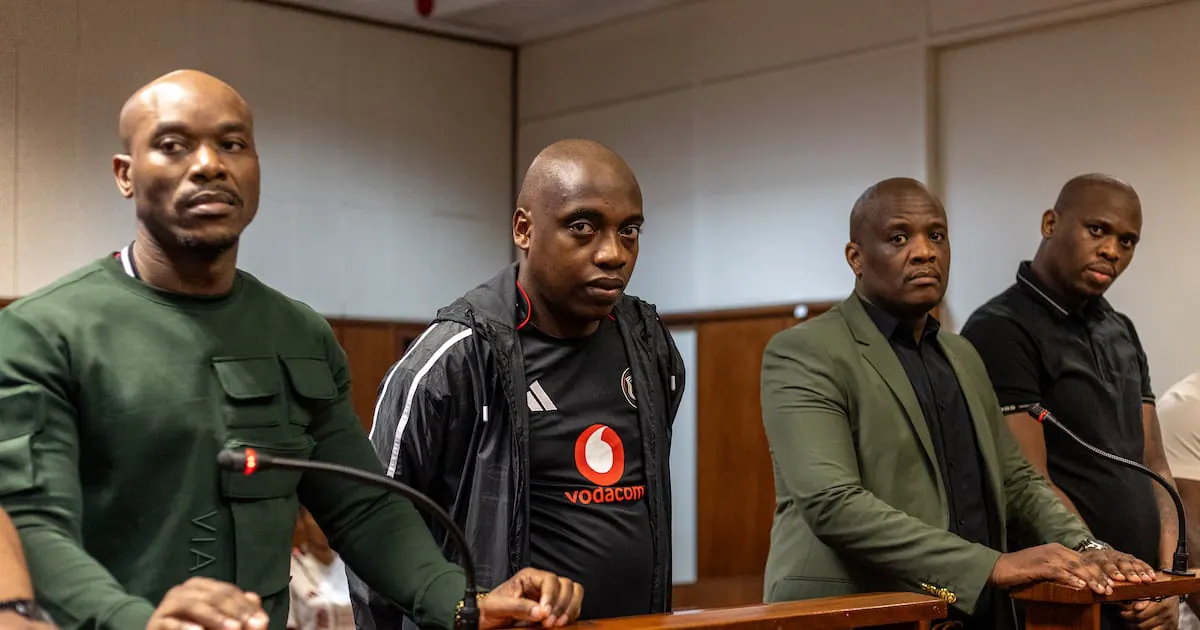
A Durban high court judge has imposed restrictions on media reporting in the trial of seven men accused of murdering rap star Kiernan "AKA" Forbes and celebrity chef Tebello "Tibz" Motsoane. The restrictions, imposed by judge Nomfundo Sipunzi, prohibit the disclosure of witness identities, restrict reporting of testimony while witnesses testify, and bar publication of exhibits unless authorised. The judge cited fair-trial rights and witnesses' interests, alongside open justice, as reasons for the restrictions. The trial began with all seven accused pleading not guilty to the charges.
The restrictions have raised concerns among media organisations and the public, who argue that they limit the public's ability to follow the substance of the case. The South African National Editors' Forum has expressed alarm at the order, while recognising that witness anonymity can be justified by safety concerns. The forum's concerns highlight the delicate balance between protecting witnesses and ensuring that the public has access to information about the trial. The case is one of the most anticipated in South Africa, with significant public interest in the outcome.
The constitution protects media freedom and the freedom to receive and impart information, rights that belong to everyone, not just journalists. These rights must be balanced against the need to protect witnesses and ensure a fair trial. The restrictions imposed by the judge do not constitute a complete reporting ban, but rather limit the scope of reporting on the trial. The judge has allowed reporting on legal arguments, rulings, pleas, and judgments, but restricted reporting on witness testimony and exhibits.
The media and the public have a right to scrutinise the evidence presented in court and to understand how it is challenged. The restrictions imposed by the judge may make it difficult for the public to follow the trial in detail. The case has significant cultural and social implications, given AKA's influence on modern pop culture in South Africa. The public's interest in the trial is not limited to the outcome, but also in the process and the evidence presented.
The South African National Editors' Forum has argued that protecting someone's identity does not automatically require restricting reports of their evidence. The court should clarify the scope and duration of the restrictions and consider narrower alternatives. The forum's concerns highlight the need for a nuanced approach to balancing witness protection and media freedom. The restrictions should be reasonable and justifiable, with clear reasons and boundaries.
The judge's order has sparked debate about the balance between open justice and witness protection. While the need to protect witnesses is recognised, the restrictions imposed by the judge have raised concerns about the impact on media freedom and the public's right to information. The media and the public have a role to play in scrutinising the trial and ensuring that justice is served. The restrictions should not be used to suppress information, but rather to protect witnesses from harm.
The trial will continue with the restrictions in place, but media organisations are likely to seek clarification on the scope and duration of the restrictions. The court will need to balance the competing interests of witness protection, media freedom, and the public's right to information. The outcome of the trial will have significant implications for the South African justice system and for the protection of witnesses in high-profile cases.
Key points
- The restrictions on reporting witness testimony and exhibits have raised concerns about open justice and media freedom.
- The South African National Editors' Forum has expressed alarm at the order, highlighting the need for a nuanced approach to balancing witness protection and media freedom.
- The court will need to clarify the scope and duration of the restrictions and consider narrower alternatives to ensure that the restrictions are reasonable and justifiable.