The Media Foundation for West Africa (MFWA) and the Participation, Accountability, Integrity for a Resilient Democracy (PAIReD) and GIZ Ghana Programme have called on media owners, managers, and editors to adapt and implement a Model Safety of Journalists Policy. This policy aims to protect media practitioners against attacks, threats, and intimidation in the line of duty. The three organisations warned that failure to prioritise journalists' safety could undermine press freedom, weaken democracy, and discourage investigative reporting on sensitive national issues.
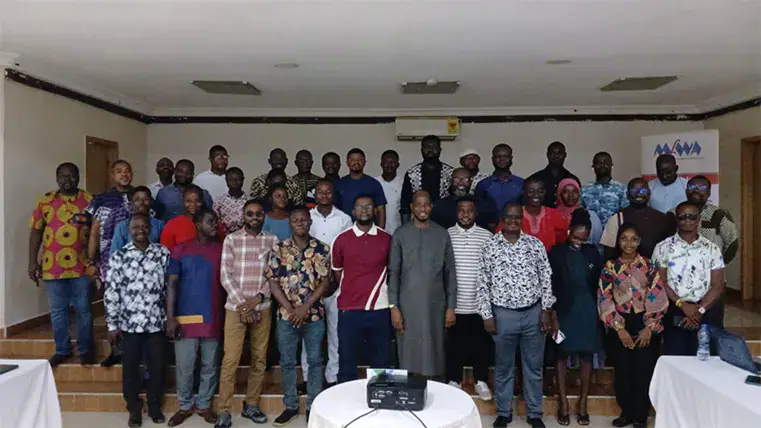
A one-day workshop was held in Kumasi on November 18, 2026, for journalists, editors, and media managers. The workshop, themed "Developing and Implementing Newsroom Safety Policy," aimed to equip media practitioners with the knowledge and skills to adapt and implement the model policy in their respective newsrooms. Programme Director of MFWA, Dr. Kojo Impraim, and Technical Advisor of PAIReD GIZ Ghana, Jonathan Donkor, made the call at the workshop.
Dr. Impraim noted that journalists played a critical role in informing the public, exposing wrongdoing, holding people in authority accountable, and strengthening democracy. However, they continued to face physical attacks, threats, online harassment, legal pressure, intimidation, and psychological trauma. He cited demonstrations, illegal mining investigations, government corruption, abuse of power, and human rights violations as some of the sensitive assignments that exposed media practitioners to serious risks.
Dr. Impraim cited the unresolved murder of investigative journalist Ahmed Suale as a painful reminder of the dangers confronting journalists in Ghana. He disclosed that MFWA recorded 32 violations across 12 West African countries in the first quarter of 2026, with the figure increasing to 44 in the second quarter and rising further in the third quarter. He warned that attacks on journalists did not only affect the victims but also threatened society's right to information.
The Model Safety of Journalists Policy provides practical guidelines for media organisations to establish safety systems covering risk assessment, newsroom security, physical and online protection, legal assistance, emergency response, incident reporting, and psychological support. Dr. Impraim explained that MFWA had introduced a legal support fund to assist journalists who qualified for assistance under its guidelines.
Jonathan Donkor stressed that journalists must be protected to enable them to continue serving as the voice of the voiceless. He observed that many people entered journalism with the ambition of speaking for marginalised and vulnerable groups, but said such a noble responsibility also required journalists to remain safe enough to tell their next stories. Donkor disclosed that the collaboration between PAIReD GIZ Ghana and MFWA had contributed to strengthening the capacity of journalists.
The project is being implemented under the Participation, Accountability, Integrity for a Resilient Democracy (PAIReD) Programme, commissioned by the German Federal Ministry for Economic Cooperation and Development (BMZ), co-financed by the European Union (EU) and the Swiss State Secretariat for Economic Affairs (SECO), and implemented by GIZ Ghana in cooperation with the Ministry of Finance.
Key points
- Media houses in Ghana are urged to adopt a Model Safety of Journalists Policy to protect journalists from attacks, threats, and intimidation.
- The policy provides practical guidelines for media organisations to establish safety systems covering risk assessment, newsroom security, and physical and online protection.
- The project aims to strengthen the capacity of journalists and promote a safer environment for media practice in Ghana.
Reporting sources
- Media Houses Tasked To Adopt Journalists’ Safety Policy · Daily Guide