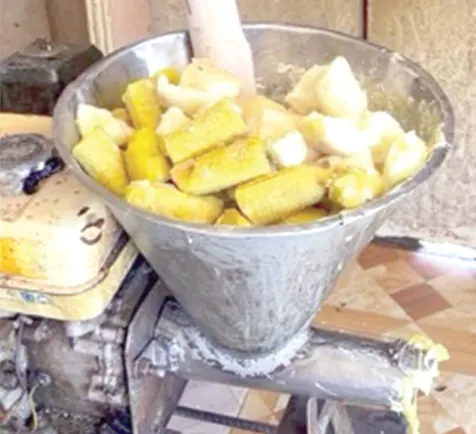
The traditional sound of a wooden pestle hitting a mortar is being replaced by the hum of mechanised fufu-pounding machines in Ghana. These machines, which began transforming fufu preparation in 2004, save time, reduce physical labour, and increase production. Innovators such as Fadegnom Charles, Professor Kwadeo Kesse, Dr Lawrence Ansong, and R. E. Dodoo have contributed to the development of these machines. However, as Ghana modernises its food preparation, concerns have been raised about whether food-safety practices have kept pace with technological convenience.
Research conducted in different parts of Ghana has documented bacterial contamination associated with food-milling equipment, including machines used to prepare fufu. A 2022 study in Tamale found Salmonella contamination in 48 per cent of 50 fufu-grinding machines sampled. Of 100 samples collected from the machines and the fufu processed through them, 27 per cent tested positive for Salmonella. More concerning, 81.5 per cent of the Salmonella isolates showed resistance to three or more antibiotics. This highlights the need for improved food-safety practices in the country.
The design and operation of commercial fufu-pounding machines pose a significant food-safety concern. The machines have internal chambers, moving components, joints, seals, and other spaces that may be difficult to access and clean. Wet, starchy cassava and plantain mixtures can leave residues in grinding chambers and around moving parts, providing nutrients and moisture for microorganisms to survive and multiply. If not properly cleaned and sanitised, contamination can be transferred to the food being processed and ultimately enter consumers' dining tables.
A study in Asante Mampong by Dr Dennis Dekugmen and colleagues found that only 12.7 per cent of surveyed milling operators reported having an operating license. Only 32.7 per cent knew that milling machines could become contaminated with microorganisms, while 85.5 per cent reported maintaining their machines only when they broke down. This highlights the need for improved maintenance and sanitation practices among machine operators.
Food safety is a chain, and the machine is only one link. Cleaning, maintenance, hand hygiene, money handling, and regulatory oversight all influence the safety of food sold to consumers. To address the issue, the writer suggests making sanitation a standard operating procedure, strengthening food-safety training, designing machines with food safety in mind, and strengthening inspection and accountability. By taking these steps, Ghana can ensure that its food-safety systems evolve with the adoption of mechanised fufu pounding.
The problem is not mechanisation, but rather mechanisation without adequate food-safety controls. When technology enters the food system, food safety must enter with it. Ghana does not have to choose between tradition and technology; it can preserve fufu's cultural importance while embracing machines. However, modernisation should not stop at putting a motor on a traditional process; it must also include better sanitation, stronger training, safer equipment design, and effective food-safety oversight.
To ensure the safe adoption of mechanised fufu pounding, stakeholders must work together to implement the suggested measures. This includes providing practical training to vendors and machine operators, incorporating practical sanitation requirements into routine inspections, and designing machines with food safety in mind. By taking a comprehensive approach to food safety, Ghana can minimise the risks associated with mechanised fufu pounding and ensure that convenience does not compromise food safety.
Key points
- Mechanised fufu pounding machines have been associated with bacterial contamination, highlighting the need for improved food-safety practices in Ghana.
- The design and operation of commercial fufu-pounding machines pose a significant food-safety concern, with internal chambers and moving components that can harbour microorganisms.
- To ensure safe adoption, stakeholders must implement measures such as sanitation, training, safer equipment design, and effective oversight.