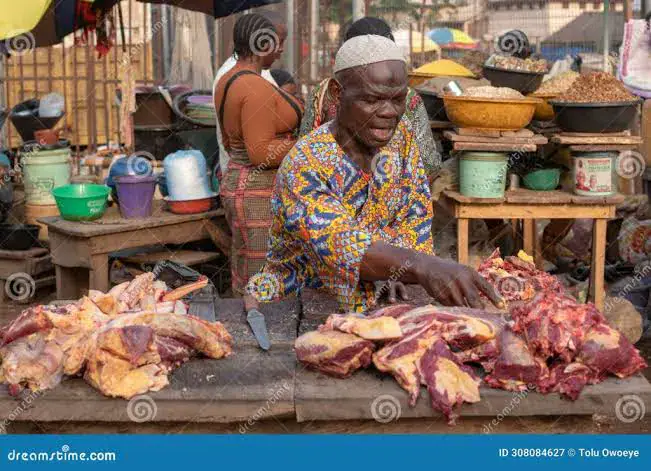
Rising prices of meat, fish, and chicken in Lagos are compelling households to reassess their daily meals, reduce protein intake, and turn to more affordable options. This shift in consumption patterns is attributed to the increasing cost of feeding, which is straining family budgets. Consumers are adjusting their eating habits, with many opting for smaller portions of meat or replacing beef with eggs.
Meat traders attribute the price fluctuations to increased supply, transportation, fuel, and operating costs, as well as exchange rate movements. At Oyingbo Market, a mobile butcher, Mr. Abubakar Sodiq, reported that the price of beef had risen from N6,000 per kilogram in August to N8,000 currently. He cited rising fuel prices and the cost of purchasing cattle as contributing factors.
Other traders at Oyingbo Market, such as Mr. Musa Danjuma, confirmed the price increase, stating that a lap of meat now sells for between N30,000 and N45,000, depending on its size. Danjuma noted that while meat had become more expensive and scarce, the price increases had not significantly impacted his business. Meanwhile, chicken traders at Ijora Olopa Frozen Food Market reported varying price movements.
Mrs. Mahmoud Ganiyat, a chicken trader, stated that a carton of soft chicken currently sells for N41,000, while old layer chicken goes for N52,000. She attributed the fluctuations partly to exchange rate movements, noting that customers reduce their purchases when prices increase. Ganiyat also mentioned that some customers who can no longer afford chicken have switched to fish.
Fish traders at Oyingbo Ultra-Modern Market reported relatively stable prices for some varieties since January. Mrs. Titilayo Balogun stated that kote sells for N95,000 per carton, N6,000 per kilogram, and N4,000 per piece. However, she noted that declining patronage, partly due to the demolition of houses in some areas, has affected the quantities purchased.
Egg traders at Ijora Olopa reported relatively stable prices, with a crate of small eggs selling for N5,800 and bigger eggs for N6,200. Mrs. Rokibat Hamzat stated that customers generally maintain their usual purchasing habits, although patronage sometimes declines on certain days. Another egg trader, Mrs. Williams Chinaza, attributed the price changes to the cost of poultry feed, transportation, and other supply expenses.
For consumers, even slight price increases have translated into difficult decisions about what goes into their daily meals. Mr. Olayinka Oluwafemi, a graphic designer, reported that the price of a piece of beef had increased from N100 to N200, reducing his meat consumption by approximately 80 percent. He has turned to eggs as an alternative source of protein, with each egg selling for between N200 and N250.
Key points
- Rising meat, fish, and chicken prices are forcing Lagos households to cut protein consumption and opt for cheaper alternatives.
- Meat traders attribute price fluctuations to increased supply, transportation, fuel, and operating costs, as well as exchange rate movements.
- Consumers are adjusting their eating habits, with many opting for smaller portions of meat or replacing beef with eggs.