The diplomatic dispute between South Africa and the US has brought long-running questions about the country's post-apartheid transition and national identity to the fore. Analysts say the growing internationalisation of the Afrikaner question could affect social cohesion. The Thabo Mbeki Foundation's recent paper, The United States of America and the Future of the Afrikaners in South Africa, has sparked debate about South Africa's unresolved "national question" and the compromises made during the country's negotiated transition.
The paper examines the growing engagement between sections of the Afrikaner community and the Trump administration, placing the dispute within the history of colonialism, apartheid, and South Africa's post-1994 settlement. It reproduces demands made by a June 2025 delegation involving FF Plus MP Corné Mulder, Southern African Agri Initiative president Theo de Jager, and National Employers' Association of SA CEO Gerhard Papenfus. These demands include classifying farm attacks as priority crimes, an ANC denunciation of the "Kill the Boer" chant, and opposition to land expropriation without compensation.
Sanusha Naidu, senior research fellow at the Institute for Global Dialogue, said the debate was not simply about Afrikaner rights but also about whether South Africa had sufficiently transformed politically, economically, and socially since 1994. She said questions around BEE, land reform, minority rights, and economic ownership had to be understood within a broader context. Naidu also noted that the foundation's argument should be viewed against the broader international debate about minority rights, majoritarianism, diversity, and inclusion.
The Mbeki Foundation's paper distinguishes between Afrikaners as a whole and sections of the community seeking separate political and cultural existence, which it links to elements of apartheid-era "separate development". It cites a 2025 statement by 46 prominent Afrikaners who rejected the portrayal of the community as victims of racial persecution. The foundation draws comparisons between South Africa's transformation debate and the US experience of slavery and racial inequality.
Joelien Pretorius, professor of political studies at the University of the Western Cape, warned that the current dispute could harden racial divisions within South Africa. She attributed the growing international traction for groups that previously struggled to gain support to a shift to the right in European and US politics. Pretorius cautioned against allowing the international dispute to feed into a self-fulfilling prophecy where South African cultural groups are stereotyped as "indigenous black" and "settler colonialists".
The diplomatic dispute between Pretoria and Washington remains unresolved, with the US imposing punitive tariffs on South African exports and introducing a preferential refugee programme for Afrikaners. South African officials have rejected Washington's characterisation of the diplomatic process as having failed. Presidential adviser Alistair Ruiters said Pretoria has made concessions, including commitments relating to critical minerals and a review of aspects of BEE.
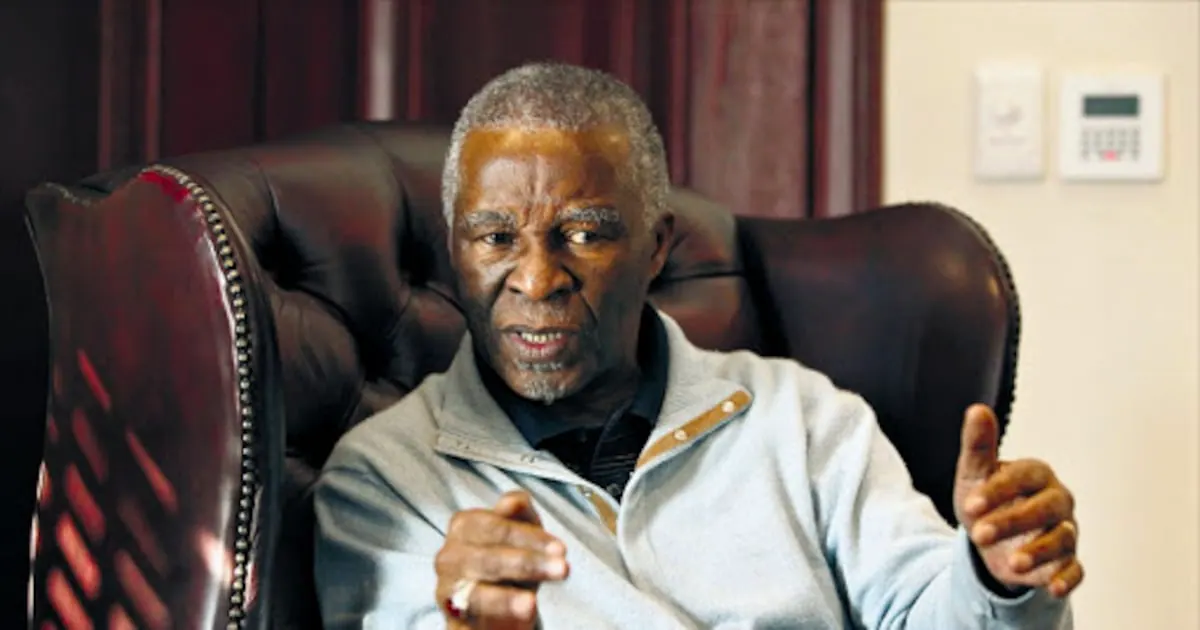
US ambassador to SA Leo Brent Bozell III recently praised former president Thabo Mbeki as a veteran statesman and master negotiator who could help break the diplomatic impasse between Washington and Pretoria. The Mbeki Foundation's paper has sparked debate about South Africa's post-apartheid transition and national identity, with analysts divided over the implications for social cohesion and the country's relationships with the US and other international partners.
Key points
- The Thabo Mbeki Foundation's paper has sparked debate about South Africa's post-apartheid transition and national identity.
- Analysts warn that the growing internationalisation of the Afrikaner question could affect social cohesion in South Africa.
- The diplomatic dispute between Pretoria and Washington remains unresolved, with the US imposing punitive tariffs on South African exports.