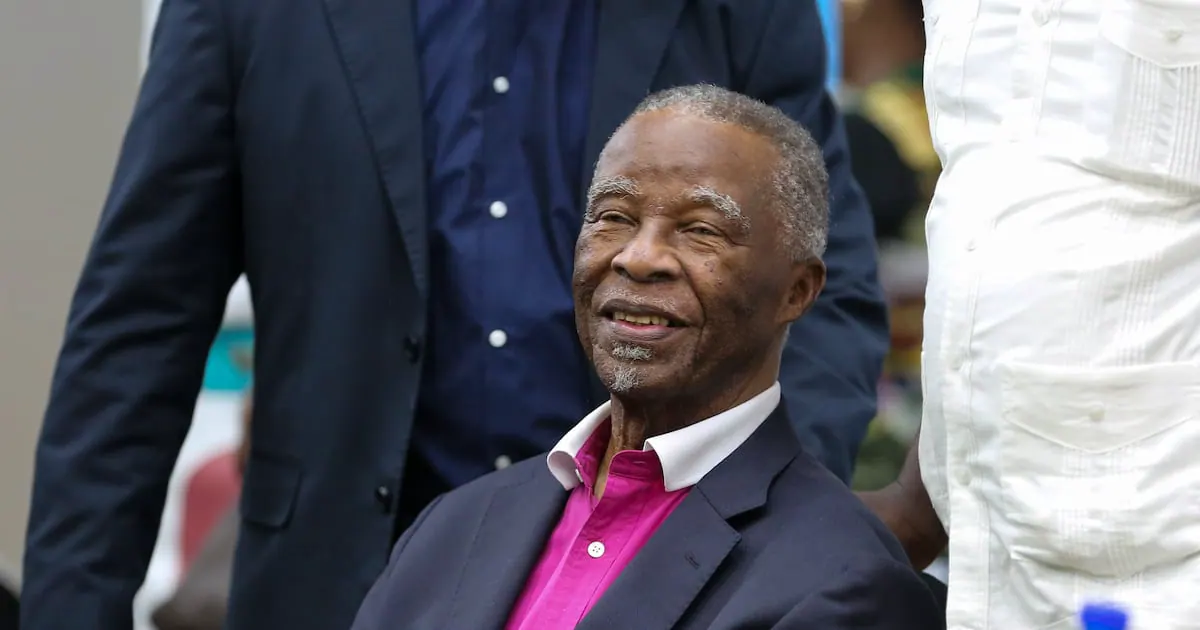
The Thabo Mbeki Foundation has released a 123-page paper, "The United States of America and the Future of the Afrikaners in South Africa," highlighting concerns over growing US support for Afrikaner organisations seeking greater cultural and political autonomy. The foundation argues that this development risks entrenching racial divisions in South Africa, a country that has spent three decades trying to dismantle its legacy of apartheid. The paper places the diplomatic tension between Pretoria and Washington within the context of the unresolved "national question" in both countries.
The paper comes days after US Ambassador to South Africa L. Brent Bozell III suggested that former President Thabo Mbeki was best placed to help break the diplomatic impasse between Pretoria and Washington. Bozell stated that Washington had "run out of patience" with the Ramaphosa administration and that Mbeki's stature and experience could help unlock negotiations. However, the foundation's paper does not present Mbeki as a potential diplomatic intermediary. Instead, it offers a detailed critique of the relationship between Afrikaner organisations and the Trump administration.
The foundation examines visits to Washington by Afrikaner organisations, including the Solidarity Movement and AfriForum, as well as a June 2025 delegation comprising FF Plus MP Corné Mulder, Southern African Agri Initiative president Theo de Jager, and National Employers' Association of SA CEO Gerhard Papenfus. The paper reproduces demands taken back from Washington, including classifying farm attacks as priority crimes, ANC denunciation of the "Kill the Boer" chant, opposition to land expropriation without compensation, and exemptions for US companies from BBBEE requirements.
The Solidarity Movement's "Washington Memorandum" called for greater recognition of Afrikaner cultural autonomy and proposed US assistance for an Afrikaner development fund to finance community infrastructure. The memorandum also referred to establishing a place where Afrikaners could resettle in concentrated numbers. The foundation argues that these demands amount to an attempt by sections of the Afrikaner community to secure a degree of separate political and cultural existence within South Africa.
The foundation draws a distinction between Afrikaner organisations and Afrikaners as a whole, noting that prominent Afrikaners have rejected the portrayal of the community as a persecuted minority. A 2025 statement signed by 46 prominent Afrikaners, titled "Not In My Name!", rejected the narrative that Afrikaners were victims of racial persecution. The foundation also cites research by Frans Cronje and Hermann Giliomee, which estimated that Afrikaner living standards rose faster during the first two decades after 1994 than during any comparable 20-year period since the end of World War 2.
The paper acknowledges serious failures of the democratic state, including high levels of poverty, unemployment, crime, inequality, and weak service delivery. However, it argues that these problems cannot be addressed by abandoning policies aimed at overcoming racial economic inequalities inherited from apartheid. The foundation uses US history to challenge opposition to BBBEE and other forms of redress in South Africa, highlighting the US government's use of affirmative action and targeted programmes to address racial inequality.
The foundation warns that the pursuit of racially separate political and economic structures could increase social instability and undermine the constitutional vision established through negotiations that preceded democracy. It points to the 1991 Codesa Declaration of Intent, which committed parties to an "undivided South Africa" based on common citizenship, equality, and security for all. The foundation argues that abandoning policies aimed at redressing apartheid-era inequalities could entrench a "two nations" reality, where socioeconomic divisions continue to follow racial lines.
Key points
- The Thabo Mbeki Foundation warns that growing US support for Afrikaner autonomy risks entrenching racial divisions in South Africa.
- The foundation argues that the pursuit of racially separate political and economic structures could increase social instability and undermine the constitutional vision.
- The paper highlights the need to address racial economic inequalities inherited from apartheid, rather than abandoning policies aimed at redressing these inequalities.