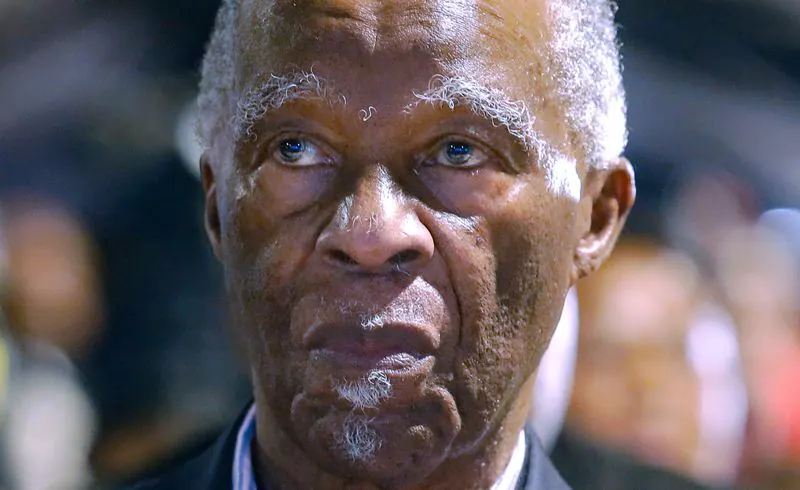
Former South African President Thabo Mbeki has filed an 82-page statement to the Khampepe Commission of Inquiry into delayed Truth and Reconciliation Commission prosecutions, denying allegations of political interference in TRC matters. Mbeki's statement, filed on October 5, categorically denies claims that he held secret discussions with apartheid generals and former President FW de Klerk. The allegations were made by the families of victims of human rights abuses, known as the Calata Group.
Mbeki attributed the failure to prosecute TRC cases to the National Prosecuting Authority (NPA), which he claimed failed to discharge its duties. He drew a parallel with British wartime President Winston Churchill, noting that the Allies had taken elaborate steps to mislead the Germans during World War II, protecting Normandy with "A Bodyguard of Lies". Mbeki suggested that the NPA had similarly created a "Bodyguard of Lies" to hide the truth about why TRC-referred cases were not prosecuted.
The former President denied attending meetings with FW de Klerk and his security chiefs to discuss a "political solution" to stop prosecutions. He also denied agreeing to halt prosecutions or granting a general amnesty. Mbeki stated that he had not directed, authorized, or approved the suppression of TRC case investigations or prosecutions. He claimed that his attempts to delay his appearance at the Khampepe Commission were due to pending judicial review of a recusal ruling.
Mbeki argued that post-TRC prosecution delays were caused by former apartheid-era prosecutors inherited by the NPA, who may have been unmotivated to prosecute their former "comrades" among the security forces. He denied that his April 2003 address to Parliament was "classical Machiavellian", as characterized by Advocate Anton Ackermann. Mbeki stated that he had dealt with the NPA on operational matters, but not interfered with individual cases.
The Calata Group had accused Mbeki of failing to instruct his ministers of justice, national directors of public prosecutions, and police commissioners to investigate TRC cases. They also alleged that Mbeki had personally halted planned arrests of former Minister of Police Adriaan Vlok and former Police Commissioner Johan van der Merwe. Mbeki denied these allegations, stating that he had no constitutional or statutory power to instruct prosecutors or police regarding individual cases.
Mbeki noted that he had established the Priority Crimes Litigation Unit within the Office of the National Director of Public Prosecutions to handle TRC-related prosecutions. He stated that his parliamentary speech had explicitly declared that there would be no general amnesty and reaffirmed that those who were refused amnesty or failed to apply to the TRC remained accountable. Mbeki argued that the creation of this dedicated prosecutorial machinery contradicted allegations that his intentions were to suppress TRC prosecutions.
The former President also addressed the ANC's collective "Group of 37" amnesty application, stating that it was an effort to accept moral and political responsibility, not a bid for blanket immunity. Mbeki's statement to the Khampepe Commission is a significant moment in the inquiry, which has been sitting for almost a year. The Commission will continue to investigate allegations of delayed TRC prosecutions.
Key points
- Mbeki denies allegations of interfering with TRC prosecutions.
- The former President blames the NPA for failing to pursue TRC-referred cases.
- Mbeki's statement to the Khampepe Commission contradicts allegations that his intentions were to suppress TRC prosecutions.