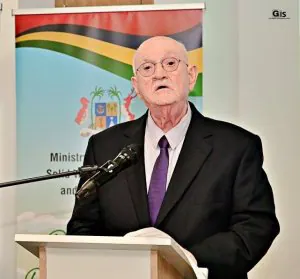
The Mauritian government has withdrawn the Wetlands Bill from Parliament, sparking concerns over the protection of environmentally sensitive areas. The bill was first read in Parliament on August 4, 2026, but was subsequently withdrawn at the request of the Minister of Environment, Rajesh Bhagwan. According to Arvin Boolell, Minister of Agro-industry, Bhagwan asked him to withdraw the bill to prioritize amendments to the Environment Act related to Environmentally Sensitive Areas (ESA), which include wetlands.
The withdrawal of the Wetlands Bill has raised questions about the government's commitment to environmental protection. Joanna Bérenger, a concerned citizen, has questioned why Rajesh Bhagwan did not object to the bill when it was presented to the Cabinet on July 31, 2026, and why the Cabinet approved it only to withdraw it later. She also wonders how two ministries, the Ministry of Environment and the Ministry of Agro-industry, could work on separate projects related to the same issue without coordination.
The proposed housing project in La Mivoie, Rivière-Noire, has sparked concerns among local residents and environmentalists. The project is located in a sensitive wetland area, and residents are questioning how the project obtained the necessary permits and how it will comply with the Environmental Impact Assessment (EIA) requirements. Bruno Lemerle, a spokesperson for the affected residents, has been in contact with the Ministry of Environment, the Prime Minister's Office (PMO), and the Ministry of Agro-industry to express concerns about the project.
The ESA Committee, chaired by Rajesh Bhagwan, was established to oversee the protection of environmentally sensitive areas. However, Joanna Bérenger has questioned the legitimacy of the committee's meetings, citing the Environment Act, which states that the committee should be chaired by the Director of Environment or another senior official. The committee has employed a consultant to work on the ESA project for six months, but Bérenger wonders if the committee's meetings are lawful.
The amendment to the Environment Act, which is expected to cover wetlands through the ESA provisions, has not yet been presented to Parliament. If the amendment is presented, it will raise questions about the government's priorities and commitment to environmental protection. If the amendment is delayed or not presented, it may suggest that the Ministry of Environment is trying to protect the proposed housing project in La Mivoie.
The withdrawal of the Wetlands Bill has sparked concerns about the government's handling of environmental issues. The Ministry of Environment, the PMO, and the Ministry of Agro-industry have been accused of lacking coordination and transparency in their handling of the issue. The proposed housing project in La Mivoie has raised concerns about the impact of development on environmentally sensitive areas, and residents are calling for greater accountability and transparency from the government.
The future of the Wetlands Bill and the proposed housing project in La Mivoie remain uncertain. While the government has withdrawn the bill, it has not ruled out presenting an amendment to the Environment Act. Residents and environmentalists are calling for greater protection of environmentally sensitive areas and greater transparency in the government's decision-making processes. The issue is expected to continue to be debated in the coming weeks.
Key points
- The Mauritian government has withdrawn the Wetlands Bill from Parliament amid concerns over a proposed housing project in a sensitive wetland area.
- The withdrawal of the bill has raised questions about the government's commitment to environmental protection and the coordination between ministries.
- The proposed housing project in La Mivoie has sparked concerns among local residents and environmentalists about the impact of development on environmentally sensitive areas.