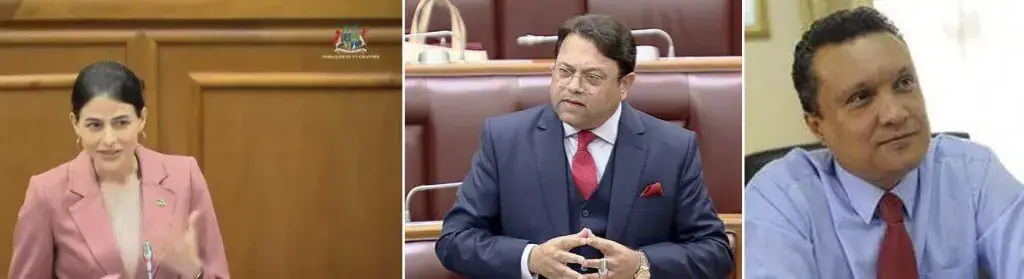
The Mauritian government is under scrutiny for its handling of the country's water crisis, with Minister of Energy and Public Services Patrick Assirvaden facing accusations of wasting months with reports. In a parliamentary session, Assirvaden revealed that a study on Non-Revenue Water (NRW) was conducted by the Climate Resilient Infrastructure Development Facility (CRIDF) between 2020 and 2023, focusing on the North and East zones. However, the minister was accused of misrepresenting the study's scope.
The CRIDF study found that the focus was on characterizing and measuring NRW in select areas of DWA (District Water Supply System) North and DWS East, identifying key interventions required. Assirvaden also announced that consultants from Singapore Corporation Enterprise (SCE) would work on the East zone, raising concerns about duplication of efforts. The SCE was paid Rs 9.5 million for the study, which was not subject to a tender process, unlike the CRIDF study that was free of charge.
The minister revealed that the SCE study was conducted by the same firm that had been engaged in 2013, but the report had not been acted upon. The SCE's preliminary report was submitted quickly, despite the minister's earlier statement that the team would take time to determine where water was being lost in the distribution circuit. The study's findings and recommendations have not been made public, fueling concerns about the government's transparency.
The French firm Application Européenne de Technologies et de Services (AETS) is also conducting studies on water management, funded by the Agence Française de Développement (AFD). The AFD will provide Rs 1.7 billion to replace water pipes in the East zone and upgrade meters, although the minister had previously stated that meter replacement was almost complete. The opposition has questioned the need for multiple studies and the selection of consultants.
The government's handling of the water crisis has been criticized, with some experts suggesting that the authorities are searching for a report that supports their preconceived notions. The sector professionals have expressed concerns that the emphasis on large-scale pipe replacement projects may not be the most effective solution. The minister's department had been dismantled in 2022 but was re-established in January 2025.
The opposition has also raised concerns about the government's decision to abandon a project funded by the State Bank of India (SBI) to replace 113 km of water pipes, citing the need for additional funding. Instead, the government has secured a Rs 6.3 billion loan from the AFD to manage the water sector. The move has sparked questions about the role of Indian and Chinese contractors in the project.
The water crisis in Mauritius remains a pressing issue, with the government's response being closely watched. The effectiveness of the measures being taken, including the studies and projects being funded, will be crucial in addressing the country's water woes. The minister's future in his position may depend on the success of these initiatives.
Key points
- The Mauritian government has secured a Rs 6.3 billion loan from the AFD to manage the water sector, amid concerns about the country's severe water shortage.