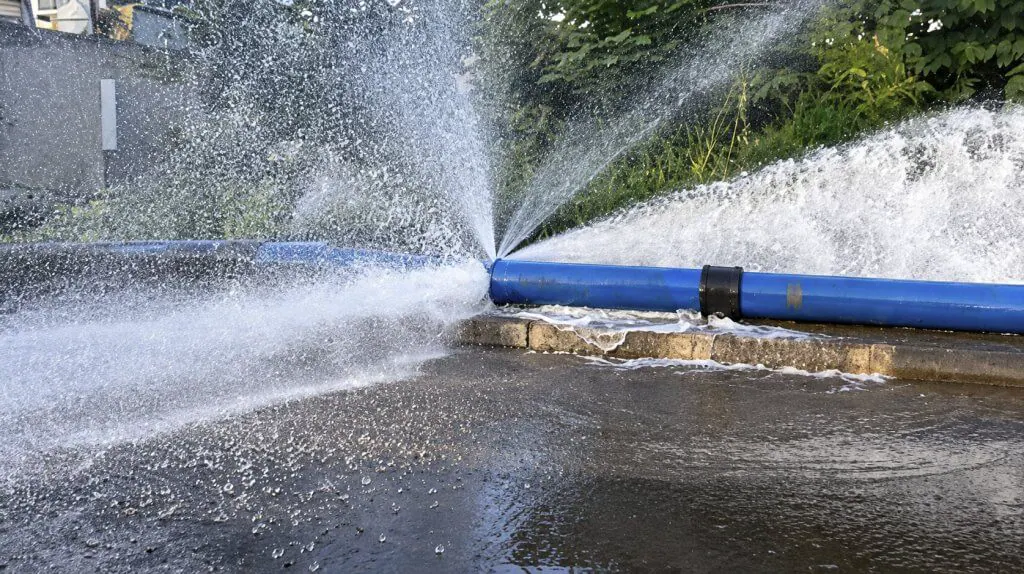
The Mauritius government's plan to replace 113 km of water pipes under the Pipe Replacement Programme (PRP) has hit a snag. Energy Minister Patrick Assirvaden announced on October 6 that India has offered a loan of Rs 2.9 billion for the project. However, the bidding process for the first phase, reserved for Indian contractors, has failed. Only three bidders participated, with the lowest bid deemed non-compliant.
The second bidder, Afcons Infrastructure Limited, was selected despite offering a price Rs 262 million higher than the estimated cost of Rs 938 million. However, the State Bank of India (SBI) refused to finance the additional amount, citing the need for the Mauritian government to find the funds. With the government's coffers depleted, the Council of Ministers decided two weeks ago to combine and execute both phases of the project simultaneously.
Minister Assirvaden had previously stated that not all projects can be launched at once, citing the Central Water Authority's (CWA) limited resources. It remains unclear how the CWA will supervise the combined phases and how the government will secure funding for the project, considering the increasing costs due to inflation. The government's reliance on external factors, such as the Chagos Islands' compensation or economic improvement, seems uncertain.
The decision to combine the phases raises questions about the project's feasibility. The government's priorities have been questioned, with the M4 highway project receiving Rs 10 billion in funding while the water distribution project faces delays. The recent water shortages and subsequent protests may prompt the government to reallocate funds.
Contrary to Minister Assirvaden's claims, the Rs 2.9 billion loan from India is not a grant but a loan from the SBI, a bank owned 60% by the Indian government. The loan's interest rate and repayment period remain unknown. The project's implementation has sparked concerns about patriotism and potential under-the-table dealings.
The failed bidding process and funding issues have raised concerns about the project's timeline and feasibility. With the government's financial constraints and the CWA's limited resources, it remains to be seen how the project will move forward. The water pipe replacement project is crucial to addressing the country's water distribution issues.
The delay in the project may have long-term consequences for the country's water infrastructure. With the increasing demand for water and the existing pipe network's limitations, the government must find a solution to address the issue. The project's revival will require careful planning, funding, and implementation to ensure that the country's water distribution needs are met.
Key points
- The Mauritius government's water pipe replacement project faces delays due to failed bidding and funding issues.
- The project's implementation has sparked concerns about patriotism and potential under-the-table dealings.
- The delay in the project may have long-term consequences for the country's water infrastructure.