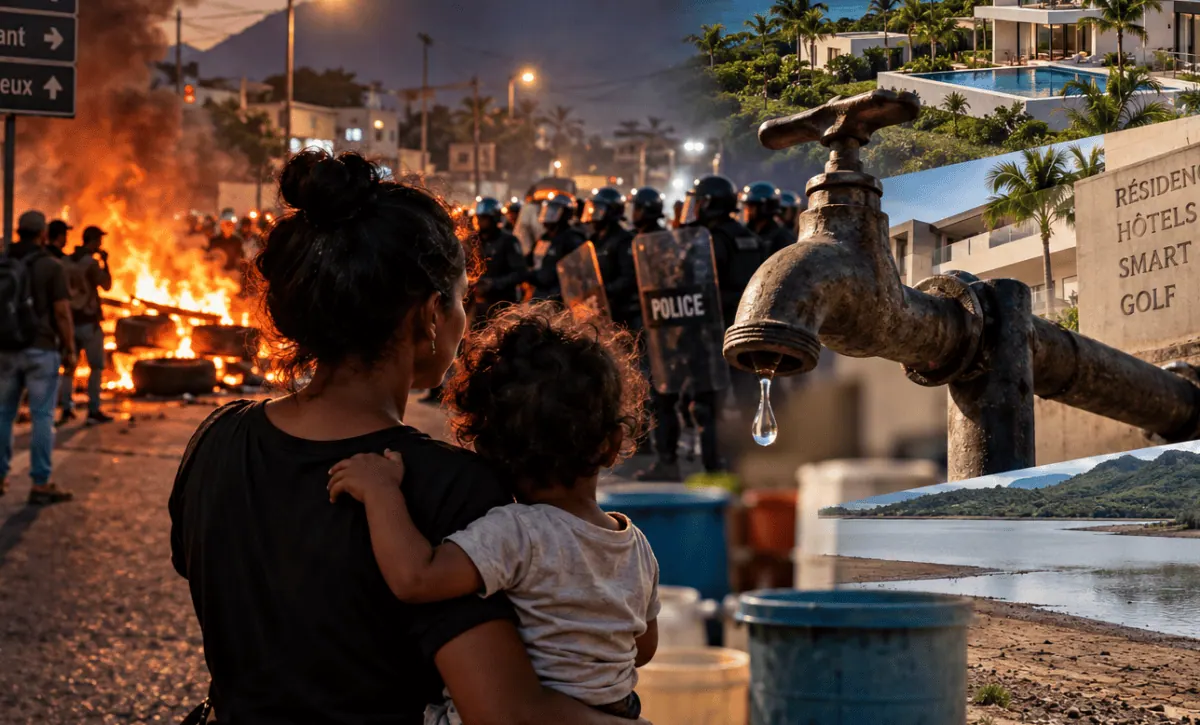
Mauritius, known for its turquoise lagoons and luxury hotels, is facing a growing crisis over water shortages and social inequality. Despite its idyllic image, several regions of the country are struggling to access basic necessities like clean water. Protests have been erupting in various parts of the island, including Clairfonds, Saint-Paul, and Camp-Levieux, with residents expressing frustration over the lack of access to water. The situation has become increasingly tense, with roads blocked, tires set on fire, and police interventions.
The water crisis is not an isolated issue, but rather a symptom of a broader social malaise. Mauritians are already feeling the pinch of economic changes, including pension reforms, rising fuel prices, and increasing housing costs. The country's economy has been shifting towards luxury developments, such as high-end residential projects and Smart Cities, which are often unaffordable for the majority of the population. This has created a sense of discontent among residents, who feel that the country's prosperity is not trickling down to them.
One of the key concerns is the distribution of water resources in the country. With the expansion of luxury developments and Smart Cities, there are questions about how water is being allocated among households, hotels, and other large consumers. There are concerns that these developments may be receiving preferential treatment in terms of water supply, while ordinary residents are left to struggle. The authorities have been urged to publish data on water consumption by different categories of users, as well as the criteria for water distribution and network losses.
The impact of large-scale developments on the country's water resources is also a major concern. The construction of new infrastructure, such as roads and buildings, has been altering the natural watercourses and canals that feed the country's reservoirs. This has led to a decrease in the available water supply, exacerbating the crisis. The government has been accused of prioritizing luxury developments over the needs of ordinary citizens, and there are calls for a more equitable distribution of resources.
The situation took a dramatic turn on October 9, when a 27-year-old woman was injured by a police bullet while returning home from work. The incident has sparked widespread outrage, and there are calls for a thorough investigation into the circumstances surrounding the shooting. The government has been urged to take concrete steps to address the water shortages and ensure a fair distribution of resources.
The water crisis has highlighted the need for greater transparency and accountability in the management of the country's resources. The authorities have been urged to publish data on water consumption and distribution, as well as to take steps to address the root causes of the crisis. The government has promised to take action, but so far, the response has been inadequate, and the situation remains tense.
As the situation continues to unfold, there are concerns about the long-term implications for the country's development and stability. The crisis has exposed deep-seated social and economic inequalities, and there are calls for a more inclusive and equitable approach to development. The government will need to take bold steps to address the water crisis and ensure that the country's resources are managed in a fair and sustainable way.
Key points
- The water crisis in Mauritius is a symptom of a broader social malaise, driven by economic inequality and a lack of access to basic necessities like clean water.
- The distribution of water resources is a major concern, with questions about how water is being allocated among households, hotels, and other large consumers.
- The government has been urged to take concrete steps to address the water shortages and ensure a fair distribution of resources, including publishing data on water consumption and distribution.