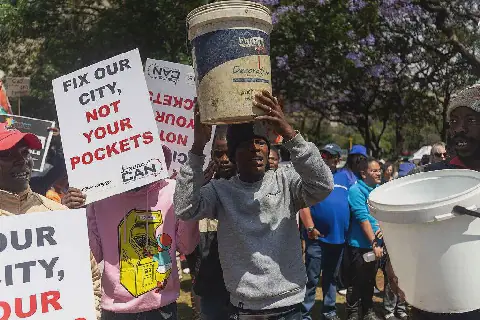
A severe water shortage has affected several regions in La Caverne-Phoenix, Mauritius, leaving residents without water for several days. The crisis prompted Khushal Lobine, the area's deputy and leader of the New Democrats, to take action. He wrote to Shiam Thannoo, the Director-General of the Central Water Authority (CWA), requesting an urgent meeting, more water tankers, and better communication on water distribution schedules.
Lobine's move is legitimate, given the residents' right to a rapid response and an elected official's duty to represent their constituents. However, the approach has raised eyebrows, particularly since Lobine's colleague and Minister of Energy and Public Services, Patrick Assirvaden, is also an elected representative of the same constituency. As the minister responsible for the CWA, Assirvaden is well-positioned to address the issue directly.
The situation raises questions about the effectiveness of Lobine's approach. Typically, a deputy would have a direct channel to the minister, especially one who is also a colleague in the same constituency. This direct line could have facilitated a quicker resolution to the water shortage issue. Instead, Lobine chose to write to the CWA Director-General, which some might see as an unusual move.
Two possible interpretations of Lobine's actions emerge. One is that he is following a formal and traceable process, putting pressure on the responsible institution to execute a solution. The other, more political interpretation suggests that Lobine's public letter to a civil servant may be a communication strategy rather than a genuine attempt to resolve the issue administratively.
The water shortage in La Caverne-Phoenix is a pressing concern that requires a swift and effective response. While the public debate between Lobine and Assirvaden may be newsworthy, residents are more concerned with seeing an end to their water woes. The ability of the responsible officials, both elected and administrative, to work together and provide a unified response is crucial.
Ultimately, the situation highlights the complexities of governance and representation in Mauritius. As the water crisis continues to affect residents, the focus should shift from political maneuvering to finding a concrete solution. The effectiveness of Lobine's approach will be judged by its impact on the ground, rather than its political implications.
The water shortage in La Caverne-Phoenix serves as a reminder of the challenges faced by many communities in Mauritius. While the immediate crisis may be resolved, the long-term solution will require a coordinated effort from all stakeholders, including government officials, administrators, and community leaders.
Key points
- Deputy Khushal Lobine's letter to the CWA Director-General requesting a solution to the water shortage has sparked debate about the best approach to addressing the crisis.
- The involvement of Minister Patrick Assirvaden, Lobine's colleague and the minister responsible for the CWA, adds a layer of complexity to the situation.
- The water shortage in La Caverne-Phoenix remains a pressing concern for residents, who are eager to see a swift and effective resolution.