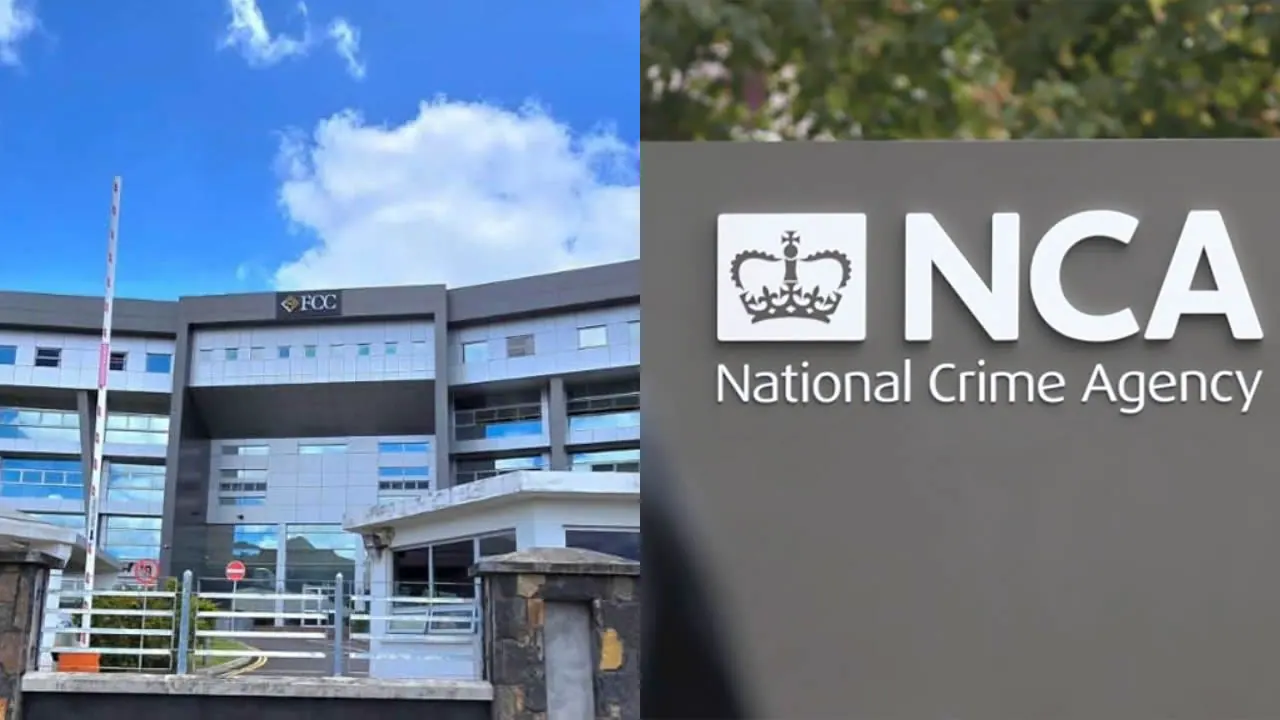
The government of Mauritius is set to replace the Financial Crimes Commission (FCC) with the National Crime Agency (NCA), marking a significant shift in the country's approach to tackling crime. The NCA will not only inherit the FCC's powers but also expand its mandate to include cybercrime and complex, serious, and organized crime. This move aims to enhance the country's ability to investigate and prosecute a broader range of crimes. The NCA will be the lead investigative agency for financial crime, cybercrime, and complex, serious, and organized crime.
The FCC, established to focus on financial crimes such as corruption, money laundering, and fraud, will be succeeded by the NCA, which will have a broader remit. The NCA will be able to intervene in cases involving organized criminal groups, international dimensions, or cybercrime, as well as cases related to money laundering or terrorist financing. The agency will also be able to take over investigations from the police or other investigative bodies. This expanded mandate is expected to enable the NCA to tackle complex crimes more effectively.
A key difference between the FCC and the NCA lies in their structures. The FCC is headed by a Commission comprising a director-general and four commissioners. In contrast, the NCA will be led by a director-general with administrative and operational control, supported by a Governance Advisory Board for strategy and organization, and a Senior Leadership Board for daily operations. This change is expected to streamline decision-making and enhance the agency's efficiency.
The NCA will comprise nine divisions, including Anti-Money Laundering and Anti-Corruption, Cybercrime, and Asset Recovery and Unexplained Wealth. The agency will also feature a Digital Forensic Laboratory to extract, preserve, and analyze digital data. This specialized structure is designed to enable the NCA to tackle a wide range of crimes, from financial offenses to cybercrime and organized crime.
The appointment of the NCA's director-general will be subject to a new mechanism, with the President nominating the director-general on the advice of the Independent Advisory Panel, following consultation with the Prime Minister and the leader of the opposition. The director-general's mandate will be four years, with a maximum of two terms. However, the first director-general will be appointed through a different process, with the incumbent head of the National Crime Interim Agency automatically becoming the NCA's first director-general.
The NCA's director-general will enjoy enhanced protection under the Constitution, with the Constitution Amendment Bill proposing to enshrine the office in the Constitution. This move aims to ensure the director-general's independence and prevent undue influence or pressure. The bill also provides for a Tribunal to examine the removal of the director-general, which will be based on specific grounds, including incapacity or misconduct.
The NCA will have the power to take over investigations from the police, and it will also establish a National Flagging Database to avoid duplication and identify cases or entities already reported. The agency will have access to a range of investigative powers, including the ability to conduct searches and seizures, obtain financial information, and use special investigative techniques. The introduction of the NCA is expected to strengthen Mauritius' law enforcement capabilities and enhance its ability to tackle complex crimes.
Key points
- The National Crime Agency will replace the Financial Crimes Commission, expanding its role to include cybercrime and organized crime.
- The NCA will have a broader mandate than the FCC, with the power to investigate financial crime, cybercrime, and complex, serious, and organized crime.
- The NCA's director-general will enjoy enhanced protection under the Constitution, ensuring independence and preventing undue influence or pressure.