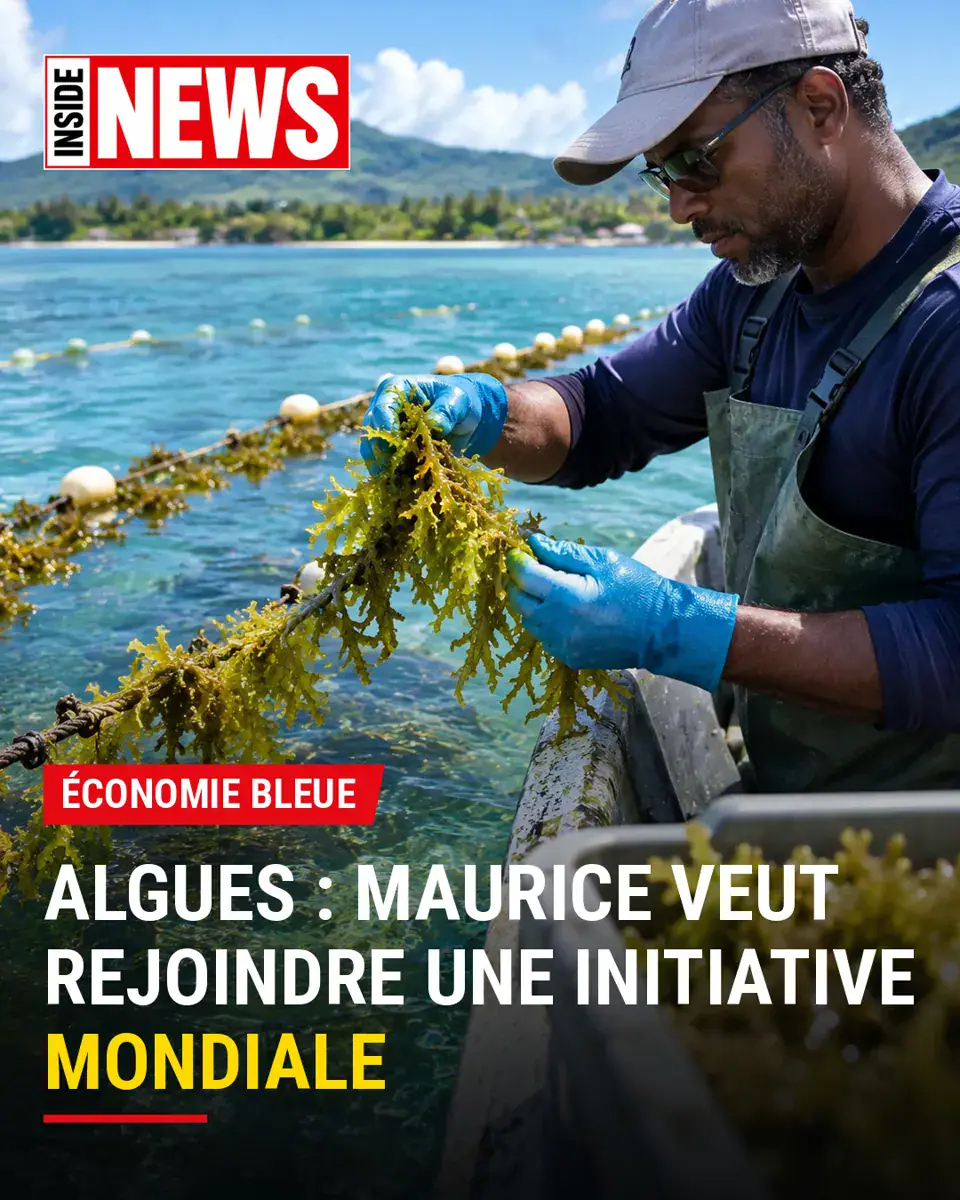
The Mauritian government has approved its participation in the Global Seaweed Initiative, a United Nations-led platform that seeks to promote sustainable development in the seaweed sector. This move is part of the country's efforts to diversify its maritime economy. The initiative, launched in September 2025, aims to support policy coordination, research, innovation, and exchange on standards and sustainability in the seaweed industry.
The Global Seaweed Initiative brings together policymakers, researchers, and industry stakeholders to promote sustainable seaweed development. The platform focuses on supporting small-scale producers and marginalized groups, while also considering the environmental implications of seaweed farming. Seaweed is used in various sectors, including food, cosmetics, and pharmaceuticals, but its economic prospects depend on factors such as species, cultivation conditions, markets, and environmental requirements.
Mauritius has not yet disclosed specific projects, investments, or job creation plans related to its participation in the Global Seaweed Initiative. The government will need to determine which institutions will participate, what projects will be studied, and whether financing or authorizations will be required. The potential impact on coastal ecosystems and existing activities will also need to be assessed if concrete projects are proposed.
The Council of Ministers' decision to join the Global Seaweed Initiative is seen as a positive step towards diversifying Mauritius' maritime economy. The country's economy is heavily reliant on tourism and sugar production, and the government is seeking to explore new opportunities in the blue economy. The seaweed sector offers potential for growth, but it also requires careful planning and management to ensure sustainability.
The next step for Mauritius will be to develop a clear strategy for implementing the Global Seaweed Initiative. This will involve identifying specific projects, securing funding, and engaging with stakeholders. The government will also need to ensure that the initiative aligns with its overall economic development goals and that it benefits local communities.
The Global Seaweed Initiative has the potential to support sustainable development in Mauritius and other participating countries. By promoting sustainable seaweed farming practices, the initiative can help to protect marine ecosystems, support local livelihoods, and contribute to food security. As Mauritius moves forward with its participation in the initiative, it will be important to prioritize transparency, accountability, and community engagement.
Key aspects of the Global Seaweed Initiative include supporting policy coordination, research, and innovation in the seaweed sector. The initiative also aims to promote sustainable development and to consider the needs of small-scale producers and marginalized groups.
Key points
- The initiative aims to support policy coordination, research, innovation, and exchange on standards and sustainability in the seaweed industry.
- Mauritius seeks to diversify its maritime economy through participation in the Global Seaweed Initiative.
- The initiative focuses on supporting small-scale producers and marginalized groups in the seaweed sector.